

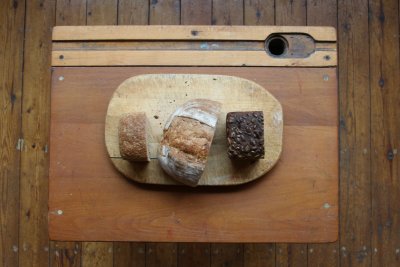
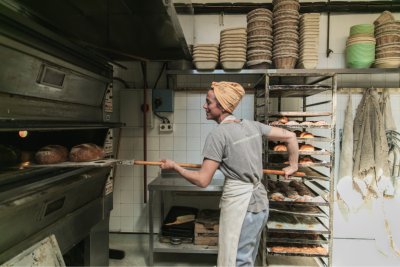
 Real Bread on the menu and on the timetable. Credit: Chris Young / www.realbreadcampaign.org CC-BY-NC-SA-4.0
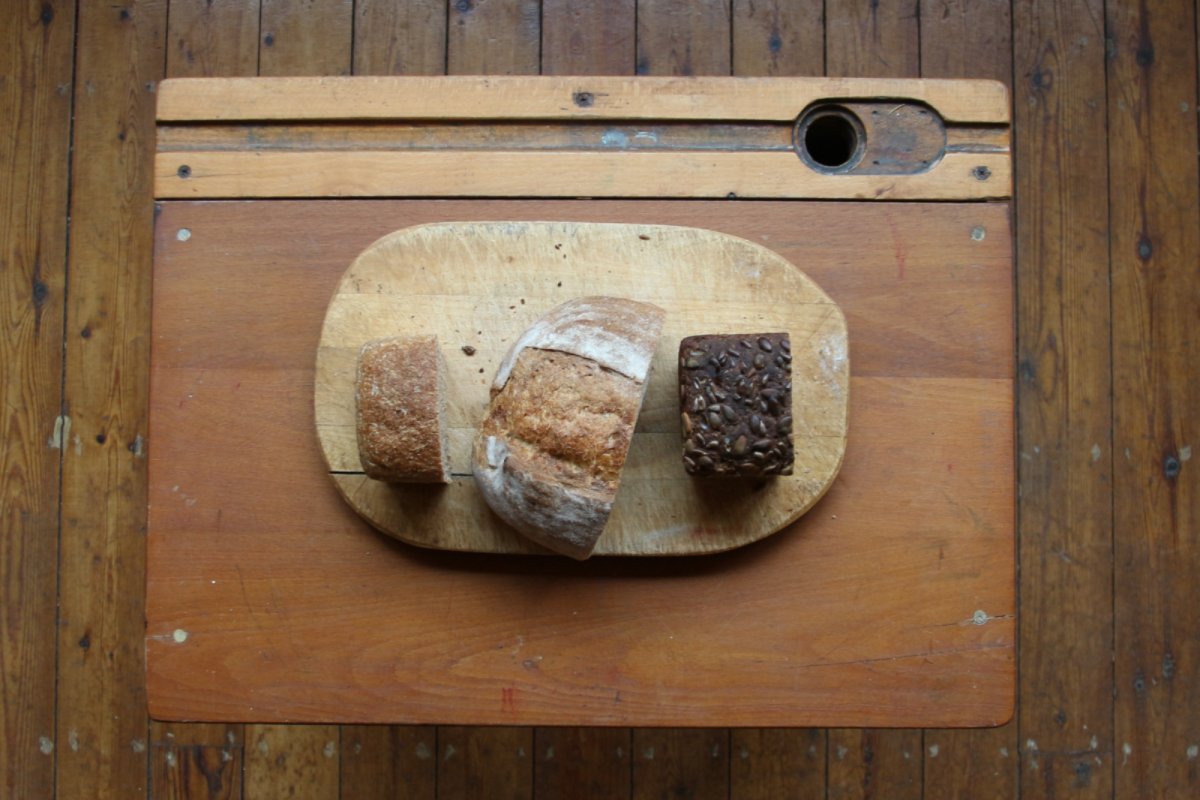

School Food Standards: Real Bread Campaign response
Campaign submits recommendations to governmental review.
As part of the 2026 review of School Food Standards for England, the Department for Education and Department for Health and Social Care conducted a public consultation survey on the government’s proposed new standards.
On 11 June 2026, the Real Bread Campaign submitted its response, to be read in conjunction with Sustain’s overall response, submitted by the Children’s Food Campaign.
Download the Real Bread Campaign response
Real Bread Campaign coordinator Chris Young said: ‘As we note in our consultation response, we welcome the government reviewing the School Food Standards for England, which creates a rare opportunity to update and improve them.’
He added: ‘We believe our recommended standards and good practice guidance represent an achievable and cost-effective way to improve children's nutrition. They will also offer a range of potential socio-economic benefits.’
Key points
As one of the most frequently consumed foods in schools, bread is uniquely positioned to make a significant, positive impact on children's health and wellbeing. Whether in the form of bagels, baguettes, flatbreads, panini, buns or sandwiches, ‘bread’ is routinely eaten by millions of children across the UK every single day. The ubiquity and frequency mean that even modest improvements will have a substantial, cumulative positive effect on children’s nutrition.
The Real Bread Campaign’s recommended basic standards for bread and morning/baked goods served in schools are:
- Made without ‘processing aids’ or other additives (see below).
- Must contain at least 5g of fibre per 100g.
- Salt must not exceed the government’s current (or most recent) target maximum.
- Made with no added fat or oil, except when necessary to achieve the usual characteristics of a particular type of bread – olive oil in focaccia, for example.
- Bread and morning / baked goods with any form of added sugars are to be categorised as sweetened baked products / desserts.
- Breakfast options can include bread and morning / baked goods (as above).
- Fried breads, laminated products (e.g. croissants, pains au chocolat) and pastries are not permitted.
- The standards must incorporate requirements and scope / exemptions that ensure and enable each school to meet dietary requirements of all pupils, be they religious or cultural or medical.
- Breadsticks are allowed as snacks. They must have no added sugar or oil, and no more salt than the government’s current / most recent target maximum.
Our recommended for good practice guidance to accompany the basic standards:
- The preference is for bread with a fibre content of at least 6g per 100g (i.e. a ‘good source of fibre’ claim, as per Regulation (EC) No 1924/2006) but ideally wholemeal.
- Enrichments should only be used, in limited amounts, where necessary to specific characteristics of particular bread types, e.g. olive oil in focaccia.
- When bread is not made on site, the preference is for schools / caterers to buy it from local SME bakeries, in line with government ambitions and proposals to increase procurement of locally-produced food.
- In line with government ambitions and proposals to increase procurement of food produced to higher environmental production standards, the preference is for certified organic, or otherwise agroecologically produced, bread and flour.
- The preference is for bread made from grain grown and milled as locally as possible to the point of serving. This is in line with government ambitions and proposals to increase procurement of food produced locally and (depending on the farms, mills and bakeries involved) to higher environmental production standards.
- Offering options across the week that are not only appropriate to the backgrounds and identities of its pupils but also give them opportunities to enjoy Real Bread from a wide range of traditions / heritage.
- The school should explore taking a whole school approach to food. Running sessions to share Real Bread skills and knowledge (such as that outlined in the Real Bread Campaign’s Bake Your Lawn book ) could help to improve uptake of higher-fibre, healthier bread at – and outside – school.
- Schools should consider the possibility of involving parents / carers and other members of the school community in sharing and learning breadmaking skills and knowledge.
- Setting up and running a microbakery is a project that some schools find is a way to teach children both breadmaking and enterprise skills. It can also offer opportunities for community engagement, for example by selling Real Bread at the school gate on a pay-as-you-can basis.
Commentary
Thanks to the work of exemplary cooks and caterers, and organisations in and beyond Sustain’s alliance (including Chefs in Schools, Hackney School of Food, Food For Life, The School of Artisan Food, School Food Matters and others) there are many islands of good practice putting healthier, higher-fibre, better bread on school menus and timetables.
This review is a chance to harness and build on this expertise and experience to inform and inspire a nationwide landscape in which millions of children are able to enjoy delicious, nutritious, additive-free Real Bread at school. We urge the government to seize this opportunity fully.
See also
- What do parents want to see in future school food standards?
- Bake Your Lawn grow-a-loaf guidebook (includes Lessons in Loaf guidance)
- Real Bread on the Menu
- Knead to Know…more about setting up a microbakery
Features and news
- Real Bread in your school?
- Chef in the classroom
- Seed to sandwich in Shaky Toon
- Bakers’ bush
- Playing fields of wheat
- From seed to sourdough
- Having a field day
- Toast for good health
- Ambassador profile: Marcia Harris
- Free bread making kits for schools
- I didn't know work could be such fun
- A breaducation
- Class act
- Yellow Door gets Northern Ireland schoolkids baking
- Campaign calls for sugar levy funding for Real Bread breakfasts
- Katie Caldesi to offer school teachers Lessons in Loaf
- Kids’ school lunches knead Real Bread!

Real Bread Campaign: Finding and sharing ways to make bread better for us, our communities and planet.
Sustain
The Green House
244-254 Cambridge Heath Road
London E2 9DA
020 3559 6777
sustain@sustainweb.org
Our mission is to catalyse systemic change in the UK’s food and farming system – securing a healthy, fair, and sustainable future for all people, nature and a stable climate.
© Sustain 2026
Registered charity (no. 1018643)
Data privacy & cookies
Icons by Icons8
