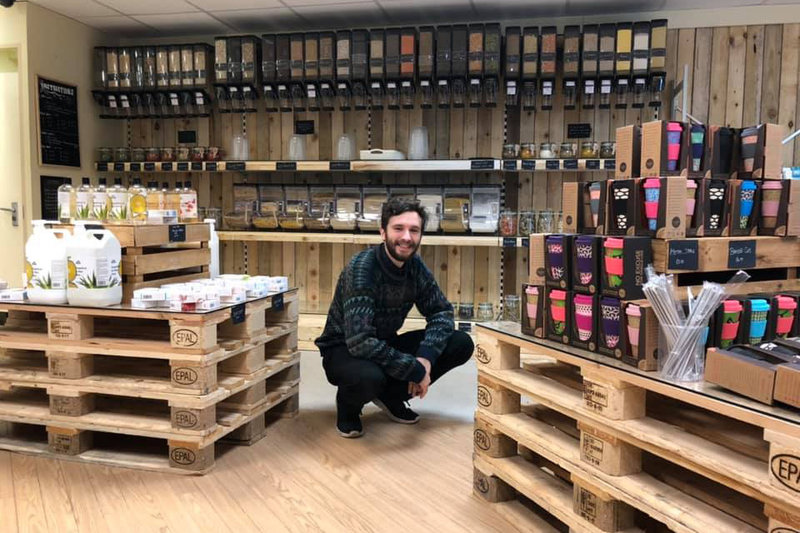
 Photo credit: Keele University

Where will your food co-op be based?
Where you choose to run your food co-op will affect its popularity and success. Most food co-ops use venues that are free (or very low cost), as otherwise they have to generate enough money to cover rent on an on-going basis.
Many small buying groups simply run in someone's house. However, if you plan to be open to the wider public and want to attract as many customers as possible you should try to find a location that is easy to get to and that local people already use or know about. It is also a good idea to run your food co-op when there are other activities running in the same venue on the same day, for example a toddler group or lunch club.
Many food co-ops often run in premises managed by other community-based organisations, such as community centres, schools, children's centres, or church halls. Often these organisations receive income from renting out their rooms, so it can be difficult to persuade them to let you use the space for free. You need to be ready to emphasise the benefits of your food co-op: perhaps it can help revitalise the community facilities by bringing in more people (who may use other services offered by the group)? Can your food co-op partner in helping the space meet their own targets by promoting healthy eating or engaging volunteers?
Some food co-ops also run a stall, and you may find it easier to attract customers if you are in a busy location with lots of passing trade (but remember to plan for challenging weather!). To trade outside you do need a street trading license, and you will most likely be limited to existing street markets (that will charge you a pitch fee). If you’re based at a university, they might let you set up a stall on campus grounds - check out these student enterprises who have set up successful food co-ops for inspiration!
As you’re planning your premises and scoping out the options, it’s worth thinking about the following:
- Will you have to pay rent? (if so, how much per hour/week? What's the notice period if you or they don't want to continue using the space?)
- Is the venue in a good location and likely to attract passing trade? How many people or groups already use the venue on the same day?
- How much space will be available to pack bags or boxes and/or display your produce?
- Will you have anywhere you can store equipment and food from one week to the next?
- Does the venue have easy access for receiving deliveries? (think about where suppliers with large lorries could park, and how far you may have to carry heavy boxes)
- Are there kitchen facilities for making tea and coffee? Toilets and handwashing facilities?
- Is there access to electricity to plug in scales, a till or a card machine?
- Who will handle recycling, composting or other waste disposal?
To find more useful food co-op related information visit our homepage


Food Co-ops toolkit: The Food Co-ops Toolkit will give you all the information you need to set up your own food co-op.
Sustain
The Green House
244-254 Cambridge Heath Road
London E2 9DA
020 3559 6777
sustain@sustainweb.org
Sustain advocates food and agriculture policies and practices that enhance the health and welfare of people and animals, improve the working and living environment, promote equity and enrich society and culture.
© Sustain 2026
Registered charity (no. 1018643)
Data privacy & cookies
Icons by Icons8
