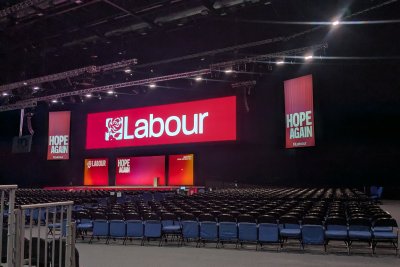


From healthier diets and farm incomes to a Right to Food, we spent the week at Labour Party Conference in Liverpool. Here’s what we heard, and what it means for the Government’s food agenda.
The Environment Secretary, Dame Angela Eagle, used her Labour conference speech to repeat the Prime Minister’s promise that the essentials of life must be controlled in the public interest. She was talking about water. Water is of course crucial, but in fringe rooms across the Liverpool conference venue, health leaders, growers, campaigners and MPs were also making the case for food.
Beyond individual choice
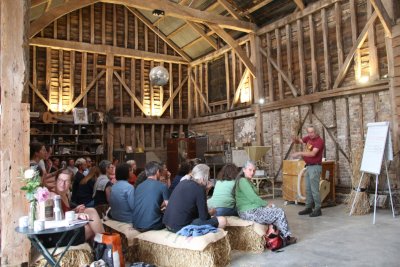
At a packed Recipe for Change panel, Jim Dickson MP told the room that 38% of 11-year-olds in Dartford leave primary school overweight or obese, calling it “a really vital equalities issue”. Penny, a lived experience speaker from Newcastle, explained why: “If you haven’t got the money, you’re buying what you can afford.”
Sustain’s Chief Executive, Kath Dalmeny, was clear that the answer lies beyond the checkout: “I never think that we can shop our way out of it by individual choice or education.” At a PLMR panel later in the week with Sarah Woolnough of The King’s Fund and Ravi Gurumurthy of Nesta, she explained why mandatory measures matter: “If it looks like a voluntary measure, it ain’t going to work.”
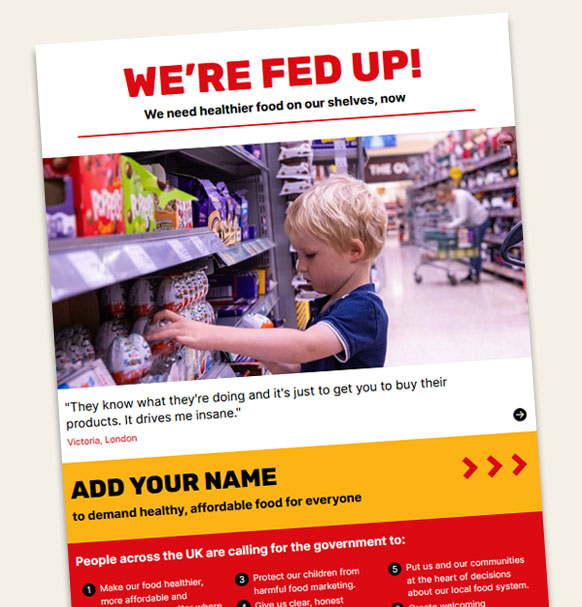
Just outside the conference, Sustain member, The Food Foundation, hosted a well-attended breakfast to raise the profile of the Good Food Bill campaign, which we joined alongside many Labour MPs. Its Food Ambassadors spoke to MPs directly about their own experiences of the food system and why primary legislation is needed to change it.
The message we heard throughout was that action on diet-related ill health must keep going, free from industry lobbying to deny, dilute and delay.
Rethinking cheap food
At a separate SME4Labour panel, Chris Hinchliff MP argued that cheap food has long been used “to make up for the failures in other parts of politics”. The result is a paradox: “Roughly a third of our farmers are not profitable anymore because food prices are so low, yet 6 million people live in food insecurity.”
His answer was to explore “contracts for food security”, with government committing to a set level of domestic production, a sign that some Labour MPs see food production as a question of national resilience. The panel also heard how planning delays of up to three years for on-farm reservoirs leave farms exposed to a changing climate, while Sustain member WWF-UK pressed panellists for their views on a Good Food Bill.
Lord Harris of Haringey’s appearance on a panel on national resilience took the argument further, noting that the UK’s food passes through around 130 distribution hubs, each a potential single point of failure. His call for a National Resilience and Defence Readiness Act put food firmly alongside energy and medicines as a strategic concern.
The view from the main stage
Angela Eagle’s speech, her first to Labour conference as a Cabinet minister, signalled DEFRA’s rising profile, though much of it focused on water and waste. On food, she announced £10 million for Good Food Neighbourhoods in 45 communities with the highest levels of food inequality. For farmers, she pointed to a £65 million drought package and planning changes for on-farm reservoirs, declaring that “food security is national security.”
Beyond that, there was little new for food. The Sustainable Farming Incentive went unmentioned, and many in the sector sense momentum behind the Government’s food strategy slowing. The energy on food systems change was coming from the conference fringe, and it had yet to reach the conference hall.
The movement presses on
Outside the formal programme, the Right to Food Commission launched its final report, A Roadmap to Delivering Food Security for All by 2035. It argues that food insecurity is a structural problem rather than a food bank problem, and sets out how to halve it by 2030 and end it by 2035.
Kerry Moscogiuri of Amnesty International UK put the case for accountability simply: “Who in government is responsible for whether people have enough left to buy food? Today the answer is no one.”
The Commission calls for the Right to Food to be enshrined in law, a step backed by 82% of the public, alongside a Cabinet Minister accountable for food and universal school meals. With Andy Burnham in Downing Street speaking the language of public control over essentials, campaigners and parts of the trade union movement sense an opening and are pressing ahead with confidence.
Looking ahead
At this Labour conference, the urgency on food and farming came from the fringes. MPs, health leaders, farmers and campaigners set out the scale of the challenge and the solutions already on the table. The party leadership, now in government, has not yet caught up to these necessary ambitions.
Voluntary measures and piecemeal announcements won’t meet challenges on this scale. A Good Food Bill, for instance, would give the whole food system the long-term legal framework it needs, with clear duties on government and accountability for delivery. That is the kind of bold action that many in Liverpool were calling for.
The Prime Minister has said repeatedly that the essentials of life belong in the public interest. Food must be one of them, and the Government urgently needs to catch up. In the months ahead, we’ll be working with MPs and our members to make sure it does.


Sustain: Sustain The alliance for better food and farming advocates food and agriculture policies and practices that enhance the health and welfare of people and animals, improve the working and living environment, enrich society and culture and promote equity.