

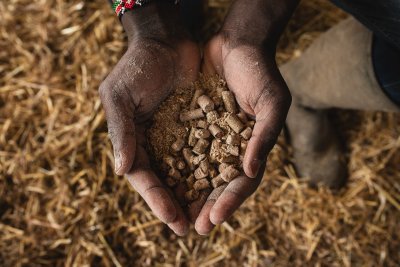
 Cupped Black hands holding animal feed. Credit: Tynefield Farm, Phoebe Davies for Culture Roots Collective

Progress, perception and representation in the food movement
Sustain's Diversity Outreach programme has a long-term vision of a more ethnically diverse sustainable food and farming sector where power, influence and visibility are more equitable.
Recent research findings from "Fair Shares? Misperceptions of race, religion and representation in the UK" by Mistaken Britain at the Policy Institute at King's College London demonstrates that there is a considerable gulf between perceptions of diversity in the workforce against reality.
The research shows that people in the UK estimate that 45% of the population belongs to an ethnic minority group, when the actual figure is 17%. It also highlights wider misconceptions about representation, racism and who holds influence and visibility in our society.
While these findings are not specifically about the food and farming sector, they raise important questions around the challenges that we face as we try to build a fairer food system and more inclusive workforce. A key challenge in justice, equity, diversity and inclusion (JEDI) work, is that misperceptions such as these lead to a belief that more progress has been made and can undermine efforts to maintain momentum in this work. If people believe that ethnic diversity in the UK is nearly three times higher than it actually is (as found in the research above), it is perhaps unsurprising that similar assumptions can emerge about representation within our sector.
The King's College research highlights how easily visibility can be mistaken for representation. The RACE Report found a similar disconnect in our sector with only 4.7% of the surveyed environment, climate and nature workforce are from ethnically diverse backgrounds.
This is against a surge in racial justice and anti-racism work where more organisations are having conversations about justice and equity and we have seen the dial shift. In places.
The evidence gathered through the RACE Report and discussed at the RACE Summit consistently points to ongoing barriers faced by people from racially minoritised communities across the sustainable food movement. From leadership and governance to funding, media visibility and career progression, many of the structural inequalities remain.
At the recent Agrifuture Forum, speakers from across media, sport, education, hospitality and agriculture shared their experiences of progress. It was clear throughout that event that perceptions can become a barrier. The King's College research demonstrates how common these perception gaps can be. At Agrifuture Forum, participants spoke about similar assumptions within professional settings - where the visibility of a small number of successful individuals can create an impression that broader barriers have been overcome.
The data, lived experience and honest reflection from these events and initiatives help demonstrate the need for change across the sector. That change requires sustained infrastructure. This could be in the form of spaces (online and in-person) for people to connect, learn, build trust and relationships and develop influence - something that is at the heart of the collaborative work between Sustain's Diversity Outreach programme and Eating Better's Nourishing Justice programme. And it goes without saying that the change requires investment in leadership, relationships, collective action and capacity.
The Mistaken Britain findings also shows that the public are twice as likely to oppose (53%) rather than support (24%) restrictions on DEI programmes. At a time when some organisations or funders may be questioning whether to continue investing in diversity and inclusion work, this suggests that public opinion may be more supportive of action than many assume.
We're at a pivitol time for this work in the UK sustainable food and farming movement. We need to demonstrate the value in nurturing a more diverse workforce, where power is more equitable and collective care is enabled to move beyond increasing diversity to strengthening the food system by centring the voices of those more negatively impacted by it.
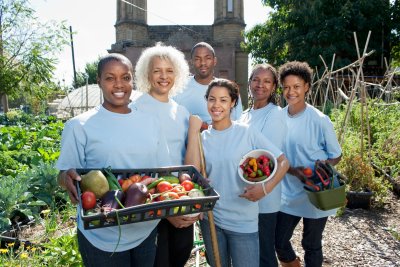
The growth of Culture Roots Collective presents an ideal anecdote to closing the gap between perceptions and reality. By connecting people across the food system, supporting leadership, creating opportunities for shared learning and amplifying diverse voices, the Collective helps to create the conditions for lasting change.
As 2027 approaches, we look at the successes so far within our Diversity Outreach work and collaborative efforts across the movement and are committed to creating even more opportunities and spaces to meaningfully embed this work across our alliance and beyond.

Sustain: Sustain The alliance for better food and farming advocates food and agriculture policies and practices that enhance the health and welfare of people and animals, improve the working and living environment, enrich society and culture and promote equity.





Sustain
The Green House
244-254 Cambridge Heath Road
London E2 9DA
020 3559 6777
sustain@sustainweb.org
Our mission is to catalyse systemic change in the UK’s food and farming system – securing a healthy, fair, and sustainable future for all people, nature and a stable climate.
© Sustain 2026
Registered charity (no. 1018643)
Data privacy & cookies
Icons by Icons8
