
The UK's national security and public health is at risk. Our food supply is facing unprecedented challenges whilst not enough is being done to halt rising obesity levels and preventable disease, particularly among children.
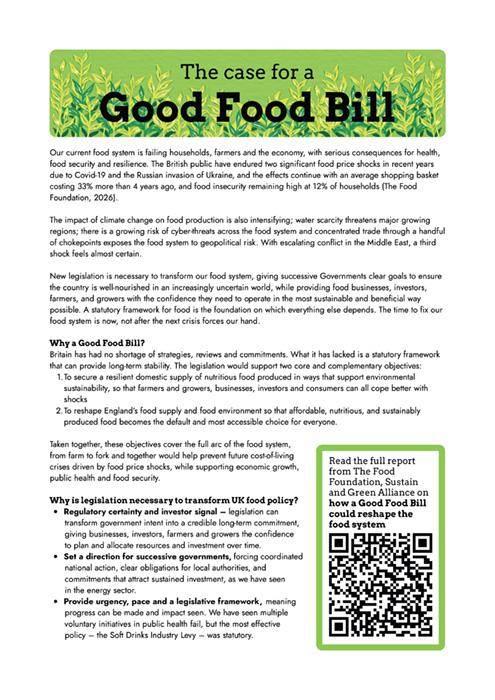
The Good Food Bill campaign - supported by over 100 food, farming, health and business organisations, and led by the Food Foundation, Green Alliance and Sustain - is calling on the Government to introduce legislation to transform the UK’s food system and protect British households, farmers and the economy from the next food crisis.

What should be in a Good Food Bill?
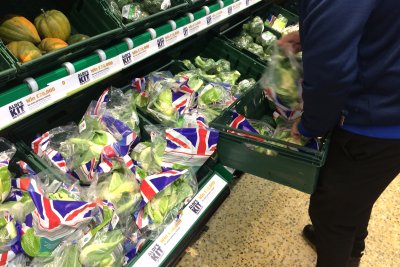
 Statutory targets to reduce childhood obesity, increase production and consumption of home-grown fruit and vegetables, and reduce food insecurity.
 A Reference Diet defining what affordable, nutritious and sustainable eating looks like to guide policy across government.
 Good Food Action Plans published every five years setting out how government will meet the targets.
 Ministerial duties to consider the targets and reference diet when making decisions that affect food, including health, agriculture, planning and trade.
 Food incorporated into local plans so local authorities support national goals and strengthen local food systems.
 Independent oversight to ensure delivery and accountability.
How can a Good Food Bill support your campaign?
The Good Food Bill creates a strong legislative framework from which to drive food system change. Below are some of the campaign areas across the Sustain alliance, along with an explanation of how a Good Food Bill can support them.
School Food
- Statutory targets on childhood obesity and fruit and veg intake create direct pressure to improve what children eat during the school day.
- Local authority food plans would likely cover how school meals support the Reference Diet and British producers.
- Cross-government ministerial duties would require DfE to consider healthy food in its decisions.
- The Bill doesn't mandate specific school food standards itself, but creates the framework that makes strengthening those standards a logical next step.
Agroecological Farming
- The Bill doesn't prescribe particular farming methods, but could create conditions supportive of agroecological approaches.
- Statutory targets to increase UK fruit and veg production would require Government to think seriously about what makes farming viable.
- The Reference Diet emphasising fruit, vegetables and sustainable production could align strongly with agroecology.
- 5-Year Good Food Action Plans and local food plans are an opportunity to support agroecology
Food Poverty and Access
- A possible statutory target specifically on household food insecurity would mandate the government to make progress here.
- Local authority food plans would need to address how food insecurity is reduced through community food assets and local support
- The Reference Diet would need to be achievable and affordable — so access and cost have to be part of the policy conversation from the start
Local Food Systems and Procurement
- Statutory target on increasing the proportion of fruit and veg from British producers points directly toward stronger public sector procurement of British food
- Local authorities would be required to produce food plans covering procurement - how councils spend their food budgets to support local growers and the Reference Diet
Farming and Farm Viability
- Statutory target to increase UK fruit and veg production gives government a legal obligation to create conditions where that production is viable
- 5-Year Good Food Action Plans must outline how farmers will be supported to meet national goals
- Long-term statutory certainty - knowing where policy is heading - is exactly what farmers and growers have said they need to make long-term decisions
Ultra-Processed Food (UPF)
- Indirectly addressed through obesity and nutrition statutory targets
- The Reference Diet should promote whole, minimally processed foods
Animal Welfare
- The Reference Diet - which government would be required to publish and use to guide policy - can be designed to reflect high welfare standards
- Local authority food action plans could include a focus on animal welfare.
Latest