

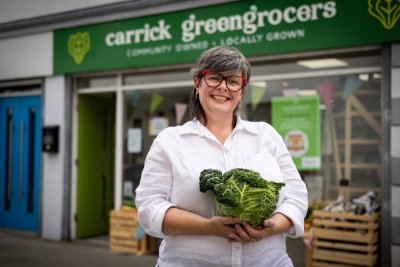
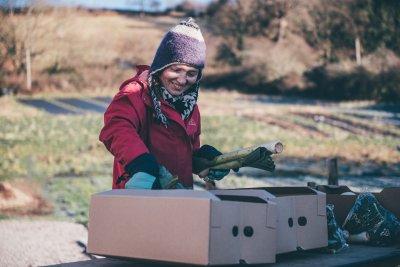
 Lee Robb. Copyright: Eleanor Church | Sustain
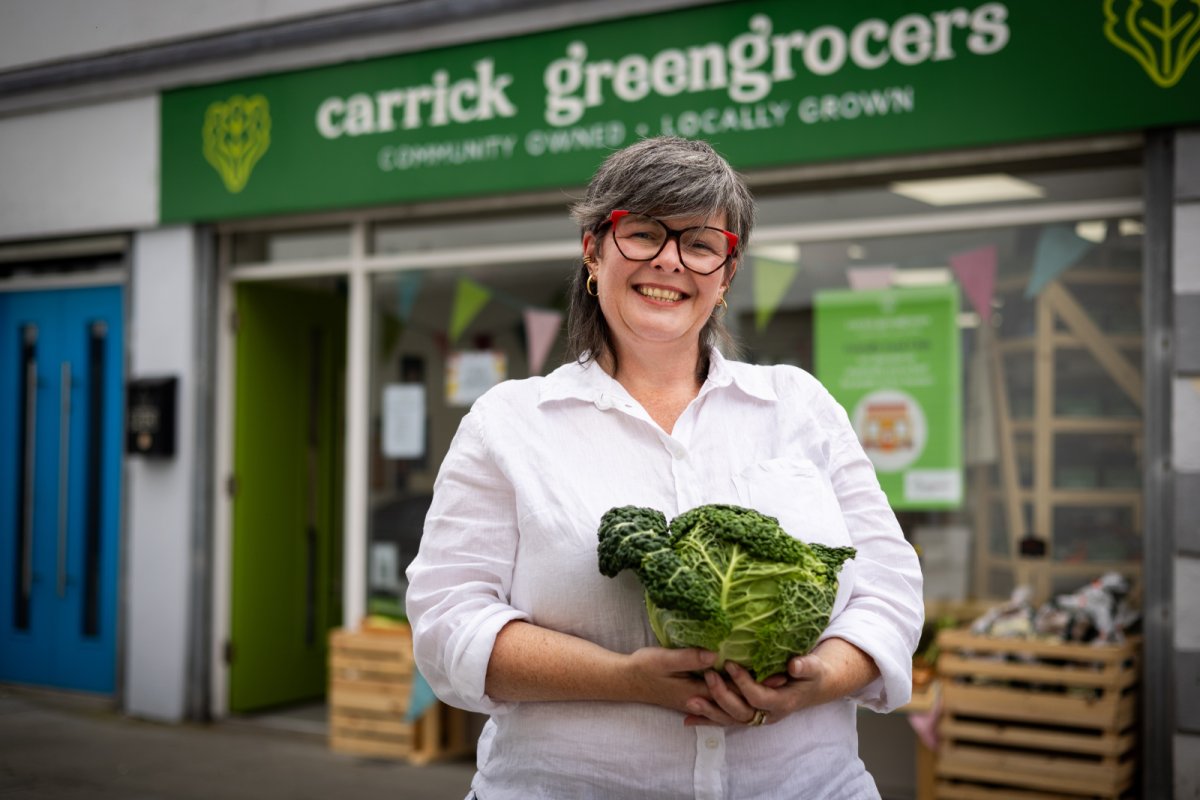

'Not weirdos': an alternative food system is more popular than we think
The local community wants it, we know how to do it, so what’s holding us back from making this the norm, asks Lee Robb from Carrick Greengrocers. In this guest blog following a Bridging the Gap wrap-up event in Stormont, Lee reflects on challenges ahead for food system change.
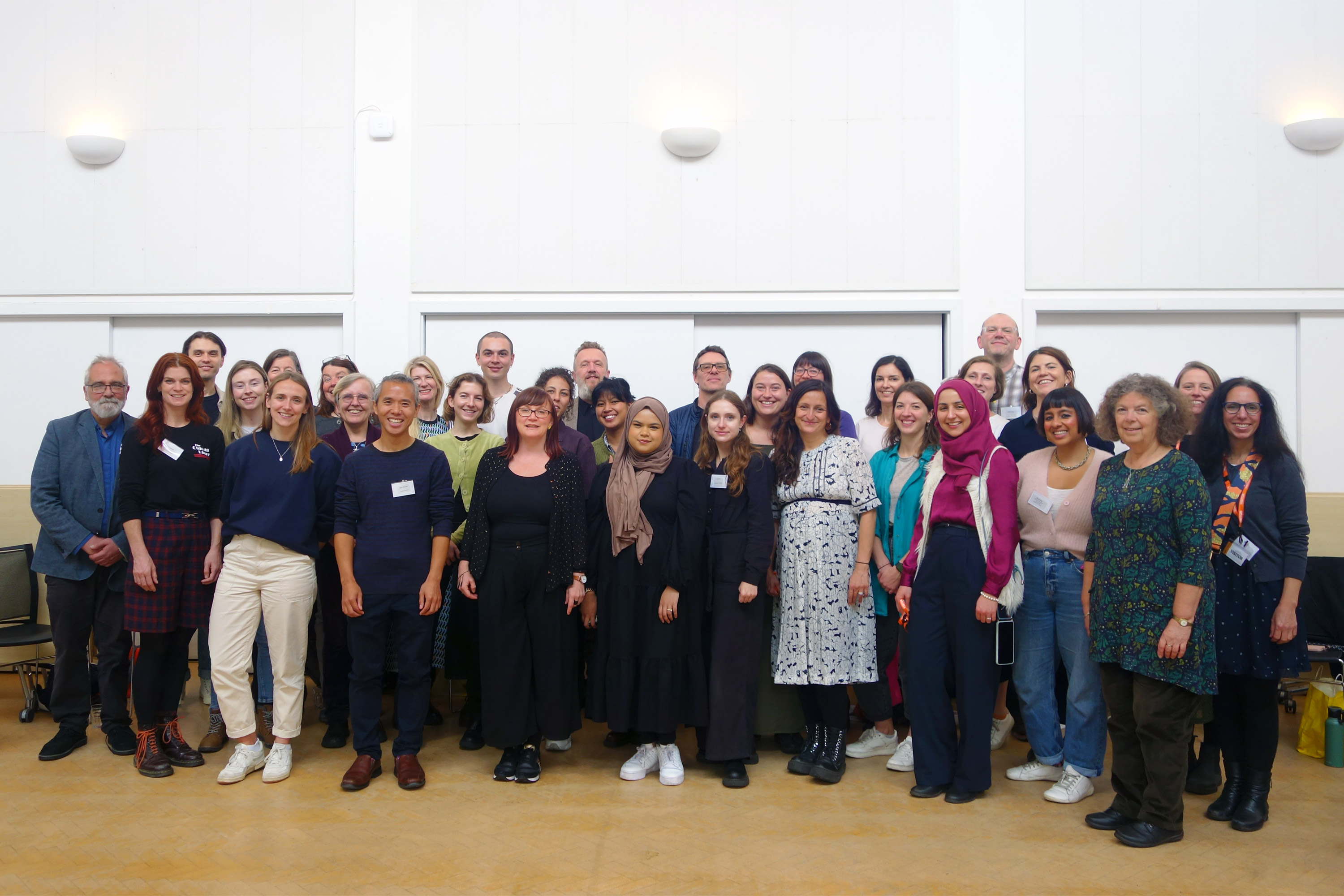
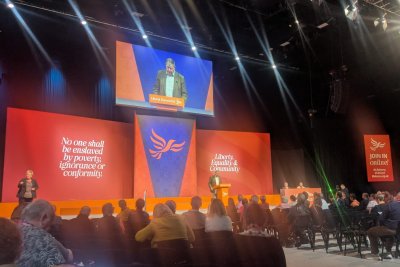
On Tuesday 10 March, following the closing of our Bridging the Gap pilot, we held an event in our Parliament Buildings, Stormont, which is the seat of the Northern Ireland Assembly. A rather grand closing to our project but very necessary as we try to build and mobilise a movement for change in our food system and reiterate the failings of our current system to those with power and influence.
Building up support for food system change in Northern Ireland
We had originally come up with the idea for an event at the Bridging the Gap gathering in March 2025 in conversation with Kerry Melville, who was leading Nourish NI at that point. Unfortunately Nourish NI has since come to an end, which is pretty disastrous for our local food policy making in NI and connections across the UK. It means that our emerging regenerative/agroecological food system has lost a key resource and advocate and the fragmentation that makes all our work harder is further baked in. We’re grateful for Nourish’s work and are determined to do our bit ‘defragmenting’ and advocating for change. So that’s why we ended up in Stormont in March with the brilliant support (and some funding) of Hannah from Bridging the Gap and Sustainable Food Places, who also offered to help us cover the costs of the event.
Our event posed the questions:
- Can we make climate friendly and organic food accessible for everyone?
- What impact can local food partnership have on health, the economy and our communities?
We kicked off the day with a quick introduction by Stewart Dickson, MLA and one of the sponsors of our event. More importantly, Stewart is a member of Carrick Greengrocers, which is a coop owned by our 434 members.
Beth and I (both co-founders of Carrick Greengrocers) then took everyone from the inception as part of a Positive Carrickfergus project, where we asked people their wildest dream for Carrickfergus, to the present day. We emphasised our impact on the local economy and our foundation as a community-led initiative that is surviving in extremely challenging and precarious conditions.
Joy Alexander, Head of Future Food Strategy in the NI Department for Agriculture, Environment and Rural Affairs (DAERA) introduced the NI Food Strategy Framework, which was launched from our shop in November 2024 by DAERA Minister Andrew Muir. The framework sets out a long-term, whole of government approach to creating a sustainable, secure and healthy food system.
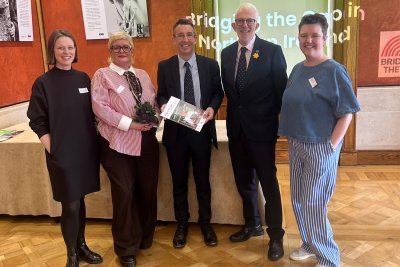
Hannah then introduced the Bridging the Gap programme with a strong focus on the findings of the programme and the opportunities for government intervention with particularly strong returns on investment in terms of health, wellbeing and community building.
This led to an introduction to our BTG pilot, the Friendly Food Club, which offered members a 50% discount on our climate and nature friendly produce primarily growing in Carrickfergus by Chris Dobbs. We believe that for a relatively small investment - £500 per year in our case – it’s possible to start to open up access while also supporting small-scale producers who are vital to a resilient local food system that is good for people and the planet. Of course we needed additional resource to design and establish our Friendly Food Club, and are proud that, now our grant has finished, we are able to continue the Club with donations from our community.
Building up the alternatives to ‘business as usual’
After lunch we heard from Andrea Gibbons from the Network and Governance Officer, Sustainable Food Places who shared great work in Wales which could offer ways forward for us in NI. Andrea was in conversation with Sophie Healy Thow, Food Systems Coordinator, Belfast City Council and Belfast Food Partnership (BFP)who is working closely with Beth on the implementation of BFP’s strategy.
As a final course our good friend, Tiziana O’Hara from Cooperative Alternatives took the lead. Tiziana helped us to develop our shop as well as supporting NI’s first community farm, Jubilee Farm, and going on to develop the practice of community farming in NI. She chaired a conversation that was framed around moving away from ‘growing the market’ - which feels like a default position that needs to be challenged as we risk replicating many of the prevailing systemic issues - to ‘building the infrastructure’. Tiziana talked to Chris Dobbs and Barry Ferguson, both small-scale market gardeners, and Louise Ferguson who leads pioneering work at Larder>East, challenging the food bank model and building a sustainable, dignifying alternative to traditional food aid by providing affordable, high quality groceries to local residents through a membership model.
Themes that emerged throughout the day:
- We know what to do. Many of us (in the room!) are doing it. But the focus continues to be on data and building the evidence. Data and evidence have their place, but where we have them, action must follow. And must be resourced to follow!
- Relatively small amounts or proportions of funding would make a transformational difference especially relating to horticulture, which has so little investment or attention.
- This work is relational and genuine collaboration can only succeed when we trust each other. This is not fast, nor easy. But it is necessary.
We’re not weirdos, but we need support
Although we were pleased to be able to convene key people who are already leading the way in our emerging food system, I did have an emotional moment during our afternoon questions and reflections where it felt completely wrong that we were even having these conversations! ‘How are we the weirdos?’, I thought to myself. How is it that we are on the fringes talking about the struggle of bringing about a life-giving food system that sustains and nourishes us and the planet? It is wrong.
We have ended up in such a mess, and we cannot leave it to the ‘market’ to undo this mess. We must push for change from our positions of real-life practice, and work with those developing policy and with the ear of decision-makers to create the infrastructure that would allow those of us on the margins to thrive and demonstrate what’s possible. We need more and more local real-life examples to inspire and more and more people to dig in and expect more and better food, health and an economy that works for everyone. If you’re a weirdo, come and join us.

Bridging the Gap: Demonstrating ways to make organic food more accessible via farmer-focused supply chains.


Sustain
The Green House
244-254 Cambridge Heath Road
London E2 9DA
020 3559 6777
sustain@sustainweb.org
Sustain advocates food and agriculture policies and practices that enhance the health and welfare of people and animals, improve the working and living environment, promote equity and enrich society and culture.
© Sustain 2026
Registered charity (no. 1018643)
Data privacy & cookies
Icons by Icons8
