

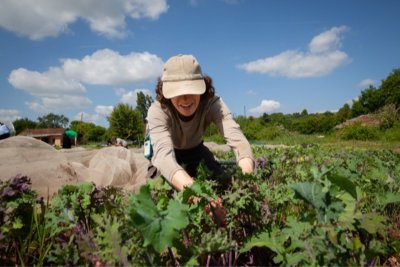
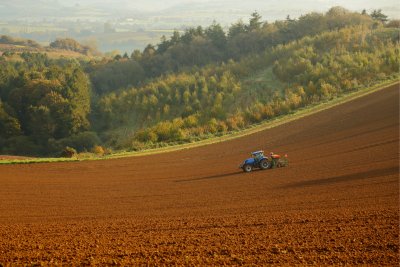
 A grower tending to their crops. Credit: Mark Simmons
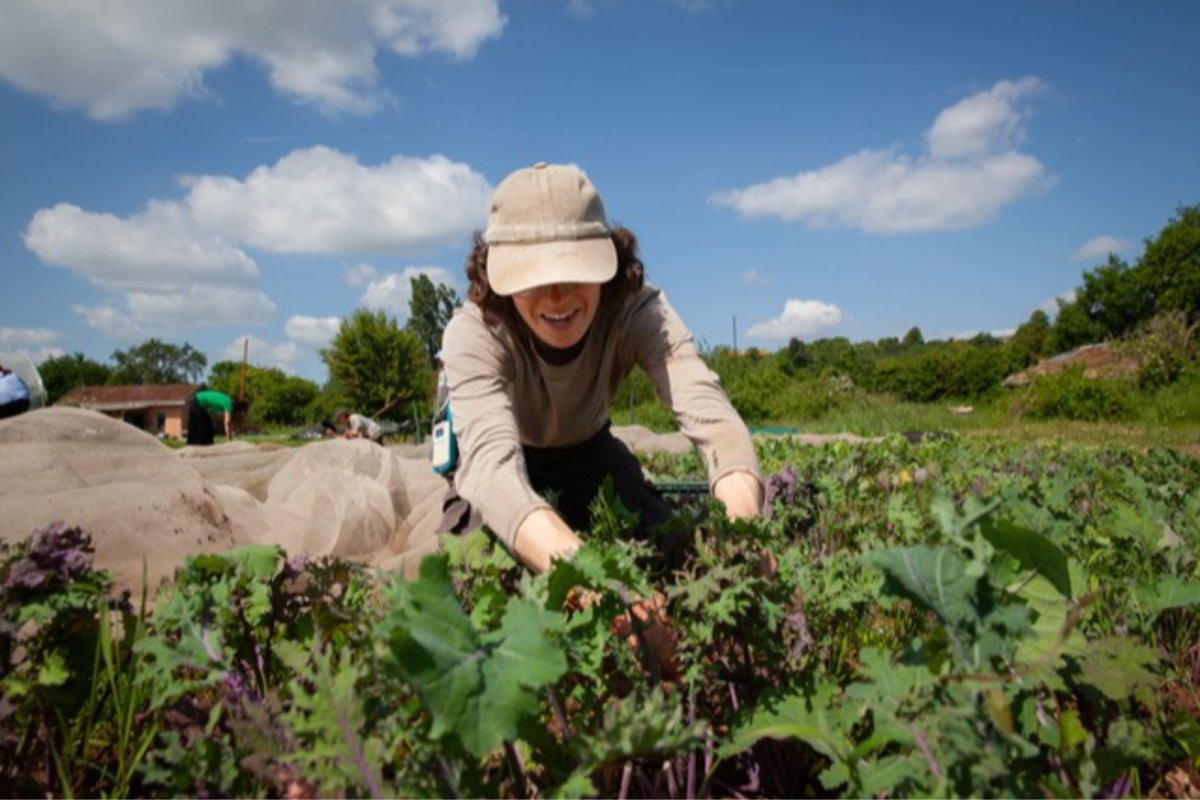

Where is the investment for farming and food? Sustain responds to Carbon Budget 7
Food and farming are set to become the UK's largest source of emissions - yet the latest Carbon Budget offers no credible plan to transform food and farming when we need it most.
Food prices have hit record highs. Extreme weather is already disrupting harvests in the UK and abroad. Yet the Seventh Carbon Budget Impact Assessment – released by the UK Government yesterday - contains no meaningful support for a green transition for the food system.
Food and farming already account for around a third of the UK’s emissions. As other sectors decarbonise, food production is on track to become the UK’s largest source of emissions by 2050.
The Government has announced ambitious clean energy plans which are expected to create around 400,000 jobs. Renewables and sustainable transport is backed by tens of billions of pounds of public and private investment to create good jobs and a green transition, but the budget offers no job creation plans or transition support for moving away from fossil fuel dependant farming.
Such an omission is indefensible at a time when security chiefs are warning that the UK cannot feed itself sustainably based on the current model of what we grow and eat. British farmers are seeing the consequences of climate change in real time, including reduced yields, unpredictable weather, and rising costs as the climate crisis intensifies. For consumers, climate change is hitting the cost of their weekly shop, with unprecedented food price inflation being a key driver of the cost of living crisis.
Without a joined‑up plan to support the sector to grow more low-emissions foods like fruit, vegetables, pulses and legumes, and improve the incomes of farmers, the UK cannot achieve its climate targets or ensure farming has a sustainable future.
Ruth Westcott, Climate and Nature Emergency Campaign Manager at Sustain, said:
“Farmers are on the frontline of the climate emergency, yet they are being left behind.
Food is set to become our biggest source of emissions, but the government has no plan to support farmers to grow more of the healthy, sustainable food we need, like British vegetables, pulses and legumes.
At a time when extreme weather is already hitting yields and threatening food security, it is incomprehensible that diets are not mentioned at all in the Carbon Budget. This collective failure from our leaders risks further locking us into a fossil-fuel dependant food system which is bad for farmers, and is destroying the environmental resources that create the food we eat. We are rapidly losing family farms, who have the knowledge and the solutions to be climate leaders. We are also missing out one of the biggest rural growth opportunities of the next decade.”
Sustain’s recommendations
To meet our climate targets, the Government must support farmers to deliver the recommendations of the Climate Change Committee (CCC). The committee says that a 40% reduction in livestock numbers is required. In today’s plan, the Government refers only to measures based on ‘integrating more trees into farmland, including hedgerows and agroforestry systems. …technical abatement measures [and] supporting farmers and landowners to deliver emissions reductions through the Environmental Land Management schemes and Farming Innovation Programme’. The CCC have been clear. Nature recovery and technical measures aren’t enough. We need to produce and eat less meat and farmers need to make a decent living from producing healthy food, including transitioning away from industrial livestock.
The government must now look to the delivery plan, which will set out in more detail the actual policies intended to deliver the seventh carbon budget. To strengthen food security and support rural communities, this must:
1. Create incentives for a farming transition
- Halt any further growth of industrial livestock
- Create a Healthy Protein Investment Strategy to boost UK production of pulses, legumes, fruit and vegetables.
- Support local supply chains, skills and rural food businesses to drive green jobs and growth.
- Reform public procurement so schools, hospitals and the armed forces buy sustainable British food.
2. De-risk the transition for farmers
- Ensure the Government’s Environmental Land Management schemes (ELMs) drive a transition to agroecological farming and producing food with lower emissions, including actively supporting diversification into horticulture and plant based protein.
- Provide fair, long-term payment rates and access for all farm types, enabling widespread uptake of the schemes.
3. Align diets with climate goals
- Set targets for businesses to serve healthier, lower‑carbon food and less and better meat, and require them to report on progress
- Back the National Food Strategy with legislation and ensure coherance across governemtn departments
4. Back British farmers as climate leaders
- Provide long‑term, fair funding to help farmers invest in low fossil fuel sustainable food production.
- Ensure imported food meets UK climate and environmental standards through securing core environmental standards in trade.
- Improve regulations so farmers secure a fair return from the supply chain, enabling them to invest in sustainable farming practices.

Food for the Planet: Helping local authorities to tackle the climate and nature emergency through food.




Sustain
The Green House
244-254 Cambridge Heath Road
London E2 9DA
020 3559 6777
sustain@sustainweb.org
Sustain advocates food and agriculture policies and practices that enhance the health and welfare of people and animals, improve the working and living environment, promote equity and enrich society and culture.
© Sustain 2026
Registered charity (no. 1018643)
Data privacy & cookies
Icons by Icons8
