

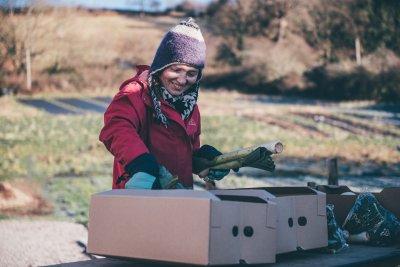
 Jade from Black Growth CIC harvesting courgettes. Credit: Black Growth CIC


London's driest July in 190 years: how urban growers are coping in extreme heat
From coping with crop losses, protecting soil health, and conserving water, we spoke to growers across our capital on finding new ways to build resilience in the face of London's drought.
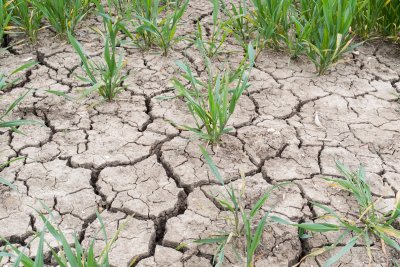
With temperatures regularly reaching the mid-30s and little meaningful rainfall, growers across London are contending with some of the toughest conditions in recent memory. From malfunctioning public transport delaying farmers getting to work, to crops like garlic and carrots literally cooking in the soil, the weather is taking a serious toll.
We spoke to some of London’s growers to hear how they are dealing with the heat and what changes they are making to protect their plots.
Tales from Black Growth’s Roots Allotment
Black Growth’s Market Garden in Croydon is a space dedicated to climate and socio-economic justice, and is the first Black British women-led market garden in South London.
Obie Pearl, co-director at Black Growth CIC, told Capital Growth that the site is struggling in the heat, having already lost an entire okra crop. The challenge is not only the lack of rain but also its knock on effects. Soil health has deteriorated during the drought, and the team has struggled to source enough peat-free compost to replenish their growing beds- in lieu of naturally occurring biodynamic soil that is nourished by the rain.
Michaela Wilson, Head Grower at Black Growth CIC, also explained via Instagram:
"We've lost so much ancestral growing knowledge and our connection to the land. Generations of wisdom that once helped communities understand the seasons and adapt to changing conditions have been disrupted, leaving many of us to learn in real time. We are trying to adapt, but the truth is that the land is changing faster than many of us can keep up with."
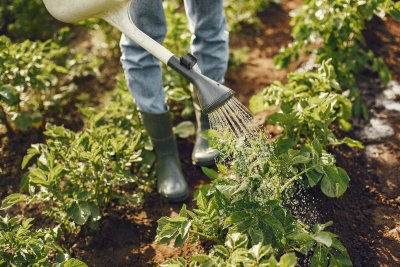
To improve their clay soil, they plan to sow cover crops over winter to build soil structure and help protect against future extreme weather. They also recommend soaker-hose irrigation systems, which are particularly useful when growers cannot always be on site. However, low water pressure has sometimes prevented the system from working, forcing them to hand-water crops during the hottest periods.
Wolves Lane’s hydrozoning approach
Meanwhile, other growers are adapting their water use to the needs of individual crops.
Pam Shor, Head Grower at Black Rootz in Wolves Lane, the horticulture centre and community food growing hub in Wood Green, also recognises the importance of indigenous farming traditions and techniques, such as companion planting like the Three Sister’s Approach. She also says one of the most effective ways to save water is also to understand each plant's needs. At Black Rootz, this principle is guiding the team as they keep crops alive in the polytunnels and growing beds while using as little water as possible.
Not all plants need the same amount of water. By understanding each crop's natural requirements and using a method called hydrozoning, grouping plants with similar water needs together, growers can reduce water use, encourage healthier root systems ,and create gardens that are more resilient to drought.
Pam recommends grouping crops as follows:
High water demand: These crops need consistent moisture, particularly when flowering and fruiting.
- Cucumbers
- Courgettes
- Pumpkins and squash
- Sweetcorn
- Celery
- Lettuce
- Spinach
- Strawberries
- Raspberries
- Blueberries
- Newly planted fruit trees
Moderate water demand: These benefit from watering during prolonged dry spells but are generally more resilient.
- Tomatoes
- Peppers
- Aubergines
- Beans
- Beetroot
- Chard
- Potatoes
Low water demand: Once established, these require little additional watering.
- Mediterranean herbs such as rosemary, thyme, sage and oregano
- Established apple, pear and plum trees generally only need watering during prolonged drought.
- Garlic
- Onions
- Shallots
- Asparagus
Pam stresses that, when water is limited, it should be prioritised for seedlings, newly planted crops and fruiting vegetables. Established perennials, herbs and mature trees are often far more drought-tolerant than we think.
Even if you cannot fully implement hydrozoning, simply understanding your plants' water requirements can help reduce waste and ensure each crop gets only what it needs.
Working with nature, the Permaculture way
Another way to adapt is by working with nature rather than against it. Permaculture principles encourage designing gardens that mimic natural ecosystems, creating resilient spaces that support people, soil, and wildlife.
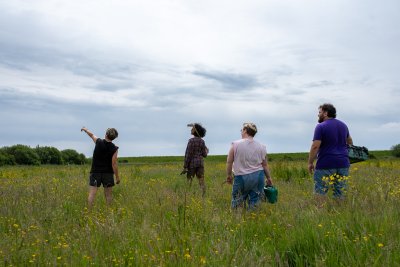
The Permaculture Association suggests that, rather than immediately asking, "How can I fix this?", we should begin with observation.
Next time you're outside, take a few moments to notice:
- Where does water linger after rain?
- Which plants are thriving despite the heat?
- Which parts of your garden stay cool?
- What patterns are emerging that you hadn't noticed before?
- What has this summer taught you?
Understanding the unique conditions of your growing site can help you decide where and when to plant, when to water, and sometimes when to let nature take its course.
As drought, wildfires and extreme heat become more common, growers are being forced to adapt quickly. The experiences of London's community gardens and market growers show that there is no single solution. Instead, resilience will come from combining practical water-saving techniques, improving soil health, sharing knowledge and working more closely with nature- and most importantly supporting eachother.
If you want to read more short term and long term tips to protect your community garden during drought read here. If you have any tips of your own please do write in so we can share with our members, email lula.wattam@sustainweb.org

Capital Growth: Connecting a network of London growers.


Sustain
The Green House
244-254 Cambridge Heath Road
London E2 9DA
020 3559 6777
sustain@sustainweb.org
Sustain advocates food and agriculture policies and practices that enhance the health and welfare of people and animals, improve the working and living environment, promote equity and enrich society and culture.
© Sustain 2026
Registered charity (no. 1018643)
Data privacy & cookies
Icons by Icons8
