

 Pulses. Credit: Pexels
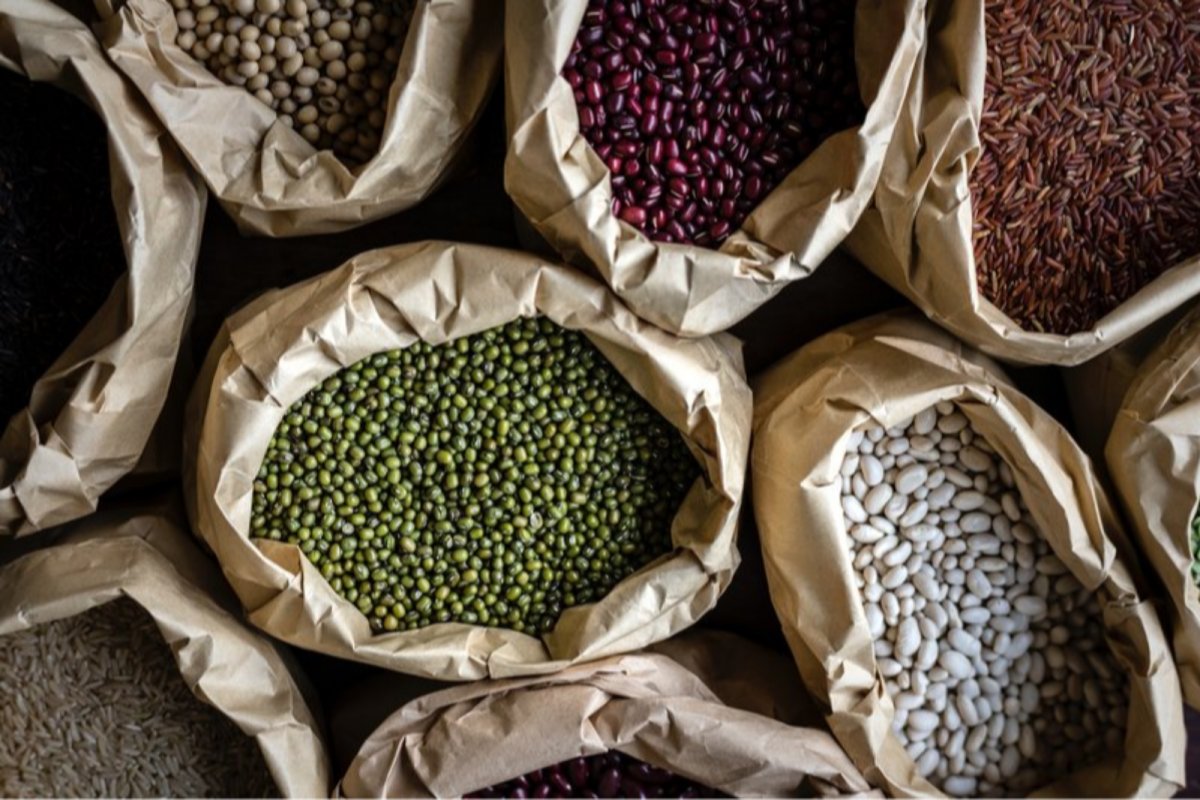

Feeling the pulse of the nation: new report makes the case for a UK protein strategy
A new FoodSHINES report by researcher Josephine Heger explores how a national protein strategy could help the UK grow and eat more pulses, drawing lessons from European countries.
Beans, peas and lentils can support healthier diets while helping farmers build soil fertility, reduce reliance on synthetic nitrogen fertiliser and diversify rotations. Yet UK-grown pulses still struggle to reach people’s plates. As Bridging the Gap pilot, Give Peas a Chance discovered, production, processing, routes to market and consumer demand are not joined up.
The report, “Could a national protein strategy promote pulses for human consumption in the UK’s food system? Lessons from EU countries”, published by Anglia Ruskin University through the FoodSHINES programme, shows why coordinated policy matters. Kiloran O’Leary, from Sustain’s Bridging the Gap team, worked closely with Josephine as she investigated what the UK can learn from approaches elsewhere in Europe, including Denmark, Flanders and Sweden.
The report analyses how a national strategy could bring together support for growers, such as investment in infrastructure, and market development, such as through public sector food procurement contracts, to turn British pulses into an everyday staple on the nation’s plates.
The findings reinforce lessons from Sustain’s Bridging the Gap programme: resilient supply chains need action across the supply chain. Government must help fix the supply, invest in the ‘missing middle’ of aggregation and processing, and use public procurement to create reliable demand for locally and sustainably produced food.
Hannah Gibbs, Programme Manager, Fair Supply Chains at Sustain said
“This report underlines that growing more pulses is only part of the answer. We also need fair, transparent supply chains, investment in the processing and distribution infrastructure that connects farmers to markets, and strong demand signals. That is central to Sustain’s strategy: government should back farmer-focused local supply chains and use the power of public procurement to get more healthy, climate- and nature-friendly British food onto people’s plates.”
The Food Foundation’s “Bang in Some Beans” campaign alongside the new School Food Standards promotion of pulses on school menus, are making strides towards boosting demand. Much of the UK’s currently production is for animal feed, as the nation moves to less and better meat, so should the production of legumes transition though a managed shift towards greater emphasis on food markets.
The UK government has an opportunity to support this transition, by enabling knowledge exchange and farmer collaborations, setting targets for cultivation and consumption which are incentivised for farmers, alongside demand side interventions that are already underway.
Read the full FoodSHINES report

Bridging the Gap: Demonstrating ways to make organic food more accessible via farmer-focused supply chains.


Sustain
The Green House
244-254 Cambridge Heath Road
London E2 9DA
020 3559 6777
sustain@sustainweb.org
Our mission is to catalyse systemic change in the UK’s food and farming system – securing a healthy, fair, and sustainable future for all people, nature and a stable climate.
© Sustain 2026
Registered charity (no. 1018643)
Data privacy & cookies
Icons by Icons8
