

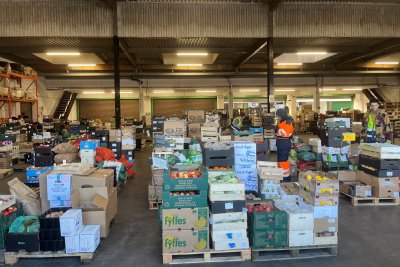
 Organic North warehouse. Copyright: Sustain
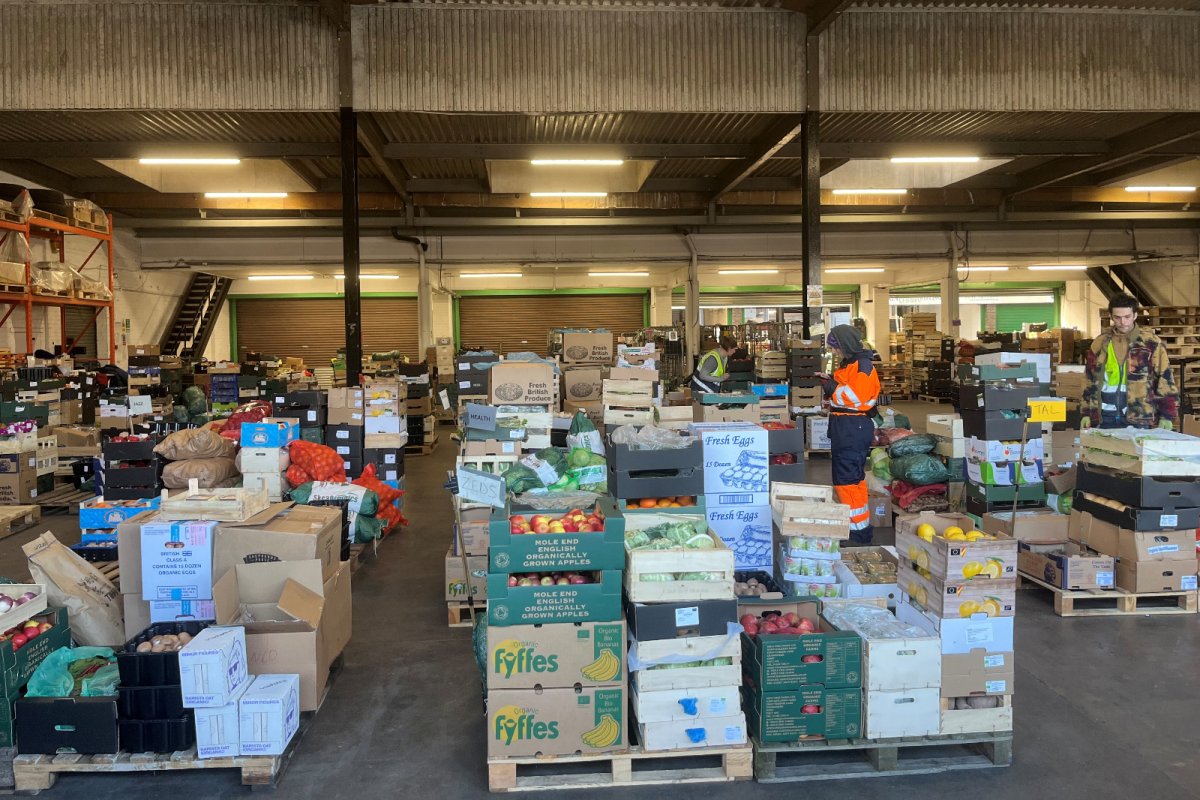

Fertiliser-free organic market shows resilience amid global energy and fuel crisis
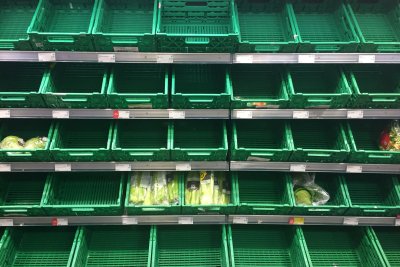
The organic farming sector remains resilient despite the US and Israel's conflict with Iran, which has disrupted oil, gas, and fertiliser supplies. However rising fuel and packaging costs are still expected to increase consumer prices.
In the face of oil, gas and fertiliser disruption linked to the US and Israel war on Iran and instability around the Strait of Hormuz, UK organic growers and wholesalers say their supply chains are holding up better than much of the conventional sector. Organic standards prohibit synthetic nitrogen fertilisers - one of the inputs most exposed to global energy shocks - helping to cushion the immediate impact. But suppliers warn that knock-on pressures, including higher fuel, packaging and transport costs, are likely to feed through to prices if disruption persists.
Food security concerns have flared again as the conflict hits energy markets and risks disrupting trade routes. While the impact is not expected to mirror the immediate shock seen after Russia’s invasion of Ukraine - a major global supplier for industrial agirculture - suppliers say volatility in oil and gas can quickly translate into tighter availability and higher costs for fertiliser and logistics. However many in the organic sector warn that if disruption around the Strait of Hormuz continues, the effects could be felt later in the year as supply contracts renew and stocks run down.
According to Sean Ruffell of Organic North and Alex Pearce of Langridge Organics, who run medium-sized organic wholesale businesses and were both involved in Sustain's Bridging the Gap programme, supply for the coming season is currently secure. However they are already seeing increases in costs for plastic packaging, cardboard, fuel and manure. They expect those rises to affect farm-gate and distribution prices within weeks or months.
Alex Pearce of Langridge Organics said:
"Products like cardboard are going up and the HVO we use instead of diesel has gone up just shy of 50%. We had two new electric vans delivered today, and things like that will certainly help, but only provide part of the answer. This will undoubtedly filter through into farm-gate prices as it is difficult to see how it can’t. How long the war goes on for will be the defining factor."
For Sean Ruffell at Organic North, early signs of strain are emerging in packaging: one cabbage grower in Lincolnshire recently warned it was struggling to source nets for packing produce. He also said some growers are considering packing larger volumes to reduce packaging use, but warned that changing case sizes can create challenges for independent retailers who rely on predictable or smaller formats.
Ruffell said manure, which is usually free for a lot of growers as an alternative to synsthetic fertilisers, has started to spiral in price as conventional farmers compete to secure an affordable alternative.
And transport remains a key risk. Ruffell said fuel-price volatility can quickly filter through the European supply base, and cited recent disruption in Ireland, where diesel prices have driven logistical “gridlock” for some operators. Organic North has not yet raised prices to reflect transport costs, he said, but may have to if the conflict drags on. He added that the business operates with a relatively tight margin compared with some larger wholesalers.
Shorter supply chains and building up the UK production and supply of organic fruit and veg will be key to shoring up resilience as global uncertainty continues. It helps that appetite for organic produce has shot up, with sales growing 4.2% to £3.9bn, around double the value recorded a decade ago, according to the latest Soil Association Organic Market Report. However, domestic organic production and land conversion have not kept pace with demand. The UK remains reliant on imports of some fruit and vegetables, including from regions already facing climate stress, such as parts of Spain and Morocco.
Ruffell said Organic North’s shorter, Europe-focused supply chains have helped it avoid some of the disruption facing longer-distance import routes. Organic North does not air-freight produce, and he said organic certification is more consistently recognised across European markets than further afield, which can simplify procurement when supplies tighten. He added that long-term relationships with growers also matter in periods of volatility. “When we buy from Europe, we try to remain loyal to certain growers. This builds greater loyalty,” he said. Scaling up supply in the UK is also essential to the business' long-term resilience.
Sean Ruffel of Organic North said:
"We used to rely a lot more on imported produce but as we scale, we've access to more UK growers and there are more growers getting in touch to work with us. We've currently 27 domestic growers on our list this week and that means we're not importing as much as we used to during this period. "
Both wholesalers said the sector’s immediate resilience should not be mistaken for immunity. While organic growers are less exposed to synthetic fertiliser shortages, they remain dependent on energy-intensive infrastructure, from refrigerated transport to packaging manufacture. The next few months will hinge on how long disruption persists in energy markets and whether cost increases can be absorbed without curbing demand.
According to Sustain, it has become ever more urgent to change the way we grow and produce food.
Hannah Gibbs of Sustain's Bridging the Gap said:
"As we look to shore up greater resilience for the UK in the face of increasingly extreme weather and global supply chain shocks as we are now seeing with Iran, we need to see more support for increasing climate and nature-friendly farming in the UK. We have seen the introduction of an Organic Action Plan for Scotland, it is now time for an Organic Action Plan for England so that we can secure more fertiliser-free produce for the future."

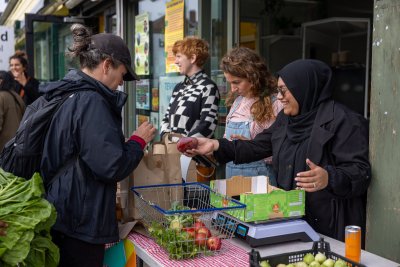
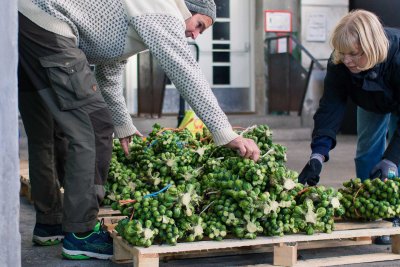
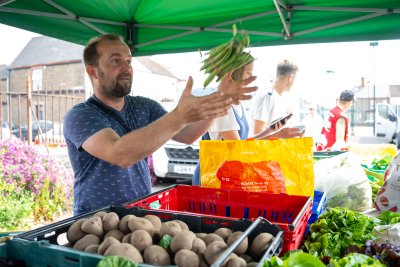
Bridging the Gap: Demonstrating ways to make organic food more accessible via farmer-focused supply chains.


Sustain
The Green House
244-254 Cambridge Heath Road
London E2 9DA
020 3559 6777
sustain@sustainweb.org
Our mission is to catalyse systemic change in the UK’s food and farming system – securing a healthy, fair, and sustainable future for all people, nature and a stable climate.
© Sustain 2026
Registered charity (no. 1018643)
Data privacy & cookies
Icons by Icons8
