

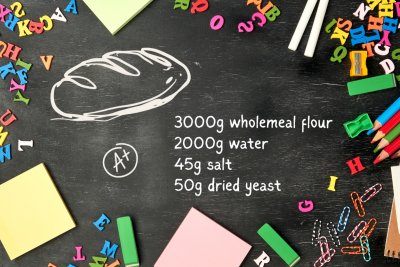
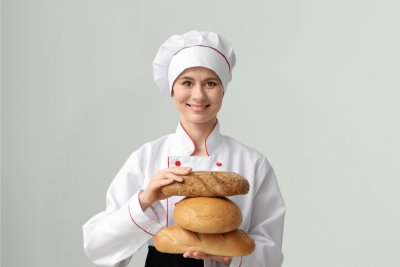
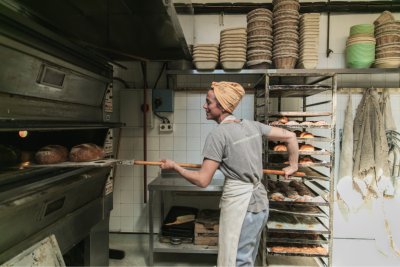
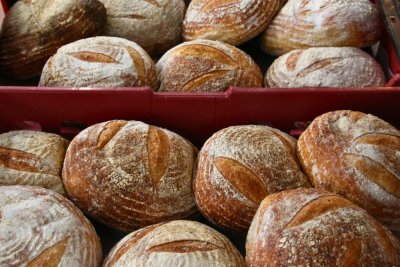
 Wholemeal bread: better for kids, better for the planet. Credit: Canva / www.realbreadcampaign.org CC-BY-NC-SA-4.0

Better bread in schools
What are the opportunities and obstacles?
On 7 May 2026, Children’s Food Campaign coordinator Barbara Crowther, Real Bread Campaign coordinator Chris Young (both from Sustain) and chef educator Dan Mountford from St. Paul with St. Luke Primary School in east London, met with representatives from the Department for Education (DfE).
The meeting was prompted by the letter sent by the Real Bread Campaign to the Secretary of State for Education in February 2026. The discussion focussed on issues raised by the current public consultation on the government’s proposed School Food Standards for England (SFS), which was launched in April.
Key points
Points raised by Sustain at the meeting included:
Fibre: Given the government’s stated intention to raise children’s fibre intake, why is proposal to set the minimum fibre level for bread as low as 3%? Supermarket half-and-half loaves far exceed this low bar, while even some sliced white factory loaves (made from highly-refined flour) meet it, indicating a need and opportunity for the SFS to be more ambitious.
DfE was interested to know what non-wholemeal products on the market have more than 3% fibre. We suggested that, rather than looking at what’s currently possible, setting a target that more than 20,000 schools have to meet will create a demand / opportunity from which bakeries will be keen to benefit.
We also discussed the pros and cons of the standard being based on a fibre content percentage (good for accuracy), versus the percentage of wholemeal flour in a recipe (which would be a more practical reference for school cooks and many small bakeries). Dan outlined how his non-wholemeal recipes range from 20% to 50% wholemeal flour, depending on the type of bread.
Salt: Though salt reduction is another aim of the proposed SFS, they don’t set a limit, or even appear to offer reduction guidance, for salt in bread. The SFS have the Government Buying Standards fod food and catering services (GBS) as a baseline, but the most recent (2021) version of the GBS only says that ‘at least 75% of bread procured by volume’ must meet Public Health England’s (PHE) 2024 salt reduction target. We propose that no bread should exceed the target and, as it has not been updated since PHE’s dissolution, provision needs to be made for the future.
Focaccia and ciabatta: Both are named in the proposed SFS as exclusions from the ‘bread must be served every day’ rule as they are made with oil, so can be served a maximum of twice a week. As the work of Chefs in Schools and others indicates, making focaccia is a simple and cost-effective way that many school cooks can serve delicious, nutrition Real Bread that children enjoy.
It also seems inconsistent for the SFS to limit serving focaccia (made using a small amount of oil that’s high in healthy monounsaturated fats and low in saturates) to a maximum of twice a week, while placing no such restriction on baguettes and other sandwiches being filled with cheese and / or served with butter or ultra-processed spreads.
As ciabatta isn’t necessarily made with oil, we proposed it should be removed from the named exclusions.
Daily bread: Before the consultation was announced, one of our proposals was that schools should be required to serve Real Bread every day.
Initial feedback from school cooks and chefs, including Dan, however, is that the requirement to serve ‘bread’ every day can have unintended consequences. One is that cooks may opt for the cheapest, lowest quality industrial dough products in order to fulfil the obligation. Especially when a meal includes other filling (and more desirable) carbs, this can lead to extra food waste. We are, therefore, reviewing our position on this.
Other points: The above filled the alloted time, so we were unable to discuss other issues raised by the proposals.
What next?
The Real Bread Campaign and Children’s Food Campaign continue to gather evidence and consult on the opportunities and obstacles presented by the proposed new SFS, in order to revise and refine Sustain’s response to the public consultation.
If you would like to be part of this process (particularly if you are involved in school catering, are a registered public health dietician, or run a Real Bread bakery that supplies schools) please email Chris at the Real Bread Campaign.

Real Bread Campaign: Finding and sharing ways to make bread better for us, our communities and planet.
Sustain
The Green House
244-254 Cambridge Heath Road
London E2 9DA
020 3559 6777
sustain@sustainweb.org
Sustain advocates food and agriculture policies and practices that enhance the health and welfare of people and animals, improve the working and living environment, promote equity and enrich society and culture.
© Sustain 2026
Registered charity (no. 1018643)
Data privacy & cookies
Icons by Icons8
