

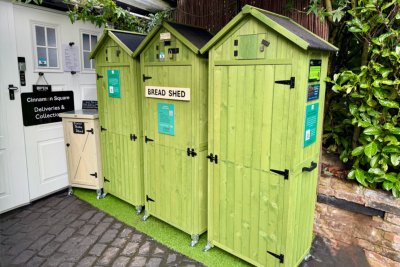
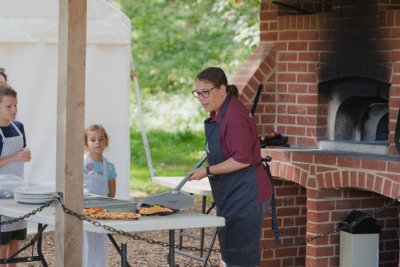
 Sheds with bread. Copyright: Cinnamon Square
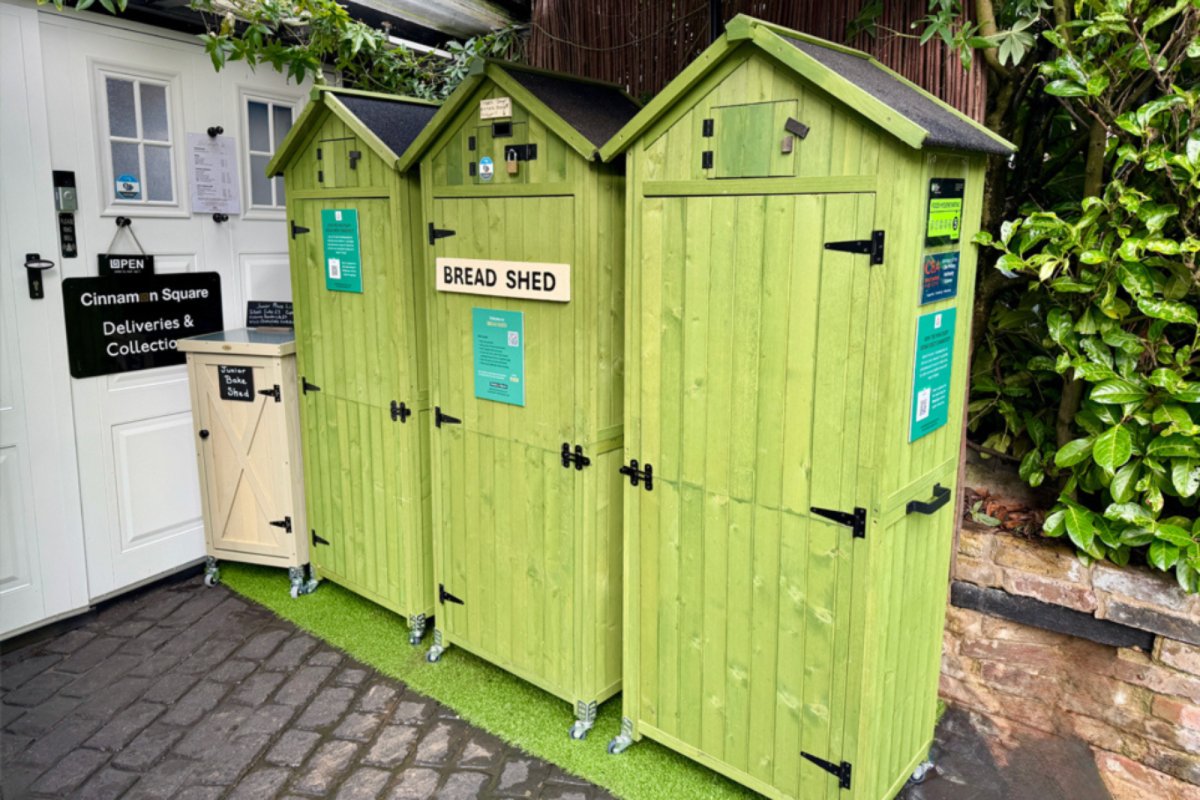

Does your bread shed need a street trading licence?
What do council crackdowns mean for microbakers?
There have been reports of some councils requiring home-based microbakers who sell from ‘cake sheds’ to pay for a street trading licence, despite the stall being on private property, not a public highway.
Real Bread Campaign coordinator Chris Young said: ‘A council insisting a microbaker pays for a street trading license for a collection point on their own property is ridiculous. A food entrepreneur like this contributes to their local economy and community cohesion. Councils should be helping, not hindering, them.’
He added: ‘When a local authority treats private property as if it’s a street, maybe the homeowner should insist the council sweeps their porch, repairs their front path or mows their lawn.’
The law
Not every local authority requires businesses to obtain street trading licenses, the conditions of which vary between authorities.
A key piece of legislation governing street trading is Part III of the Local Government (Miscellaneous Provisions) Act 1982. For the purposes of this Act, a street is defined as: ‘any road, footway, beach or other area to which the public have access without payment’
An article by StreetComply notes that: ‘private land that is genuinely restricted — fenced, gated, or requiring payment to enter — would not normally be considered a "street" under the Act.’
Some councils use modified versions of the Act that also include trading on private property, when it's within a certain number of metres of a street. Seven metres seems to be a favourite distance, as with the London Local Authorities Act 1990 (and iterations up to 2012).
Whether or not a policy applies in your area, and to your business, is at the discretion of your local authority.
What this isn't about
Street trading licensing isn't about food safety, other consumer protection, or any other aspects of running a business, which are covered by other legislation that all food business operators have to comply with.
Street trading licenses are basically a way of a local authority controlling who sells what, where in their area. The LA can decide which streets trading is allowed on, how many traders can operate on a particular street, and who can (and can't) trade.
Find out more
If you have any questions on this issue, please contact your local council to find the department that can offer advice about street trading licenses.
You can find a wealth of information and guidance on setting up, running and expanding a (micro)bakery business in the Real Bread Campaign's Knead to Know...more handbook.

Real Bread Campaign: Finding and sharing ways to make bread better for us, our communities and planet.

Sustain
The Green House
244-254 Cambridge Heath Road
London E2 9DA
020 3559 6777
sustain@sustainweb.org
Sustain advocates food and agriculture policies and practices that enhance the health and welfare of people and animals, improve the working and living environment, promote equity and enrich society and culture.
© Sustain 2026
Registered charity (no. 1018643)
Data privacy & cookies
Icons by Icons8
