

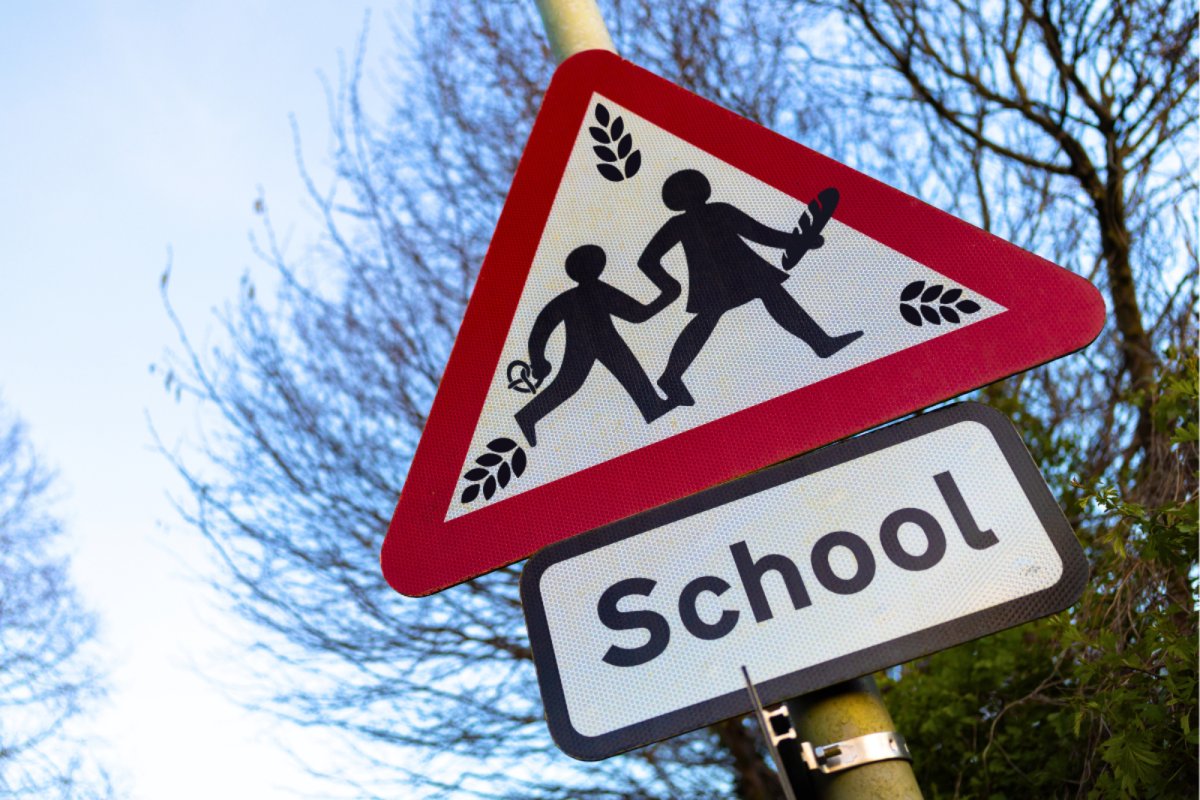
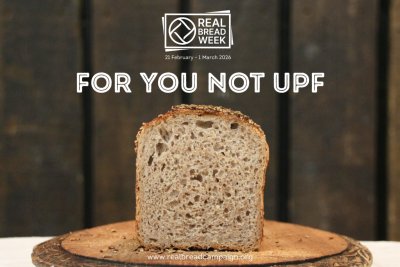
 It's a sign. Credit: Canva / www.realbreadcampaign.org CC-BY-SA-4.0

Real Bread in Schools update
Proposed project progress report.
On 4 December 2025, Sustain convened an online meeting of school food educators, bakers and organisations that work with schools to discuss the Real Bread Campaign’s proposed Real Bread in Schools project.
If you have knowledge of a specific potential source of funding / income for Real Bread Campaign work, please email the Campaign coordinator.
Who and what
Chaired by Sustain CEO, Kath Dalmeny, the virtual meeting was attended by representatives from: Chefs in Schools, Food For Life Scotland, Food Teachers Centre, Hackney School of Food, Hobbs House Bakery, Pakeham Primary, School Food Matters, Scotland the Bread and The Next Loaf.*
The purpose of this meeting was to:
- Discuss the initial draft project outline.
- Identify project needs and potential barriers.
- Get provisional commitment from potential partners, discussing who could be responsible for which aspects of project design, delivery and securing funding / income.
- Suggest potential funders and other potential options for financing the work.
- Agree next steps and timeline.
*representatives of other organisations, who did not attend the meeting, were kept informed of the outcome with a view to possibly being involved in the initiative.
Reflections
Rather than detailed minutes of the meeting, this is a brief summary of the considerations / suggestions raised, which included:
- How do we create a Real Bread in Schools initiative that unites and builds upon all of the great work being done already (rather than competes with it), and enables even more children to benefit?
- Need to decide whether the initiative will be aimed at primary or secondary. [Initial idea is primary, mainly focussed on Key Stage 2]
- Need to decide whether to take a whole-school approach, or focus mainly / exclusively on either the classroom (Real Bread skills and education) or canteen (Real Bread on children’s plates).
- Children making bread, rather than watching a demo, is key.
- Visiting bakers and ‘off the shelf’ toolkits are great, but to really embed bread in a school, there needs to be an internal champion who drives it.
- A school’s head teacher needs to lead (or, at least, fully support) food education work.
- Like most people in the UK, many teachers (and people with a food education remit but not a teaching staff member) lack bread making skills and knowledge, and / or confidence to pass them on to children. Train the trainer, maybe plus mentor support, could help.
- Many schools are in financial deficit and lack dedicated food education space, and a food teaching / education lead. Sometimes the food education lead role sits under another role, e.g. DT.
- There are many things competing for space on the timetable, and teachers’ headspace – need to make it easy for them to slot in.
- More schools are likely to engage with Real Bread as a project if it’s created as a unified package that offers a pick-and-mix range of options, rather than a one-size-fits-all.
- Though desirable, food education as its own subject seems to be hard to fund. Might have more success in using bread as a topic in other subjects, or bread making as a means to an end – e.g. working with attendance, disengaged children or those struggling with an academic focus.
- Canteens can be under-staffed, limiting capacity to make things (e.g bread) from scratch. Space / oven capacity can also limit ability to produce enough bread to meet a school’s needs.
- Buying in additive-laden baked products is cheap and easy; buying Real Bread isn’t – especially from a small, indie bakery that doesn’t benefit from economy of scale (or cut corners…).
- School food standards focus on nutrition and might discourage, or rule out, quality recipes that can enable Real Bread and service practicalities. For example, a tray-bake focaccia can be easily made and portioned, but many traditional recipes have an oil content disallowed by school food standards) that.
- Matchmaking service to help create and maintain relationships between schools and bakeries could be useful.
- Fragmentation of catering contracts and services is an issue. Academies not required to follow national school food standards; some schools have in-house kitchen teams and facilities; others have food delivered by larger catering companies; variable systems, e.g. local authority contracts; individual school purchasing; school / academy group purchasing. Methods for getting Real Bread on the menu need to be tailored dependent on type of school and catering arrangements.
- Ideas around some sort of more affordable standard Real Bread / range of breads, either by providing recipes and training for in-house production; or establishing / working with external supplier / suppliers to make Real Bread at scale.
- How do we ensure that Real Bread is on the menu for the School Food Review?
(Many of these points echo the Campaign’s experience when creating and running Lessons In Loaf in 2010-12)
Next steps
Informed by insights gained from the meeting, Real Bread Campaign coordinator Chris Young is reviewing and refining the outline project proposal. This will be circulated to potential partners to secure tentative commitment for roles and responsibilities in designing, securing funding for and delivering the project.
See also
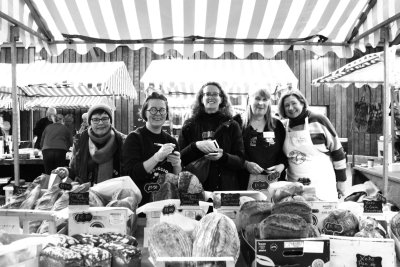
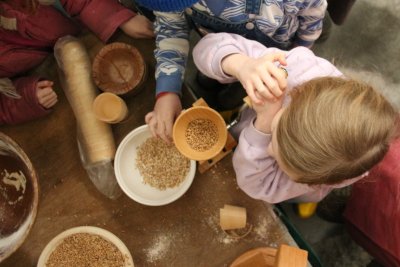
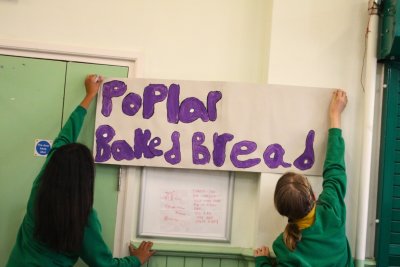
Some of the articles we've published about schools and other organisations doing inspiring work ensuring that Real Bread has a place in children's lives.

Real Bread Campaign: Finding and sharing ways to make bread better for us, our communities and planet.


Sustain
The Green House
244-254 Cambridge Heath Road
London E2 9DA
020 3559 6777
sustain@sustainweb.org
Sustain advocates food and agriculture policies and practices that enhance the health and welfare of people and animals, improve the working and living environment, promote equity and enrich society and culture.
© Sustain 2026
Registered charity (no. 1018643)
Data privacy & cookies
Icons by Icons8
