

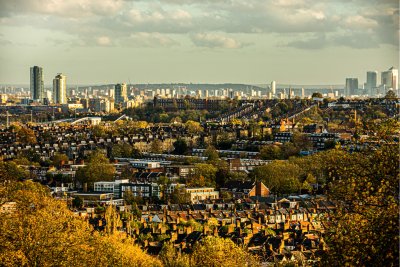
 London. Copyright: Ana Araujo istock


Building a food resilient London: Lessons from the frontline
London’s food system stands at a critical crossroads. New research from Sustain and the Greenwich Cooperative Development Agency (GCDA) brings together insights from grassroots settings through to borough leads to highlight best practice and set out recommendations for a more resilient food system.
With the vast majority of London’s food coming from outside the city, the capital's food system is vulnerable to the next major shock – from extreme weather and crop failures to food price spikes, supply chain disruption or another pandemic. But new research from Sustain and Greenwich Cooperative Development Agency (GCDA) shows that London already has a vital resource for responding to crises: a vast network of grassroots community food organisations.
The experience of COVID-19, alongside geopolitical conflict and disruption to energy and food supply chains, exposed just how quickly pressures on precarious supply chains can escalate. For a city already experiencing high levels of household food insecurity, and continuing dependence on the charitable food sector to support people experiencing financial crisis, the consequences of another major disruption could be severe. The report highights that thriving community food settings providing positive engagement around food is essential infrastructure that needs to be properly funded, coordinated, listened to, and supported to become a sustainable landscape of support in the long term.
Following on from recent government guidance, our research stands in stark contrast to recommendations focussed on an individualised response of stockpiling. As Professor Tim Lang said in the seminal Just in Case report, resilience planning “cannot be left to the people to activate in an ad hoc way or on their own. It requires a process of learning, capacity-building and preparation.”
Our new report commissioned by the Greater London Authority's London Resilience Unit brought together insights from grassroots charitable food providers and other community food assets, commercial food settings and other food system stakeholders, alongside the experience of local authorities, food partnerships and Local Resilience Forums with experience of coordinating food responses in emergencies. Our research was gathered through a series of interviews, workshops, site visits and two consultations held between 2025 and 2026.
The Food Resilient London report sets out what needs to happen next for London to strengthen its food resilience. Findings have been translated into recommendations for London Resilience at the Greater London Authority, borough leads, London wide infrastructure organisations and community food settings, to ensure London’s food resilience infrastructure is ready to respond, not just when the next emergency hits, but in the years and months beforehand to ensure no one gets left behind, and those vulnerable to crisis do not fall through the cracks.
Not everyone has the capacity to, or can afford, to have a cupboard full of tins.

Sustain: Sustain The alliance for better food and farming advocates food and agriculture policies and practices that enhance the health and welfare of people and animals, improve the working and living environment, enrich society and culture and promote equity.



Sustain
The Green House
244-254 Cambridge Heath Road
London E2 9DA
020 3559 6777
sustain@sustainweb.org
Sustain advocates food and agriculture policies and practices that enhance the health and welfare of people and animals, improve the working and living environment, promote equity and enrich society and culture.
© Sustain 2026
Registered charity (no. 1018643)
Data privacy & cookies
Icons by Icons8
