

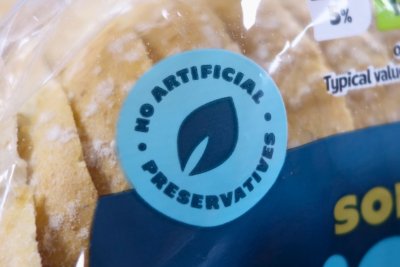
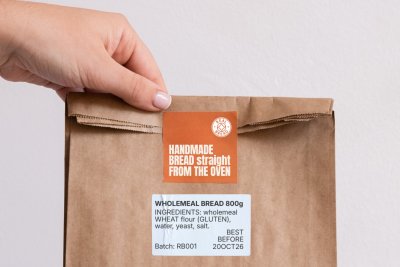
 Meaning it contains a preservative, just not an 'artificial' one?. Credit: Chris Young / www.realbreadcampaign.org CC-BY-NC-SA-4.0

Trading standards too busy for undeclared preservative complaint
Overwhelmed public protection service won’t investigate case.
In summer 2025, the Real Bread Campaign began investigating the sector-wide question of whether industrial dough fabricators were adding propionic acid (aka the preservative E280) to products, without declaring it by name or E-number on ingredients lists.
On 22 September 2026, the Campaign submitted a complaint to the trading standards department of its local authority, London Borough of Tower Hamlets (LBTH), giving details of 17 major companies that used ‘fermented wheat flour’ in factory loaves.
On 19 November 2026, a food safety team leader in the Public Protection and Integrated Enforcement Division of LBTH advised the council would be unable to investigate the case.
Real Bread Campaign coordinator Chris Young said: ‘A trading standards department taking two months to reply, then saying they didn’t have time to investigate this nationwide issue, yet again underlines how precarious the service has become. As we have said before, central government and local authorities need to step up to ensure public protection services are properly funded and resourced.’
What you can do
LBTH advised they were unable to investigate this case but the situation at your local authority might be different.
If you see food information or marketing (labels / packaging, in-store signage, flyers etc.) that is inaccurate, omits important information, or is misleading, you can (try to) contact your local authority’s trading standards department / officer. Some no longer accept contact by local taxpayers, in which case you can contact Citizens Advice to ‘triage’ your complaint.
If the issue relates to advertising (TV, radio, newspaper / magazine, billboard, company website, social media and elsewhere online, cinema etc.) you can make a complaint to the Advertising Standards Authority.
If you submit a complaint related to a bakery, mill or industrial dough fabricator, please let the Real Bread Campaign know how your case goes.
The complaint
The email sent by the Real Bread Campaign to LBTH on 22 September 2026:
Additives commonly used by industrial dough product manufacturers include the preservatives propionic acid (E280) and calcium propionate (E282). As their presence is declared by name and/or E-number on ingredients lists, shoppers have the chance to choose whether or not to buy products containing them.
In 2025, it came to our attention that a number of manufacturers and retailers were instead adding ‘fermented wheat flour’, in place of conventional industrial preservatives, to some baked products. It is our understanding that such ‘fermented wheat flour’ is not a sourdough starter culture that makes the dough rise. Instead, it is flour intentionally cultured using specific bacteria (e.g. Propionibacterium freudenreichii) to generate antimicrobial levels of propionic acid. This ‘fermented wheat flour’ is marketed to baked product manufacturers for its preservative purpose and effect: extending shelf life by inhibiting the growth of mould and other spoilage microorganisms.
In August 2026, we contacted 16 companies (Aldi, Allinson’s, Asda, Hovis, Iceland, Jackson’s of Yorkshire, Jason’s Sourdough (Geary’s Bakeries), Kingsmill, Lidl, M&S, Morrisons, Sainsbury's, Tesco, The Co-op, Waitrose and Warburtons) to ask the identity and purpose of the ‘fermented wheat flour’ they add to some of their products.
Asda confirmed that it: ‘typically refers to flour fermented to generate propionic acid. This process is used to enhance flavour and shelf life, and it does not involve a live sourdough culture.’ Aldi and Tesco later gave similar confirmations. Despite follow up questioning, the other 13 companies were less forthcoming with direct answers. Since we began the investigation, Brace’s Bakery launched Ernest Sourdough products that include ‘fermented wheat flour’.
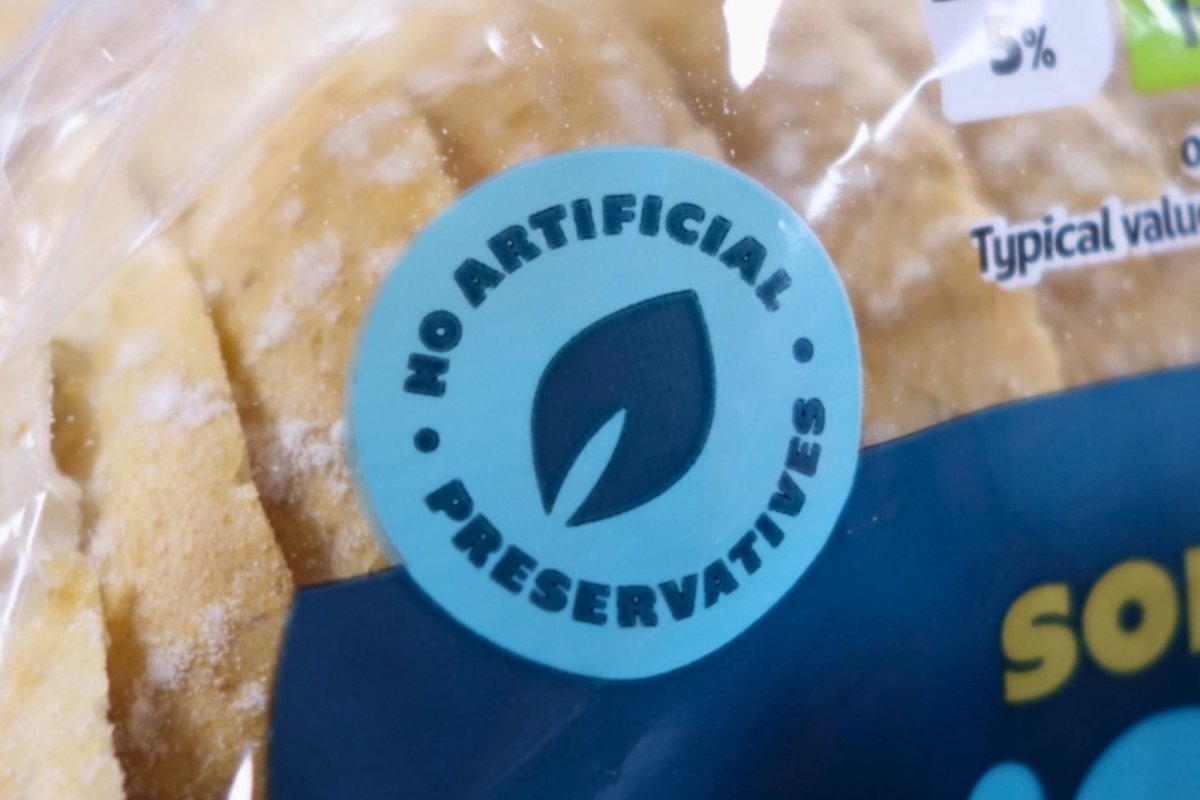
While all 17 of these companies choose not to declare the presence of added propionic acid on their ingredients lists, we found six of them instead choosing to make on-pack marketing promises that we believe belie ‘fermented wheat flour’s preservative purpose and function.
- Aldi: ‘No artificial flavourings or preservatives’
- Allinsons: ‘ARTIFICIAL PRESERVATIVE & EMULSIFIER FREE’
- Ernest Sourdough: ‘NO ARTIFICIAL PRESERVATIVES OR FLAVOURINGS’
- Jackson’s of Yorkshire: ‘NO ARTIFICIAL PRESERVATIVES’
- Jason’s Sourdough: ‘NO ADDITIVES NO PRESERVATIVES’
- Warburtons: ‘NO ARTIFICIAL PRESERVATIVES’
(The emphasis by capitalisation is as per the product packaging.)
The intentional, industrial-scale synthesis of anti-microbial levels of propionic acid (and / or other particular organic acids), and the intentional addition of it to dough for the preservative purpose of extending shelf life, are clearly very different from any incidental generation of small amounts of these that might sometimes occur naturally during the process of genuine sourdough breadmaking. The intent behind such marketing claims is also clear.
We believe that a company:
- choosing not to declare the presence of antimicrobial levels of propionic acid, when intentionally generated and added in this way, is misleading by omission.
- making claims that state or imply such a product is free from preservatives is misleading and factually inaccurate.
- doing either or both of these is likely to leave, or even lead, shoppers to understand that the product is ‘cleaner’, more ‘natural’, less processed, and even ‘healthier’, so it;
- creates an unfair commercial advantage over companies that declare preservatives they use; and Real Bread bakeries that genuinely do make products without any preservatives or other additives.
We look forward to learning what you and your trading standards service colleagues around the UK propose to do to resolve this sector-wide issue.
LBTH response
‘At present, we are unable to commit to investigating all companies listed in your complaint or all of the ‘sector-wide’ issues raised. This would require a significant commitment of officer time and resources, which would have an adverse impact on our ability to deliver our other statutory functions.’
If you have specific concerns relating to a particular business, or if there is evidence of an immediate risk to public health and safety, or consumer safety, please contact the Team. This will enable us to assess the concerns and determine whether further action is warranted in accordance with our enforcement priorities and available resources.
In relation to [the details in the complaint] we will log this as intelligence, which we may be used to inform future regulatory activity, inspections, and interventions as appropriate.’
See also
- Where are The Bread Police?
- When is a preservative not a preservative?
- Fermented wheat flour = stealth additive?
- Aldi comes clean about ‘fermented wheat flour’
- Tesco confirms ‘fermented wheat flour' preservative purpose
- Fermented wheat flour is a preservative confirms trade body
- Trading standards running on empty?
- Industrial loaf additive linked to obesity and diabetes

Real Bread Campaign: Finding and sharing ways to make bread better for us, our communities and planet.





Sustain
The Green House
244-254 Cambridge Heath Road
London E2 9DA
020 3559 6777
sustain@sustainweb.org
Our mission is to catalyse systemic change in the UK’s food and farming system – securing a healthy, fair, and sustainable future for all people, nature and a stable climate.
© Sustain 2026
Registered charity (no. 1018643)
Data privacy & cookies
Icons by Icons8
