

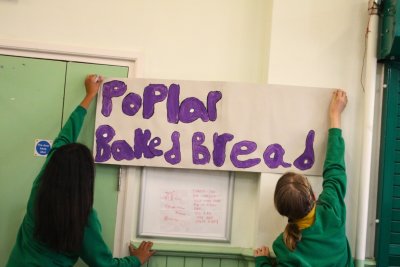
 Putting Real Bread on the school menu . Credit: www.realbreadcampaign.org CC-BY-SA-4.0
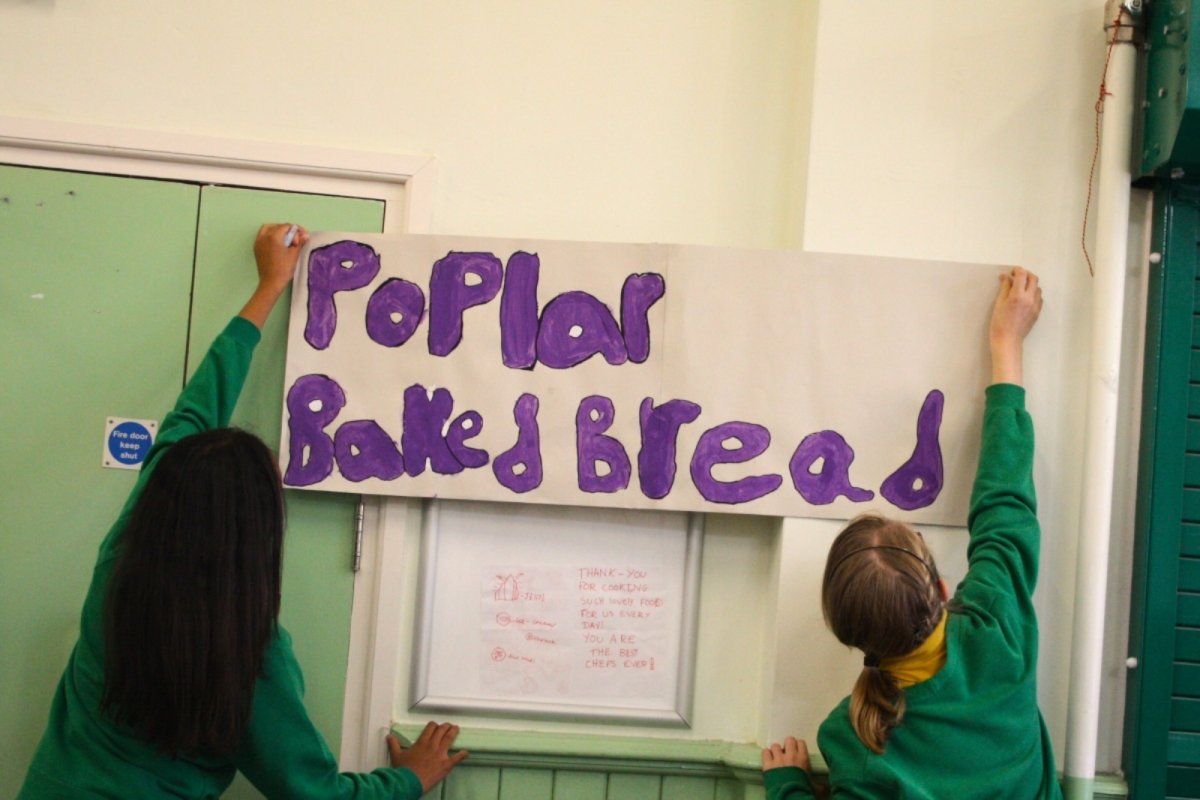

Children knead better bread at school!
Real Bread Campaign calls for improved food standards
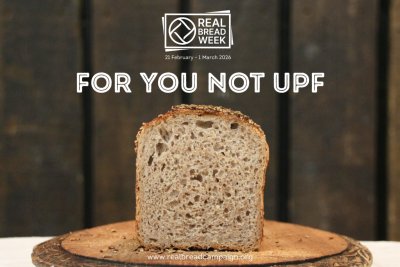
This Real Bread Week, the Real Bread Campaign has written to urge the Government to use the Schools Food Standards Review to improve bread served to children in schools.
The proposals are designed to help raise levels of children's fibre intake, reduce salt intake, and eliminate additives. The potential socio-economic benefits include enhanced skills and professional development for school catering staff and / or procurement from independent SME bakeries; plus learning and community opportunities through connections between children and the people who make their bread.
As Campaign coordinator Chris Young stated in the letter: 'The current review presents a once-in-a-generation opportunity to ensure that every child has access to wholesome, additive-free bread as part of their school meals. We believe our proposed standards represent an achievable and cost-effective way to improve children's nutrition, whilst supporting food education, development of essential culinary skills, and local food economies.'
The Campaign is currently seeking funding for a project to put Real Bread on The Menu, and bread making on the timetable, in more schools.
The letter
To: Bridget Phillipson, Secretary of State for Education
CC: Ashley Dalton, Minister for Public Health; Olivia Bailey, Parliamentary Under-Secretary of State (Minister for Equalities) and Parliamentary Under-Secretary of State (Minister for Early Education); Defra Food Team
Re: Improvements to school food standards for bread
Dear Bridget Phillipson,
I am writing on behalf of the Real Bread Campaign, run by the food and farming charity Sustain. On our mission of finding and sharing ways to make bread better for us, our communities and the planet, we work towards a future in which everyone has a realistic chance of choosing additive-free bread.
We welcome the current review of School Food Standards (SFS) as an ideal opportunity to update and improve standards for a key staple food on children’s plates: bread. This is a chance to respond to the latest nutritional guidance from SACN and other experts, including on fibre, salt, fat, sugar and use of non-nutritive sweeteners.
Thanks to the work of exemplary cooks and caterers, and organisations in and beyond Sustain’s alliance (including Chefs in Schools, Food For Life, The School of Artisan Food, School Food Matters and others) there are many islands of good practice featuring better, higher-fibre bread in school food. The SFS review is a chance to harness and build on this expertise and experience to inform and inspire a nationwide landscape in which millions of children are able to enjoy delicious, nutritious, additive-free bread as part of their school meals.
Bread is uniquely positioned to make a significant, positive impact on children's health and wellbeing. As one of the most frequently consumed foods in school meals – featuring at lunch and in breakfast clubs – bread is routinely eaten by millions of children across the UK every single day. This ubiquity means that even modest improvements will have a substantial, cumulative positive effect on children’s nutrition.
Through improving standards of an affordable key element of balanced school meals, the Real Bread Campaign's proposed standards would help to:
- Increase the consumption of fibre. According to the National Diet and Nutrition Survey 2019 to 2023, 86% of children aged 4 to 10 years and 96% of 11 to 18 year olds did not meet the fibre recommendation for their age group.
- Reduce salt intake. By setting clear upper limits for sodium in bread, in line with governmental reduction targets, we can significantly reduce children’s daily consumption.
- Reduce the amount of ultra-processed food (UPF) in children’s diets.
Potential socioeconomic benefits include:
- Serving wholemeal, and other high-fibre, bread offers a tangible benefit to schools through helping to reduce the increasing incidences of constipation and other bowel-related problems amongst pupils.1,2,3 This will contribute towards fewer absences and healthier pupils, who are ready and able to learn, as well as reduce pressures on education staff increasingly dealing with these issues.
- Particularly when taken with the government’s commitment to expand school meal eligibility to all on Universal Credit, serving better, high-fibre bread as part of healthier school meals will help to reduce health disparities, in line with the Child Poverty Strategy.
- Enhanced skills and professional development (and perhaps job satisfaction) for school catering staff, when making bread from scratch on site.
- Support for local food economies: procurement from independent SME bakeries keeps money circulating a school’s community.
- Opportunities for establishing connections between children and the people who make their bread.
- People making bread on site, or at a local bakery, offers food education and essential cooking skills opportunities. Through hands-on baking sessions, led by their school’s bread makers, children can have the chance to discover how to make their own Real Bread.
Outline of proposed standards and guidance
Beyond the legal requirement to comply with the Bread and Flour Regulations 1998 (as amended), the Campaign proposes:
Essential standards:
- Bread must be offered at every meal.
- Bread must have at least 5g fibre per 100g (achievable by using higher-extraction non-wholemeal flours, or a mix of flours)
- Bread must meet the Real Bread Campaign’s basic Real Bread definition: made without the use of any chemical raising agents, ‘processing aids’ or other additives.
- Plain bread must not include added fat / oil or sugars.
Additional standards:
- The preference is for wholemeal bread (as defined in The Bread and Flour Regulations) with a fibre content of at least 6g per 100g (a good source of fibre, as per Regulation (EC) No 1924/2006.), but preferably 7g or more.
- The sodium / salt in bread should not exceed Public Health England’s current (or most recent) target maximum.
- Enrichments should only be used, in limited amounts, where necessary to specific characteristics of particular bread types, in line with guidance on culturally appropriate food (e.g. olive oil in focaccia).
Procurement:
- When bread is not made on site, the preference is for schools / caterers to procure it from local SME bakeries, in line with government ambition to source from local, sustainable and British producers.
- The preference is for certified organic, or otherwise agroecologically produced, bread and flour.
- The preference is for bread made from grain grown and milled as locally as possible to the point of serving.
- Inclusivity:
- The diverse backgrounds and identities and needs of children at each school should be factored in to ensure that bread offered not only meets their dietary requirements but are also culturally appropriate.
The current review presents a once-in-a-generation opportunity to ensure that every child has access to wholesome, additive-free bread as part of their school meals. We believe our proposed standards represent an achievable and cost-effective way to improve children's nutrition, whilst supporting food education, development of essential culinary skills, and local food economies.
We would welcome the opportunity to discuss these proposals with your officials in greater detail, and to share examples of schools and caterers who are already demonstrating that high-quality Real Bread is practical, popular and beneficial in school settings.
We look forward to your response and to working collaboratively towards better bread for all children in our schools.
Yours sincerely,
Chris Young
Coordinator, the Real Bread Campaign
---
- Hospital admissions for children with a 'primary diagnosis' or 'any diagnosis' of constipation, 2014-15 to 2023-24, NHS England, 11 February 2025.
- Constipation in children: How common is it? NICE, last revised August 2025.
- Laxatives and nappies: how schools are coping with constipation in pupils, The Guardian, 18 February 2025.
See also

Real Bread Campaign: Finding and sharing ways to make bread better for us, our communities and planet.


Sustain
The Green House
244-254 Cambridge Heath Road
London E2 9DA
020 3559 6777
sustain@sustainweb.org
Sustain advocates food and agriculture policies and practices that enhance the health and welfare of people and animals, improve the working and living environment, promote equity and enrich society and culture.
© Sustain 2026
Registered charity (no. 1018643)
Data privacy & cookies
Icons by Icons8
