

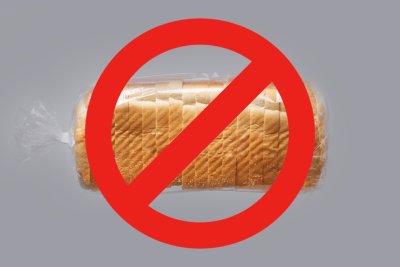
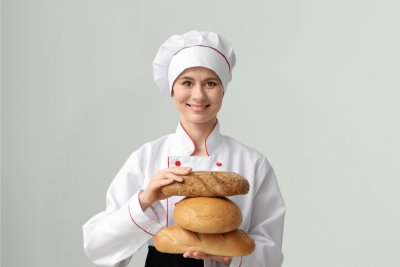
 Its day has come. Credit: Created in Canva. www.realbreadcampaign.org CC-BY-NC-SA-4.0

UK bans the Chorleywood Process
Supermarket factory will have to become Real Bread.
The Real Bread Campaign has received leaked information that the government is set to ban the Chorleywood Process.
This is used to fabricate one of the most consumed ultra-processed foods (UPF), around which questions and concerns continue to gather.
Real Bread for everyone
Real Bread Campaign coordinator Chris Young said: ‘Wow! After more than seventeen years of successive governments showing little to no appetite for any of our proposals for a better-bread Britain, this one’s about to go further than we ever asked for or imagined.’
He went on to say: ‘We champion Real Bread, the people who make it, and work towards everyone having the chance to choose it. We’ve never called for a ban on additive-laden industrial dough products, but it seems that’s what’s about to happen.’
Young added: ‘We now look forward to the Big Bakers joining local indies, public sector caterers, and people in their own homes, in making Real Bread available to everyone.’
No official announcement has been made. For updates, you can sign up to the Real Bread Campaign's free mailing list.
What is the Chorleywood Process?
Depending on whose figures you believe, perhaps around 11-13 million loaves are sold every day in the UK. The majority are manufactured by the Chorleywood Process.
This ‘no time’ process involves a cocktail of an oxidising agent and other additives; high melting point fat and / or emulsifier[s] (such as mono and diacetyl tartaric esters of mono and diglycerides of fatty acids, aka E472e or DATEM); more yeast and water than traditional tin loaf recipes; mixing under a partial vacuum; high speed mixing; and minimal fermentation time.
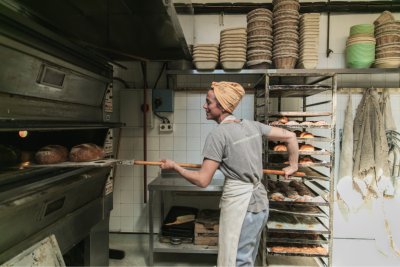
The fully-automated process is faster and more profitable than employing skilled bakers to craft slowly-proved Real Bread by hand. In addition to the process’s contribution to the loss of jobs and local businesses, it has been asked whether there might be displaced and deferred costs, primarily in terms of reported negative health impacts of UPF in our diets.
See also
- 93% of Brits unaware of supermarket loaf contents
- White sliced loaf of death?
- Dirty secret behind factory loaf 'clean labels'?
- Supermarket loaves: why the massive markup?
- Folic acid free flour and bread

Real Bread Campaign: Finding and sharing ways to make bread better for us, our communities and planet.
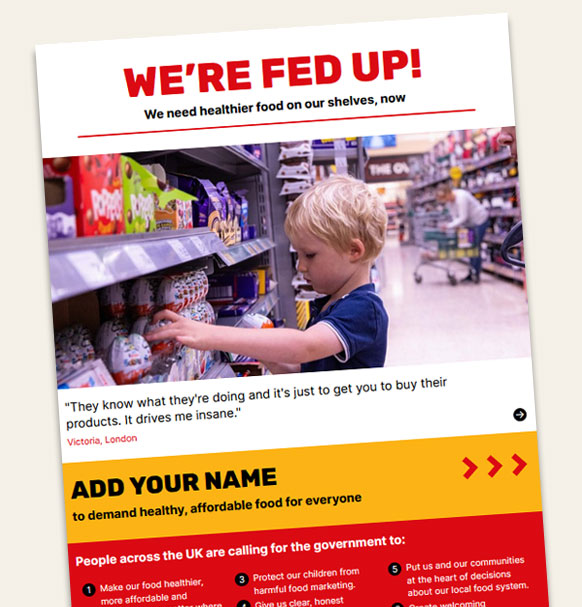
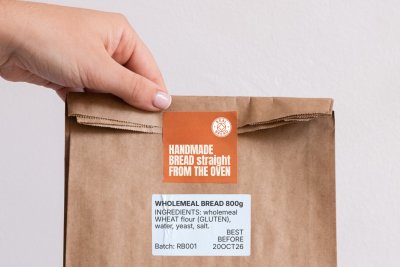
Sustain
The Green House
244-254 Cambridge Heath Road
London E2 9DA
020 3559 6777
sustain@sustainweb.org
Sustain advocates food and agriculture policies and practices that enhance the health and welfare of people and animals, improve the working and living environment, promote equity and enrich society and culture.
© Sustain 2026
Registered charity (no. 1018643)
Data privacy & cookies
Icons by Icons8
