

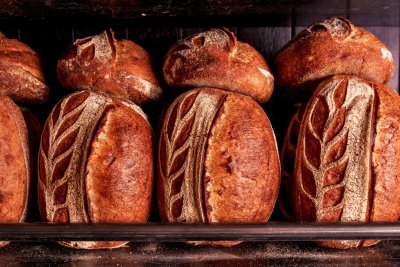
 Getting bready for school. Credit: www.realbreadcampaign.org CC-BY-NC-SA-4.0


Have your say on bread in schools
Consultation opens doors to improvement.
On 13 June 2026, the Department for Education (DfE) and Office for Health Improvement and Disparities launched a public consultation on updating the School Food Standards for England.
The key proposed changes are related to increasing fibre, reducing sugar, and restricting foods higher in fat, sugar and salt.
Real Bread Campaign coordinator Chris Young said: ‘Having previously sent the DfE our proposals for improvements to bread standards in schools, it’s good to see the government echoes our ambition to increase children’s fibre intake. We welcome this opportunity for everyone to have a say to help ensure the standards will be even higher than those outlined in the consultation.’
The Real Bread Campaign's response will be included in Sustain's submission.
The consultation is open to all which runs until 12 Jun 2026. Full details can be found on the DfE website.
The people from whom the government particularly wants to receive responses include parents, school staff members, trust leaders and governors; local authorities; catering managers and chefs/cooks; food producers and suppliers; public health professionals; nutritionists and dietitians working with schools.
The bready bits
The proposed standards related to bread are:
- All bread and morning/bakery goods must contain at least 3g of fibre per 100g. Examples given are: wholemeal breads, some seeded breads and higher fibre white breads such as those which are made with 50% whole grain flour and 50% white flour and with no added fat or oil.
- Bread that does not contain added fat or oil must be available every day - brioche, focaccia, ciabatta are excluded.*
- One or more portions of food from starchy foods group A1** to be served every day and three or more different starchy foods each week. [In addition to the daily bread requirement.]
- Starchy foods cooked using fat or oil (for example focaccia made with olive oil) may be served no more than twice a week and only when they form part of a meal.
- Permitted snacks include breadsticks, with no added salt, sugar or fat.
- No more than one portion of sweetened baked products*** or desserts can be served each week, and these must contain at least 50% fruit or vegetables, but no confectionery or chocolate.
- It appears that it will be permitted to serve 'items such as fruited buns on other days.' The Campaign will check what criteria / restrictions will apply to these.
Permitted foods at breakfast include bread and morning/bakery goods (which must meet the fibre and no fat/oil requirements); bread-based fruited buns; and crumpets. Fried breads, pastries and croissants are not permitted at breakfast.
The consultation makes no reference to serving bread with butter / plant-based alternatives (for example spread on rolls, sandwiches, naan, baguettes etc.) or oil to dunk it in.
The standards will apply during the school day (mid-morning break and
lunchtime) and food served in wrapround care - breakfast clubs and after school provision up to 6pm.
These standards won't apply to food at parties, celebrations or fundraising events, or to food used for teaching / in lessons.
*The Campaign will check whether this exclusion also applies to ciabatta made without oil.
**Group A1: all types of bread, pasta, couscous, noodles, rice, potatoes, sweet potatoes, yams, millet, bulgar wheat and cornmeal.
***Sweetened baked products include cakes, buns, muffins, tray bakes, doughnuts, brownies, biscuits and cookies, flapjack, sweet pastries and products containing pastry, crumbles, tarts, pies, sponge puddings, scones. Excludes bread-based fruited buns, such as fruit tea cakes.
Must try harder
The government’s proposed standards fall short of those proposed by the Real Bread Campaign, which will use the consultation – and the promised meeting with DfE – to restate them.
See also

Real Bread Campaign: Finding and sharing ways to make bread better for us, our communities and planet.

Sustain
The Green House
244-254 Cambridge Heath Road
London E2 9DA
020 3559 6777
sustain@sustainweb.org
Sustain advocates food and agriculture policies and practices that enhance the health and welfare of people and animals, improve the working and living environment, promote equity and enrich society and culture.
© Sustain 2026
Registered charity (no. 1018643)
Data privacy & cookies
Icons by Icons8
