

Sustain / Real Bread Campaign / Articles
Crop to crust in Citrus Heights
By Shannon Brodnik, owner-baker of Crumb & Butter Bakery in California.
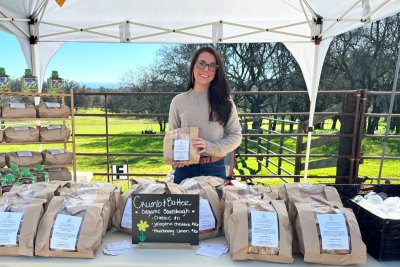




Freshly-baked bread, still warm from the oven, slathered in butter – an instant comfort! But where does it come from? What's in it? How was it made? These are among the questions that more and more people are starting to ask. Answers to those questions are why so many people, myself included, have taken the leap into making bread from scratch.
The next time you go to a grocery store, I challenge you to pick up a factory loaf and read the ingredients list. Do you know what all of that is? Making our own bread guarantees that we do know what's in it and our loaves are the freshest we can get. No artificial preservatives or other additives, none of the unnecessary extra stuff. Just flour, water and salt, as it's intended to be.
It starts with the grain
You can't make great bread without good flour, so my bread-making journey started with a deep dive into grains. I researched various species and varieties, farming techniques and styles of milling. There was so much to take in! Through this research I was pleasantly surprised to find how many milling companies exist all over the world and how many generational farms there are. I ordered as many different flours as I could, got in my kitchen and started baking.
Researching brands has led me to a deeper understanding of grains while connecting me to the farms and mills I might otherwise not have known about. I now know exactly where the grain for the flour I use at Crumb & Butter Bakery is coming from. There are companies like Sunrise Flour Mill in Minnesota, which mills organic, heritage grains using a 1930s-style, high velocity impact Unifine Mill.
Heritage grains are varieties dating back to the mid-20th century at the latest,* which have not been manipulated or modified for modern convenience. When companies like Sunrise Flour Mill use heritage grains and older styles of milling, it is more beneficial overall for the quality of the flours. It preserves more nutrients while keeping the traditions of past generational farming alive. Sunrise also sells whole wheat berries for people wanting to experiment with home milling.
My research also led me to a six-rowed, hulless (or naked) barley, known as Highland / Tibetan Barley - qingke in Chinese and nas in Tibetan. This is an ancient grain, having been around for over 3,500 years, which is a staple in the Tibetan diet. It is grown in the mountains and hardy to the elevations that Tibet is known for. It has a delicious, sweet and almost rice-like flavour, perfect for hearty homemade breads and rolls. You can order any of these grains online to use at your convenience.
Keeping traditions alive
Throughout this process I have learned so much, as well as connected with many small farms and flour mills. This is where those pressing questions are being answered. The most important thing I've learned from jumping into the world of homemade bread is it is so much more than just baking. It is the centuries-long traditions that are being kept alive. It is the preservation of farms and milling techniques that could easily be lost to the modern way of life. In some cultures, sharing bread can be traced back to ancient rituals that used bread as a symbol for friendship and forging alliances.
Discovering these farms, grains and flours has given me a profound appreciation for the world of bread, and what these farmers and mills are providing. They're providing fresh, sustainable food to our families, neighbours and friends with real nourishment in it, straight from their crops to our ovens. Let's get baking and keep these traditions alive!
*People’s cut-off point for 'heritage' varieties varies, generally within a range from the end of the 19th century to the 1940s [ed].
Originally published in True Loaf magazine issue 66, April 2026.
Got something to share?
See: YOUR words in print, My baker’s dozen, My favourite bakery, Who are your Real Bread Heroes? and Sharing your recipes.

Published Tuesday 18 August 2026
Real Bread Campaign: Finding and sharing ways to make bread better for us, our communities and planet.