

Sustain / Real Bread Campaign / Articles
Barra boy
Five hours by ferry from the Scottish mainland, Gary Lamont became his community’s baker.
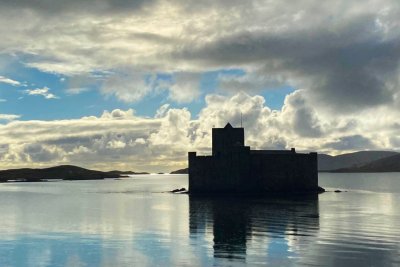




The winter of 2025 / 2026 was my third on the Isle of Barra, about 40 miles off the west coast of the Scottish mainland. In 2023, I felt that it was time for Barra to bake for itself again and not be tied to commercial, ultra-processed options. I decided to start a microbakery dedicated to producing Real Bread, with a focus on genuine sourdough, and Barra Kneads was born.
Life on the edge
The Isles of Barra and Vatersay, in the Outer Hebrides archipelago, are the most westerly inhabited islands in the UK. Islanders often remark that the third winter is the true test – people who endure it are the ones who choose to make this exposed rock and beach island their permanent home, while others eventually return to the mainland. Our main lifeline to the port of Oban on the mainland is a five-hour journey by ferry, which carries the bulk of our supplies.
The other link is a small, 16-seater Otter aeroplane connecting us to Glasgow, which lands on the beach at low tide most days... weather permitting. While not as cold as the Scottish mainland, winter here is marked by darkness and frequent ‘hoolies’ – strong winds that can blow relentlessly for days. These rough conditions often delay ferries and disrupt supply routes, sometimes for weeks at a time.
Challenges of island life
Barra is small – under nine miles long and about five miles at its widest – with approximately 1,200 residents. Unlike some other Scottish islands, we do not have a bakery. Our main source of food is a small branch of The Co-op, which offers a limited range of goods, including factory loaves. The store is vital to sustaining the islands, undertaking a role that other retailers find financially unviable. What is available to us is largely determined by The Co-op’s purchasing decisions and the company makes some efforts to consult with islanders about our needs and wants.
Due to complexities of supply chains and unpredictable weather, however, short shelf-life items are frequently wasted or lost waiting at port. From September to March, the shelves risk being depleted or completely emptied, as the delivery ferry sometimes struggles to make crossings. Perishable items such as dairy, fresh vegetables and Chorleywood loaves quickly disappear. The realities of island transport and supermarket supply chains make the availability of Real Bread a considerable challenge. None is available in this store, just sandwich loaves and sourfaux with a longer shelf life.
Historical context
These islands were once bound by feudal law. Under the thirlage system, tenants were required to take their grain to an officially sanctioned mill for grinding. Milling was a major source of income for the chief or landowner, a legacy still evident in the ruins scattered across the island. Chiefs would order any unauthorised millstones to be destroyed, maintaining the monopoly over milling and controlling who could produce bread.
Establishing the microbakery
Our starter culture, which I named Fhlòraidh a Bharraigh (Flora of Barra), was created in the wild Atlantic winds that sweep through the gorse bush and over the sea grass and shores of the island. Initially, I used my domestic oven, baking two loaves at a time, with news of my Real Bread spreading by word of mouth.
Within weeks, however, I found myself baking for nine hours a day to meet demand. With the arrival of tourists in spring, I was making up to 20 loaves a day. Wholesale orders from local hotels and cafés increased sales further, prompting me to buy a specialist oven. I ordered an RM20 oven from Rackmaster, which they shipped to me on the island. It transformed production, allowing me to scale up production sixfold to baking 12 loaves in an hour. This enabled us to offer a wider range of Real Bread, including ciabatta, focaccia, baguettes and rolls.
Baking on Barra
Other challenges remained. Cereal production on Barra ceased years ago and the island retains only the ruins of a flour mill and its millstones. With no grain grown or flour produced on the island, we have to import it. This adds high transport costs, as well as the delivery unpredictability mentioned above. On two occasions, we ran out of flour and waited three weeks for the next delivery to arrive. Another common issue is split flour sacks resulting from multiple courier handovers.
The cost of living on the island is higher than the mainland and opportunities for income and employment are limited. Real Bread, made by hand in small batches, is more expensive than pre-fabricated alternatives, with our higher import costs adding to this. Even now we are now making Real Bread available, income constraints drive many people towards cheaper, ultra-processed loaves. Retail space poses another issue. The Co-op in the main village is not an option for us as it does not source locally, with the shop’s entire stock coming from all over the world via a delivery lorry from the mainland.
Now and the future
Highlands Wholefoods, a worker-owned cooperative in Inverness, now delivers pallets of organic flour within five days at reasonable transport costs, making every effort to ensure we remain supplied. The Barra Airport Café and Padulas Café in Castlebay offer us free shelf space, and promote our products in their menus and for direct community purchase, without profiteering from the arrangement.
In a like-for-like price comparison by weight, our sourdough bread is actually priced comparably to sourdough (or sourfaux?) loaves on The Co-op’s website. We donate any unsold (but still fresh) loaves to the local community larder and food bank. We are planning to start baking classes early in 2026, to encourage families to make their own, nutritious Real Bread. I am also exploring the possibility of using our RM20 for some sort of community oven scheme, to help make baking a more accessible and affordable option.
Originally published in True Loaf magazine issue 66, April 2026.
Got something to share?
See: YOUR words in print, My baker’s dozen, My favourite bakery, Who are your Real Bread Heroes? and Sharing your recipes.

Published Tuesday 11 August 2026
Real Bread Campaign: Finding and sharing ways to make bread better for us, our communities and planet.