

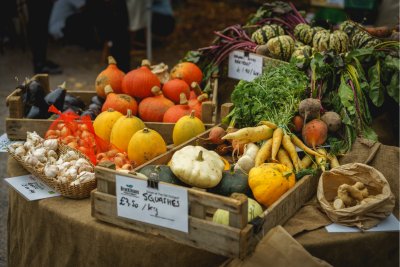
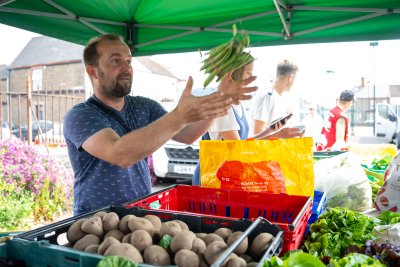
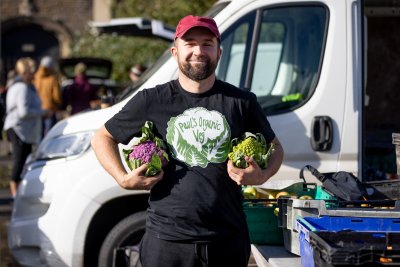
 Seasonal vegetables sold in a stall at Brockley Market, London. Copyright: Paolo Paradiso | Istock
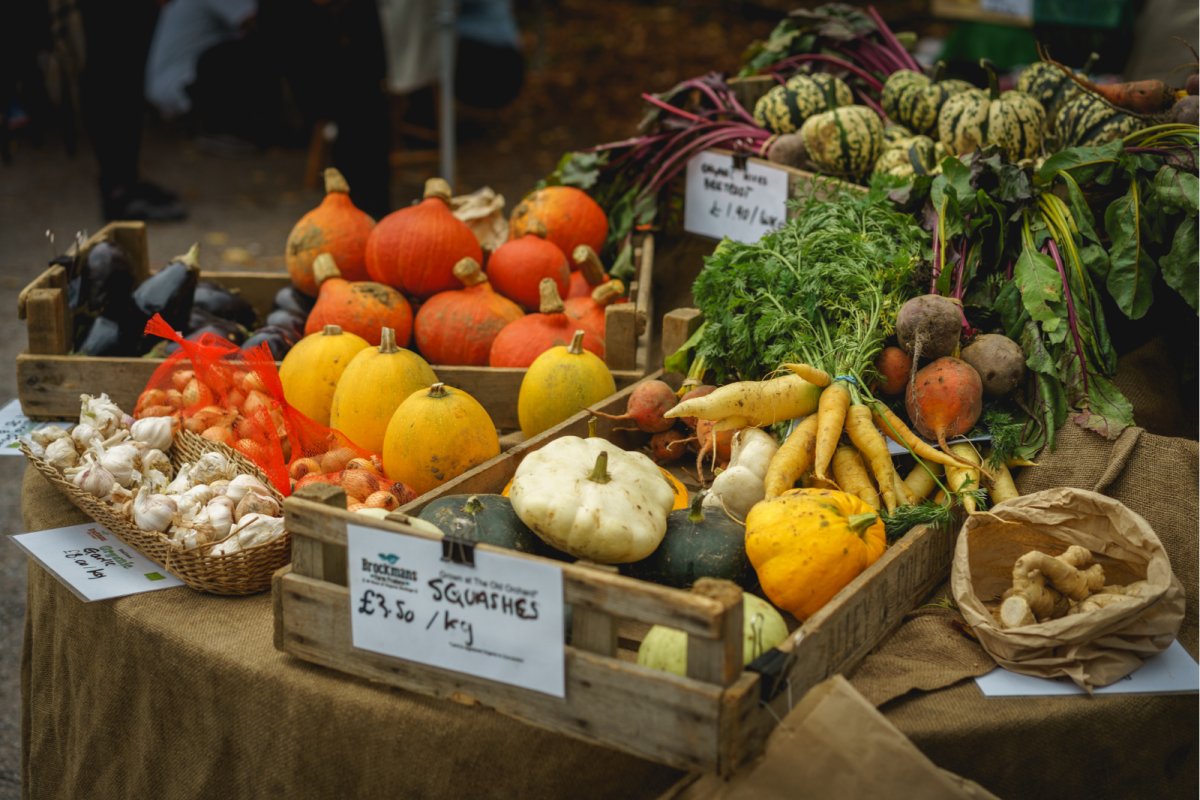

Local food is an essential part of UK resilience
Local food systems can reduce imported inflation and strengthen local economies. That’s why they must be prioritised in the government’s forthcoming Food Strategy.
Local food has long been thought of as a “nice-to-have”. But a new review of evidence has revealed how local food systems are in fact an essential part of a secure and stable food system.
Food prices are in focus again
The 2026 Iran conflict has once again shone a light on the effect that global events can have on our food prices. At present, the UK food system relies heavily on imported food, fertiliser and pesticides, complex logistics and market consolidation. This makes our food prices and supply vulnerable to political instability, climate disruptions and cyber-attacks.
The new review, commissioned by Sustain and undertaken by the Organic Research Centre, has revealed how shorter and more diverse local food systems have behaved through shocks compared with conventional food systems, revealing key benefits.
Local food systems can reduce inflationary pressure
While of course not immune to disruption, local food systems can be more resilient to imported inflation.
- Producers supplying locally are typically less reliant on synthetic inputs such as fertilisers and pesticides whose costs have risen rapidly in recent years. While local does not inherently mean organic, in practice there is often significant overlap.
- Domestic production reduces exposure to exchange rate fluctuations, which have been a key driver of food price inflation.
- Shorter supply chains tend to be more diverse, spreading risk and enabling producers to adjust more quickly when conditions change.
But this isn’t just theoretical. The evidence shows that local food prices and availability have been stable during periods of crisis, where this has been studied. On pricing, Canadian evidence shows that farmers markets experienced lower price increases than national grocery stores from 2018-2023, as well as less frequent rises. On availability, demand for local food surged 111% in the UK during the COVID period, as supply remained stable while supermarket supply faltered.
Local food can strengthen local economies
Value generated through supermarket supply chains largely leaves local areas, with farmers receiving only a small share of the final retail price. By contrast, producers selling through short supply chains retain a far greater proportion of that value, supporting farm viability and the potential for greater profitability. In addition, money spent on local food is more likely to be re-spent locally, generating greater indirect economic activity than spending through national supermarket chains.
Local and regional food systems must be scaled
Local food systems have suffered from years of underinvestment. At present, they are estimated to account for between 0.1% and 5% of UK food supply, which keeps costs high and limits access for consumers. Increasing this share to between 10% and 30% would allow efficiencies to develop, reducing costs, narrowing any price gap between local and industrial food, while significantly boosting UK resilience.
The Food Strategy must prioritise local food
The Government’s forthcoming Food Strategy is a key opportunity to scale what already works. Therefore, the Food Strategy must:
- Set an ambition to raise local food supply to 25% by 2030
- Empower local mayors, or regional / combined authorities, to plan local food supply chains by funding them to produce Local Food Growth Plans
- Use government levers to support stronger local food infrastructure so that producers can supply their local population.
See our full briefing to MPs with references here.
"Previous shocks such as the Covid pandemic have proven that local food systems and Better Food Traders are more agile, more resilient and better at keeping food prices stable than the global, commoditised food chain. Our members across the UK play a vital role in providing access to local, organic food supply. In these volatile times, we need to invest in local routes to market and more regionalised food economies, to increase UK food sovereignty and resilience."
- Julia Kirby-Smith, Executive Director of the Better Food Traders network
“What stood out from the review was the larger-scale studies from countries such as the US, Canada, France and Italy that we found. They showed that it is possible to assess the benefits of local food systems in a practical way at a national scale. At a time when farm profitability is under pressure and the resilience of the food system is being tested, the UK needs a much clearer understanding of what growing the local food sector could contribute to farm viability, regional economic activity and reducing exposure to future shocks. Working with Sustain and the expert steering group on this project has helped turn that research gap into a practical agenda for future work in this area, and it has been a valuable process to contribute to."
Rowan Dumper-Pollard, Principal Researcher - Organic Systems at the Organic Research Centre

Local Food Plan: Creating a plan to grow the local food sector 10x by 2030.

Sustain
The Green House
244-254 Cambridge Heath Road
London E2 9DA
020 3559 6777
sustain@sustainweb.org
Sustain advocates food and agriculture policies and practices that enhance the health and welfare of people and animals, improve the working and living environment, promote equity and enrich society and culture.
© Sustain 2026
Registered charity (no. 1018643)
Data privacy & cookies
Icons by Icons8
