

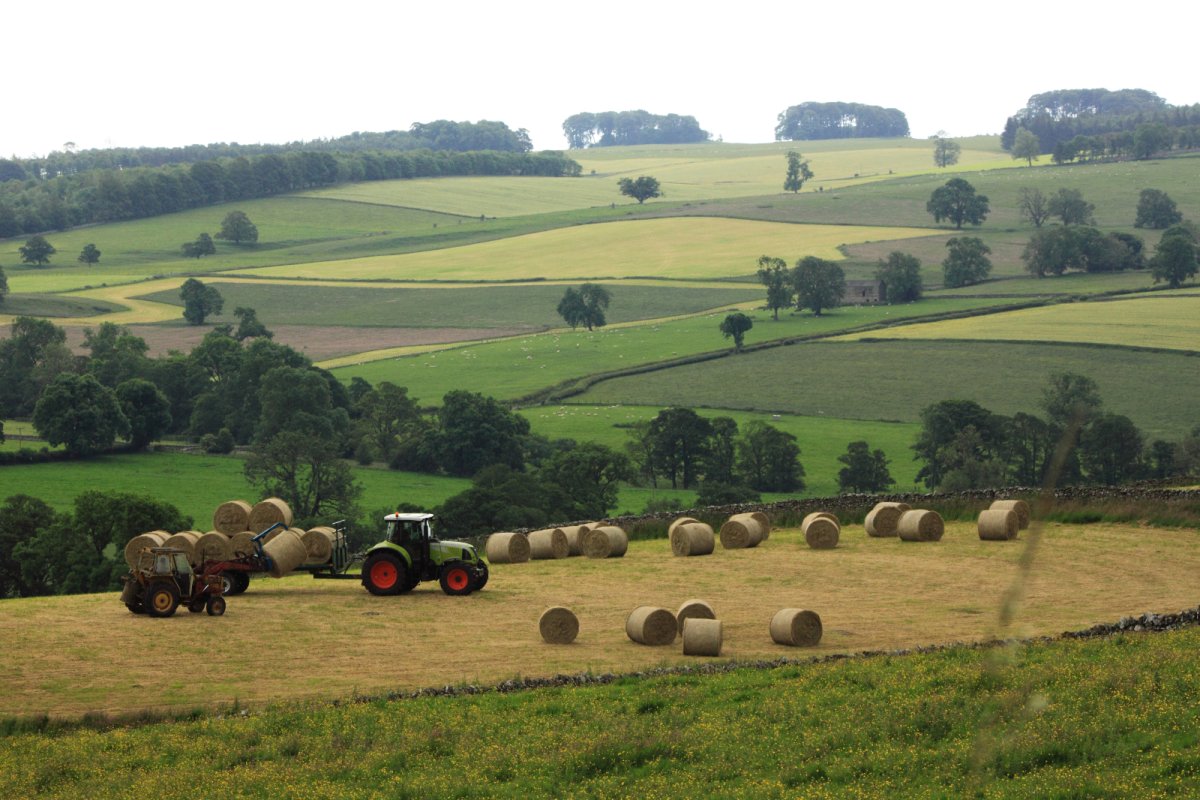
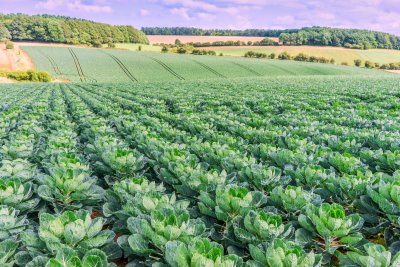
 UK countryside. Copyright: JamieAW | Istock

England's Land Use Framework finally published - Sustain calls for ambitions to be matched by action
Defra has published its long-awaited Land Use Framework for England, setting out principles and data to guide decisions on farming, nature recovery, housing, and climate. Sustain welcomes the publication but warns that good principles must be matched by policy delivery.
The Department for Environment, Food & Rural Affairs (Defra) has released England's first Land Use Framework - the long-anticipated policy document intended to guide how the country's finite land resource is managed across competing demands, including food production, nature recovery, climate action, housing, and energy infrastructure. The Framework draws on what Defra describes as the most detailed land use data ever published for England, and sets out a series of principles for decision-makers at national, regional, and local level.
Emma Reynolds MP, Secretary of State for Environment, Food & Rural Affairs, said:
"Our land is a vital national asset, but it is finite. We cannot be held back by the false choices between building homes and producing food, restoring nature and supporting farmers, or delivering clean energy and protecting landscapes. With better data, smarter tools and strategic planning, we can meet all these needs. This ensures people can manage their land in the way that works best for them while unlocking growth, strengthening food security and protecting our environment. [The Framework] makes a clear, long-term commitment to maintain overall food production in England, to underpin our future food security and drive economic growth.”
England's land - 67% of which is agricultural - faces growing and often conflicting demands. The Framework is intended to help navigate these pressures: maintaining food security at a time of global instability, meeting statutory environmental targets, enabling the building of 1.5 million new homes, and rolling out the renewable energy infrastructure needed for clean power by 2030. Defra has stated that the primary purpose of farming will always be food production, and that the Framework is not designed to prescribe or zone land use, but to inform and support better decision-making.
The Framework sets out a vision for land use in 2030 and 2050, including on food production. By 2030, ‘farmers and land managers will have clarity on the long-term opportunities for their land and policy on food production. This will enable greater investment in highly productive food growing [...]. Farmers will be able to access the information that helps them consider where their land fits in a national spectrum of potential uses, whether for sustainably producing high-quality food, supporting nature recovery or increasing resilience to climate change.’ By 2050, ‘agricultural land will be managed to prioritise sustainable food production and environmental benefits.’ and ‘We will produce more of what we consume, partly because more of our land will be efficiently growing the high-value food that people recognise on their plates, rather than ingredients for processed and unhealthy food or animal feed.’
The publication of the policy follows a public consultation in early 2025, to which the Sustain alliance submitted a joint response backed by 21 organisations spanning farming, food, nature, and climate sectors. Sustain's response welcomed the Framework's intent but identified significant gaps - including the failure to model demand-side changes such as dietary shifts towards healthier, more planet-friendly diets, the exclusion of 80% of England's land from substantive change requirements, and insufficient cross-departmental coordination between Defra, DLUHC, DESNZ, and DHSC.
Glen Tarman, Policy and Advocacy Director at Sustain, said:
"The publication of the Land Use Framework is a genuinely significant moment for food and farming - this is a policy tool that has been talked about for years and which has the potential to help join up the many competing demands on England's land. We are pleased to see it finally arrive, and our consultation response, backed by 21 organisations, helped push for the stronger, more ambitious framework than many feared.
We particularly welcome the emphasis on multi-functional land use, valuing the multiple ways that land can deliver for food production, nature recovery, climate goals and energy, and it is a welcome advance to the fragmented approach of the past. Although hard choices are still to come on land use, this publication is a positive beginning to build from. The Framework's principles must now be matched by funded, joined-up policy - from improved Environmental Land Management schemes to far better cross-departmental working - if it is to drive real, equitable change on the ground."
Martin Lines, CEO at Nature Friendly Farming Network, said:
"We have long said that farms can do much more than simply produce food, and this report rightly highlights the wide range of goods and services our industry can provide. Its emphasis on multifunctional land use - delivering multiple outcomes from the same piece of land rather than separating nature and food production - must be at the heart of our thinking for the future."
Vicki Hird, Strategic Lead for Agriculture at The Wildlife Trusts, said:
“The Land Use Framework must guide how land is used and managed - for food production, development, renewable energy generation and other multiple purposes - whilst creating the vital space for nature to be restored and climate adaptations delivered. The Framework marks a positive change in Government’s willingness to deliver changes in land use at scale. However, the scale of the environmental challenge means that today should be a starting point for further action and ambition, such as an increased budget for the nature-friendly and climate-resilient farm transition.”
Sustain and our members will be conducting detailed analysis of the Land Use Framework in the coming weeks.
Further reading
Land Use Framework on GOV.UK https://www.gov.uk/government/publications/land-use-framework
Read Sustain's alliance response to the Land Use Framework consultation (April 2025), backed by 21 organisations.

Sustainable Farming Campaign: Pushing for the integration of sustainable farming into local, regional and national government policies.

Sustain
The Green House
244-254 Cambridge Heath Road
London E2 9DA
020 3559 6777
sustain@sustainweb.org
Sustain advocates food and agriculture policies and practices that enhance the health and welfare of people and animals, improve the working and living environment, promote equity and enrich society and culture.
© Sustain 2026
Registered charity (no. 1018643)
Data privacy & cookies
Icons by Icons8
