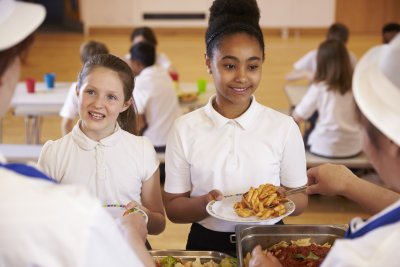



From September 2026, free school meal eligibility will expand to include children in all households in England in receipt of Universal Credit. This expansion is likely to result in 500,000 more children becoming entitled to free school meals, filling a vital financial and nutrition gap for hundreds of thousands of families with children who are most affected by the cost of living crisis.
Our partners at Bremner & Co delved into the data to create this new Local Authority Explorer, to understand the size of the gap being filled in each local authority. This revealed huge variations between different councils and regions.
The council with the most significant percentage change in numbers of children eligible was the London Borough of Hackney, where the % of children eligible and taking up Free School Meals at present is 48.9% (13,479 children), but where 20,
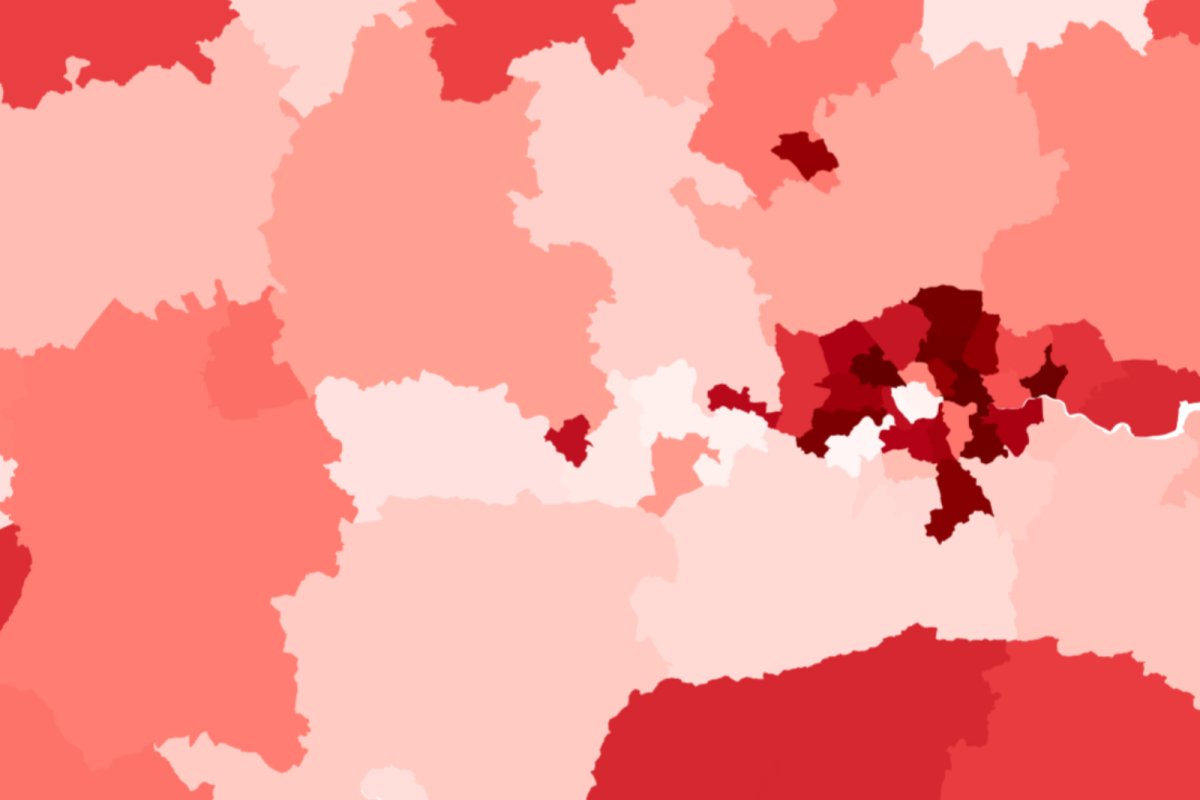
Our team at Sustain have created this heat map, that presents headline data, and the total gap analysis.
Expanding free school meal eligibility to all households on Universal Credit fills a vital financial and nutrition gap for hundreds of thousands of families with children who live on very low incomes. To understand the size of that gap in each local authority, and the benefits for local families, we ranked the 153 local authorities on the number of additional children who will now be eligible for school meals. For example, the local authority with the highest number of children newly eligible for free school meals is the London Borough of Hackney. Previously, 13,479 children were eligible and taking up free school meals (48.9% of school pupils), but over 90% of children live in households receiving Universal Credit. At the other end of the scale, the number of children in the London Borough of Kensington & Chelsea eligible for free school meals is projected to decrease, as transitional protections on free school meals will also end in September.
Select any of England's 153 local authorities and see, in seconds, what might the maximum number of pupils who could be newly identified for free school meals, as eligibility expands.
Want to know more?
Visit the Bremner & Co website where you can access a more detailed database tool - that breaks down the data further, including potential maximum new registrations by each Key Stage of education.
Data sources & methodology for this map:
Data on Free School Meal eligibility and children in households in receipt of Universal Credit were drawn from the following sources:
Department for Education, June 2026, Schools, Pupils and their Characteristics
Department for Work and Pensions, November 2025, Number of school age children in UC households by school year
Figures were adjusted to take account of children in Key Stage 1 already in receipt of Universal Infant Free School Meals, and also children in Key Stage 2 in London boroughs who are already receiving meals via the Mayor of London's additional funding for universal primary school meals.
The gap ranking is based on the percentage change in children becoming newly eligible for free school meals in each council.

Children's Food Campaign: Campaigning for policy changes so that all children can easily eat sustainable and healthy food.