

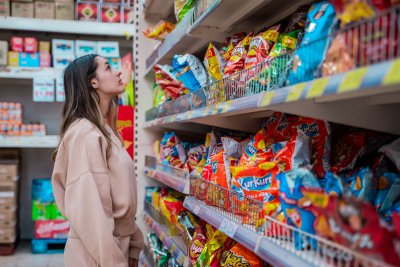
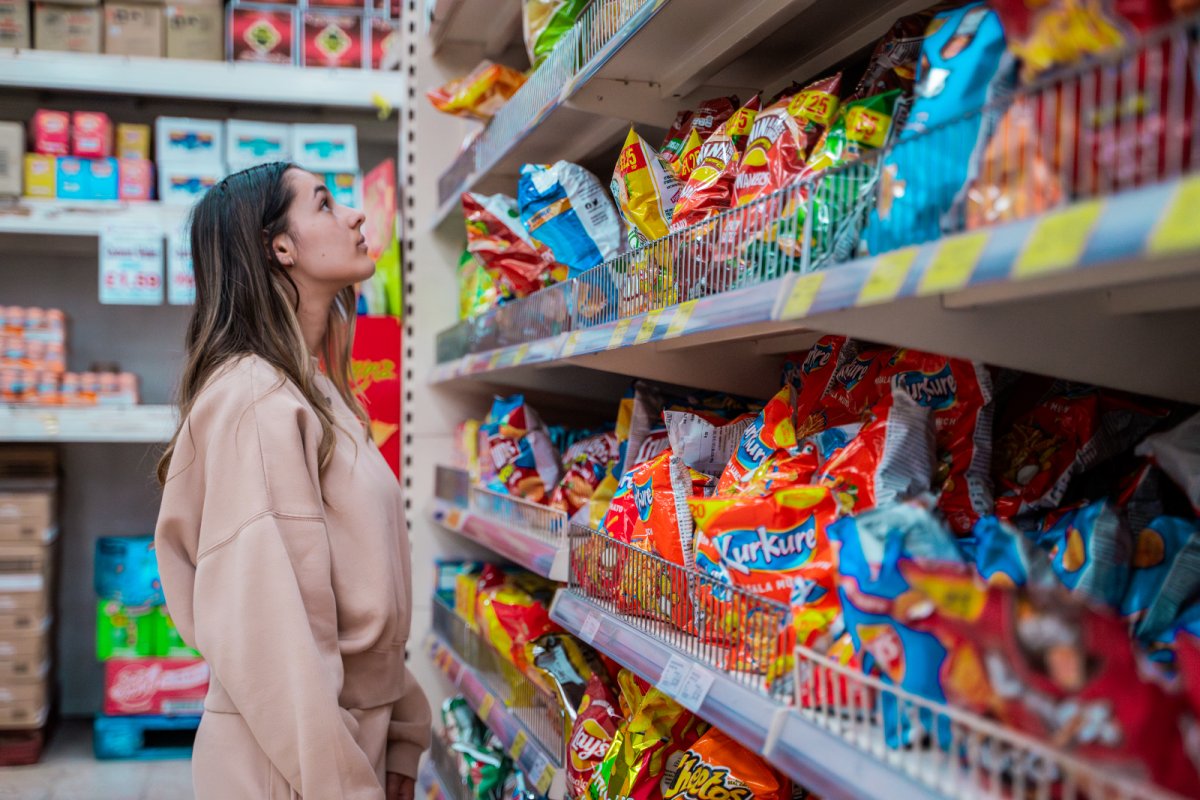
 Girl shopping in a supermarket. Copyright: © 2023. Provided by Impact on Urban Health licensed via a?CC BY-NC-ND 4.0 license

Government opens consultation on strengthening Nutrient Profiling Model
The government has opened a public consultation on plans to apply a new version of the Nutrient Profiling Model to advertising and promotions regulations, which would see more junk food products restricted.
As part of its ambition to create the healthiest generation of children, and turn the tide on childhood obesity rates, the Government is proposing to apply an updated Nutrient Profiling Model (NPM) to existing advertising and promotions regulations.
Access the consultation portal and questions.
The new Nutrient Profiling Model, based on the latest dietary recommendations, looks at the healthiness of food and drinks based on their balance of nutrients – calories, salt, saturated fat, protein and fibre – and in particular free sugars which are added to products or released during food processing.
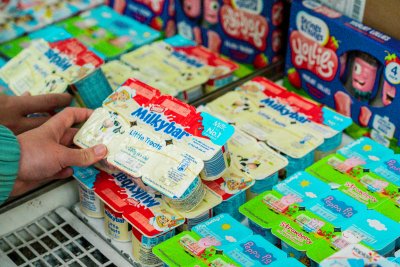
Adopting the new model will mean some products often marketed as healthier but which contain free sugars – such as certain sweetened cereals and fruit yoghurts – are now considered ‘less healthy’ and could be in scope of the restrictions if they are also part of a category of concern to childhood obesity.
The Government expects that applying the new NPM to junk food advertising and volume price restrictions could lead to 110,000 fewer cases of childhood obesity and up to 520,000 fewer cases of adult obesity in the long term.
Read the full Government press release
Fran Bernhardt, Commercial Determinants Co-ordinator at Sustain says:
"The Nutrient Profiling Model has been crucial for progress on children's health. By allowing us to differentiate between healthier and less healthy foods and drinks, it's been the cornerstone of several successful policies. One of its key strengths is its simplicity - it's easy for businesses and policymakers to use and understand, and that must be preserved as the model is updated.
“Opening this consultation is a welcome step, as unanswered questions remain around how to implement these changes. We urge the government to work closely with experts to ensure the necessary data and guidance are in place, so the updated NPM can continue - and strengthen - its role in safeguarding children's health."
The consultation is part of a wider set of measures launched in the NHS 10 Year Plan to support the ambition of the healthiest generation of children ever. The Plan also includes a proposed 'Healthy Food Standard' with mandatory reporting and future targets on healthy food and drink sales, the strengthening of the Soft Drinks Industry Levy, a ban on sale of high-caffeine energy drinks to children and strengthening of School Food Standards.
Katharine Jenner, Executive Director of the Obesity Health Alliance and interim chair of Sustain's board of trustees, says:
“Current regulations do not fully protect children from exposure to unhealthy food and drink marketing, whether on TV, online or at the checkout, which is why updating how foods are classified is a necessary and sensible next step. Some products can look healthier on paper than they are in reality; a stronger model ensures advertising rules actually reduce children’s exposure to less healthy options.
“If we are serious about improving children’s health, making the food on sale genuinely healthier is the first step to real change.”
Read the full Obesity Health Alliance response here
What is different in the new vs current Nutrient Profiling Model (NPM?)
| NPM Model 2004/5 | NPM Model 2018 |
|---|---|
| Uses total sugars | Uses free sugars |
| Higher thresholds for sugar, saturated fat and calorie density | Lower thresholds for sugar, saturated fat and calorie density |
| Lower maximum points for fibre (max 5) | Higher maximum points for fibre (max 10) |
| Positive score for protein, fibre fruit, vegetables, nuts but not seeds | Positive score for protein, fibre fruit, vegetables, nuts AND seeds |
| Uses sodium level for calculation | Uses salt level for calculation |
The consultation is open for 12 weeks until 17 June 2026. You can take part here.

Commercial Determinants: Supporting policymakers and councils to introduce healthy food advertising policies.





Sustain
The Green House
244-254 Cambridge Heath Road
London E2 9DA
020 3559 6777
sustain@sustainweb.org
Sustain advocates food and agriculture policies and practices that enhance the health and welfare of people and animals, improve the working and living environment, promote equity and enrich society and culture.
© Sustain 2026
Registered charity (no. 1018643)
Data privacy & cookies
Icons by Icons8
