

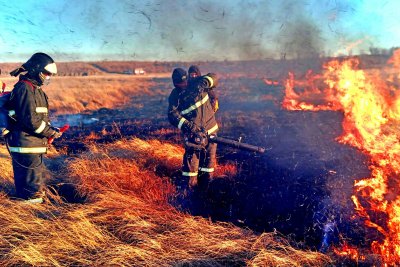
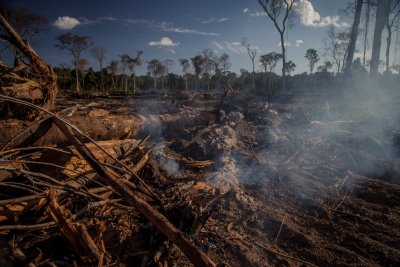
 Firefighters Putting Out a Fire. Credit: Ruslegioner.live from Pexels
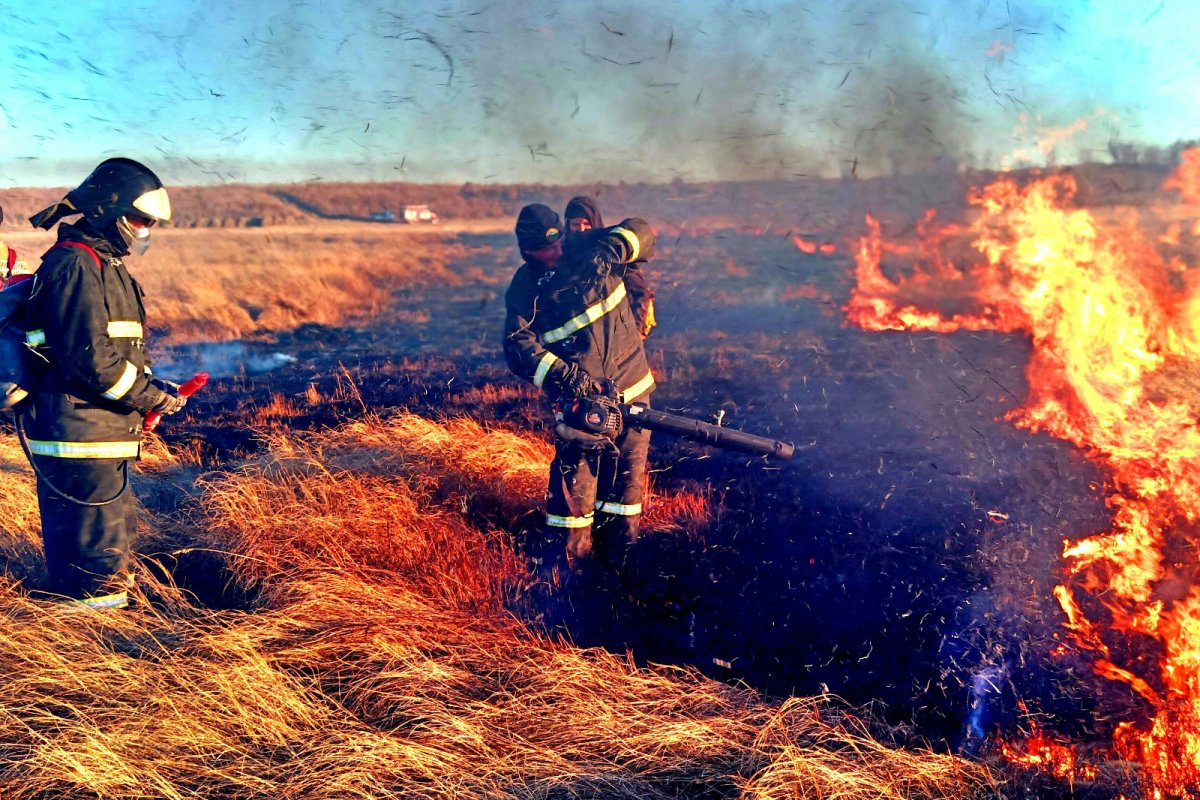

UK food system reliance on imports and meat is a national security risk, intelligence report warns
A UK government report says urgent change is needed to the way we produce and eat food to prevent worsening food insecurity and global conflict for resources.
If current trends in the decline of vital ecosystems continue, the world will see more and worse crop failures, infectious diseases, natural disasters and political instability, according to the Global biodiversity loss, ecosystem collapse and national security report, released by the UK Government last week. The UK is at risk of the fallout from increased competition for food and water and increasing conflict. This would limit the UK’s ability to import food, drive up prices, and lead to falling economic prosperity and increased hunger.
Factors that make the UK particularly at risk include that the country is “unable to be food self-sufficient at present, based on current diets and prices”. More specifically, “the UK does not have enough land to feed both people and livestock…the UK is heavily reliant on imports for fresh fruit, vegetables and sugar. Animal farming at current levels is unsustainable without imports - soy from South America makes up 18% of produced animal feed.”
According to the assessment, some ecosystems vital to global food and water risk collapse in the next 5 years, and crop failure is already leading to the migration of hundreds of thousands of people. It also warns that “conflict and military escalation will become more likely, both within and between states, as groups compete for arable land and food and water resources”. In the UK, farmers have already warned extreme weather could lead to food shortages and civil unrest.
The report, due to be published in October, was released last week following an FOI request from the Green Alliance. According to The Guardian, the release was halted by Downing Street, with The Times reporting that an unabridged version included suggestions that rainforest collapse and droughts could fuel nuclear war and mass migration to Europe, which could drive “more polarised and populist politics in the UK”.
With agriculture the key driver in the loss of the very ecosystems the world depends on for food and water, the report is clear that "significant increases in UK food system and supply chain resilience" are needed to avoid the worst impacts of ecosystem collapse. This includes "a wholesale change in consumer diets" as well as "improved efficiency and waste reduction" and "greater investment in the agri-food sector so that it is capable of innovating in sustainable food production". The authors emphasise that protecting and restoring ecosystems is easier, cheaper and more reliable than technological fixes.
Ruth Westcott, Climate and Nature Emergency Campaign Manager at Sustain says:
“The UK could significantly improve food security and protect farmers from growing uncertainty by investing in growing more vegetables, plant protein and fruit, and in nature-friendly farming. Government policy is currently sending us in the opposite direction. We’re seeing the expansion of polluting intensive animal production, which is exactly the kind of industry this report flags as a risk; import-dependent, inefficient, wasteful and accelerating ecosystem breakdown. This report should be a wakeup call to government to do what’s necessary to make it profitable and attractive to produce food sustainably, and to make our diets more healthy and sustainable. The consequences of continuing as we are are unthinkable.”
The findings come at a critical moment for UK food and farming policy, with several recent government strategies risking further entrenchment of vulnerabilities identified in the report:
The Environmental Improvement Plan, published in December, sets out the government’s approach to reducing the acute nutrient pollution crisis from agriculture, but focuses largely on monitoring, advice, voluntary measures and technical fixes such as slurry storage and low-emission spreaders.
Vicky Gerrard, Campaigns and Research Officer at Sustain says:
“The plan fails to invest in a transition towards producing more healthy, sustainable food domestically, which would address the root causes of pollution from agriculture. Instead, it risks keeping the UK locked into its dependence on intensive livestock farming.”
Similarly, the government’s White Paper, A New Vision for Water, published earlier this month, offers little support for farmers to shift towards food production that is inherently lower-pollution and less resource-intensive, such as pulses, legumes, fruit and vegetables - systems that could also free up land for nature recovery. Vicky Gerrard said:
“While some proposals in the White paper - like extending environmental permitting to cattle farming - are necessary and welcome, if farmers are locked into producing food in an unsustainable way, there’s only so much that permits can do. Farmers need to be supported to produce healthy and sustainable food locally, in a profitable way.”
The government is currently consulting on changes to key planning policy for England. A proposed change includes explicitly supporting increased domestic food production. Vicky Gerrard says this is a risk:
“Planning must explicity support the kind of food production that contributes to sustainable development, radical reductions in greenhouse gas emissions, and reducing food insecurity. That means horticulture, growing low-greenhouse gas crops, and the infrastructure farmers need to support local processing and markets. The policy needs to be clear about this, otherwise we risk green-lighting more factory farming - exactly the kind of food production this report warns about"
Recommendations:
The Government must now look to planning, nature recovery and food and farming policy to mutually support each other to deliver the wholescale changes in diets and food production that security experts recommend. Farming policy must prioritise global ecosystem recovery, and nature and climate policy include measures to grow more foods that boost our resilience and aren’t heavily reliant on imports. Immediate actions include:
- Halting any further expansion of intensive livestock production
- Investing in projects like Bridging the Gap, and schemes like Welsh Veg in Schools, to unlock profitable supply chains that increase the production and consumption of organic fruit, vegetables and legumes
- A horticulture investment strategy that boosts commercial production of UK vegetables, beans, pulses, legumes and nuts, as well as increasing the UK market for these products
- Ending the exploitative practices of large agri-food corporations, and give farmers more power to set prices and market conditions
- Funding farmer cooperatives, networks, and mentoring schemes to scale agroecological farming through knowledge sharing, pooling resources and building collective market power

Sustain: Sustain The alliance for better food and farming advocates food and agriculture policies and practices that enhance the health and welfare of people and animals, improve the working and living environment, enrich society and culture and promote equity.



Sustain
The Green House
244-254 Cambridge Heath Road
London E2 9DA
020 3559 6777
sustain@sustainweb.org
Sustain advocates food and agriculture policies and practices that enhance the health and welfare of people and animals, improve the working and living environment, promote equity and enrich society and culture.
© Sustain 2026
Registered charity (no. 1018643)
Data privacy & cookies
Icons by Icons8
