

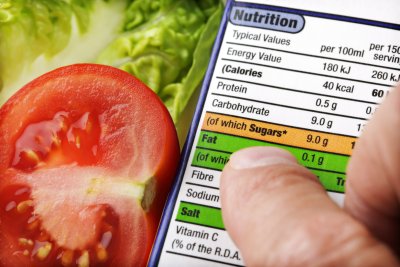
 Nutrition label on food packaging . Copyright: Brian A Jackson | shutterstock


Shoppers want clearer nutrition labelling on food
A new report from consumer organisation Which? has revealed huge public appetite for clearer and more consistent labelling on food to support healthier choices.
The consumer organisation Which? is calling on the government to update and simplify the current traffic light front-of-pack labeling scheme and make all manufacturers and retailers use it consistently.
The current labeling scheme - which uses traffic light colours to reflect the nutritional profile of manufactured products such as calories, saturated fat, sugar and salt - has been in use for over a decade, but is only voluntary. As a result, many retailers and manufacturers do not include it or only apply it to a selection of their products.
In new in-depth research, Which? captured real-time insights during people's daily shopping and cooking preparation to explore how well the current labelling scheme is working.
- Just one third (33%) of supermarket participants said that the nutrition label is the first thing they look at when choosing a product - with brand and price coming ahead of this for more people.
- Snacks (56%), dairy products (33%) and breakfast cereals (27%) are the product categories that people are most likely to check the nutrition label.
- Just 47% of shoppers said they found the label easy to understand, whilst around one in four (27%) said it helps to make quick decisions while shopping.
Which? also asked the public to compare the UK multiple trafflc light label with other food labelling used in Europe (Nutri-score, an A-E grading system based on overall nutritional balance) and Latin America (black and white warning labels), comparing their relative strengths and weaknesses. The UK traffic light label emerged as the most popular option for group members.
Public suggestions included:
- Making traffic light labels mandatory on all food products
- Making the label more prominent - improving its placement, size and readability
- Simplifying the label eg. removing references to percentage of intake which were difficult to understand
- Making portion/serving size recommendations more realistic and consistent
One participant said:
"One participant said: “I dislike that companies can manipulate the traffic light system by labelling food content based on a small portion size, even though most people are likely to consume the entire product in one sitting, which undermines my trust in these companies.”
Which? is now calling on the government to adopt recommendations in the report including:
- The UK needs to adopt a consistent, effective and prominent national front-of-pack labeling scheme across all food products and make it mandatory.
- The UK should seek an exemption as part of the current negotiations for a Sanitary and Phytosanitary Agreement with the EU that enables it to regulate to require a consistent scheme. If this is unsuccessful, the current guidance on a national scheme should be updated and the government should monitor food business use of the scheme to ensure its comprehensive and consistent use.
- The Multiple Traffic Light scheme should continue to be the UK’s national scheme as it emerged as the preferred choice in our research - but with improvements that will make it easier for consumers to use. This includes considering whether % reference intake (RI) information is needed and how portion size information can be more realistic. More generally, the nutrients and criteria underpinning the scheme need to be reviewed and any inconsistencies with current dietary advice (e.g. in relation to free sugars) should be addressed.
- The Multiple Traffic Light scheme needs to be widely promoted and form an important aspect of a wider strategy to support healthier and more affordable choices. This also needs to be backed up with effective enforcement and oversight by the Food Standards Agency and Food Standards Scotland to ensure that its use aligns with guidance and does not mislead.
Which? Head of Food Policy Sue Davies said:
“The UK is in the midst of an obesity crisis and it’s clear that a better approach to front of pack labelling is needed to help shoppers make healthier choices.
“Which? is calling on the government to ensure that all manufacturers and retailers use front of pack nutrition labelling - ideally by making this mandatory. Our research shows that people still prefer traffic light nutrition labelling, but that the current scheme needs updating so that it is clearer and simpler and works better for consumers.
“The new system should be backed up with effective enforcement and oversight by the Food Standards Agency and Food Standards Scotland - so shoppers have full trust in the labels on their food.”

Children's Food Campaign: Campaigning for policy changes so that all children can easily eat sustainable and healthy food.







Sustain
The Green House
244-254 Cambridge Heath Road
London E2 9DA
020 3559 6777
sustain@sustainweb.org
Sustain advocates food and agriculture policies and practices that enhance the health and welfare of people and animals, improve the working and living environment, promote equity and enrich society and culture.
© Sustain 2026
Registered charity (no. 1018643)
Data privacy & cookies
Icons by Icons8
