

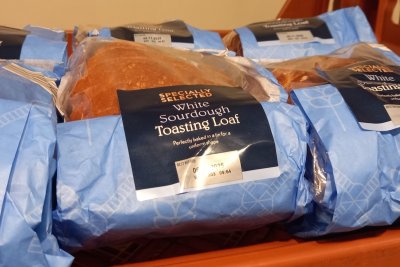
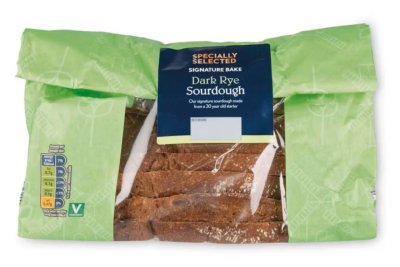
 Aldi loaf containing 'fermented wheat flour'. Credit: www.realbreadcampaign.org CC-BY-SA-4.0
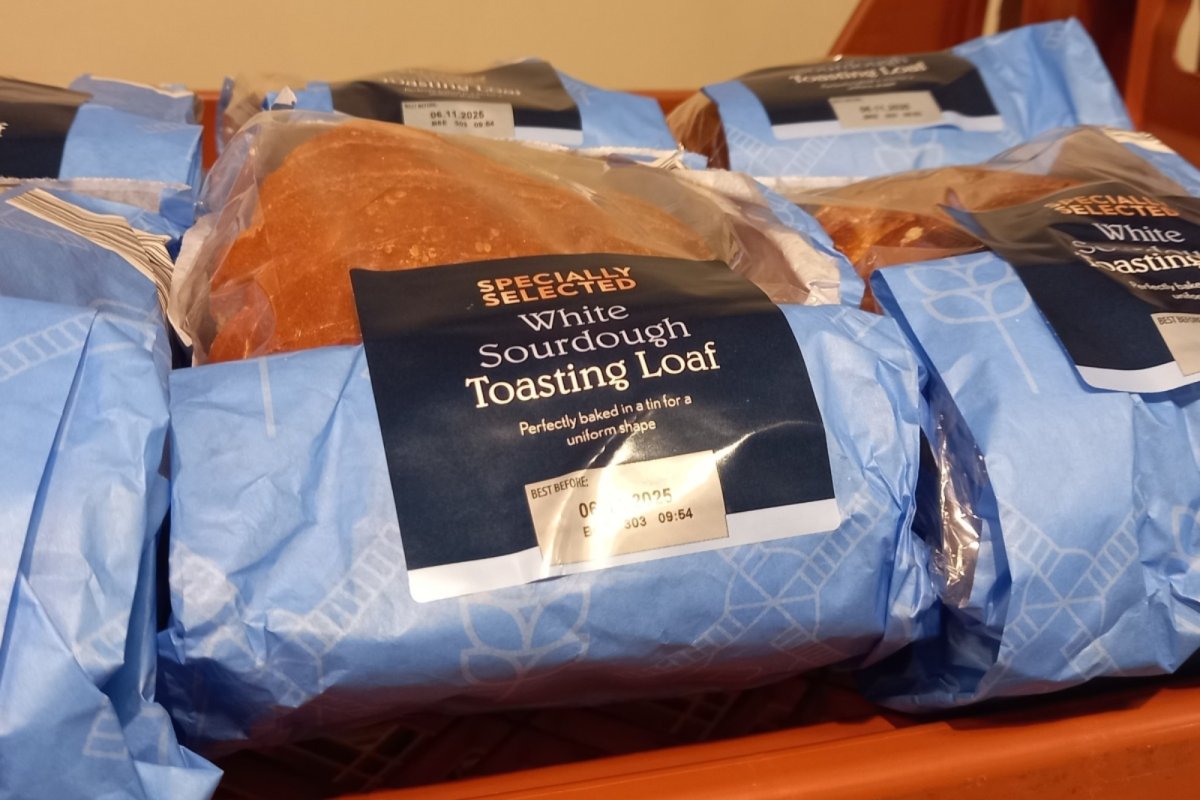

Aldi comes clean about ‘fermented wheat flour’
Supermarket chain reveals the functional ingredient’s identity and preservative purpose.
On 17 December 2025, Aldi advised the Real Bread Campaign that the 'fermented wheat flour' in the supermarket’s own brand products is not a sourdough starter culture that makes the dough rise. The company confirmed that the functional ingredient is in fact flour cultured using specific bacteria that generate propionic acid (or other organic acids), used to delay staling and / or inhibit mould growth in order to extend product durability (shelf life).
This confirmation of preservative function is the latest development in the Real Bread Campaign’s sector-wide investigation into labelling transparency and marketing honesty that began in August 2025.
What this is about
All bread (and industrial dough product) made using baker’s yeast or a sourdough starter is fermented, so why has the phrase ‘fermented wheat flour’ started to appear on the ingredients lists of some factory products? What is it and why has it been added?
In December 2025, the Real Bread Campaign followed up with 14 of the 16 major companies in its investigation, asking: Is the 'fermented wheat flour' listed on your loaves etc. -
- The sourdough starter culture that makes the dough rise?
- Flour fermented using specific bacteria that generate propionic acid (or other organic acids), used to delay staling and / or inhibit mould growth in order to extend product durability (shelf life)?
- Something else?
Honestly not an additive?
Like other UPF (ultra-processed food) manufacturers, industrial dough fabricators are very much aware that many shoppers are wary of seeing additives and unfamiliar substances on ingredients lists.
Rather than switch to traditional recipes and methods, using only natural / minimally-processed ingredients, some manufacturers are instead turning to 'clean label solutions' suppliers that sell 'label friendly' alternatives to E number additives.
One of these is 'fermented wheat flour'. Rather than simply being a sourdough starter culture, used to make the dough rise, this is a ‘functional ingredient’. The flour is intentionally cultured to generate propionic acid (and/or other organic acids), in greater concentration than typically occurs naturally in some fermented foods. At this level, such acids have a preservative effect, inhibiting mould and microbial growth, so helping to extend product ‘durability’ – ie shelf life.
Bacteria are commonly used to generate food additives. When separated from the growth medium, food law deems the isolated substance to be an additive. In the case of propionic acid, which is classed as a preservative, it must be listed on a product label by name and / or the code E280.
When the propionic acid is not separated from the growth medium (in this case, flour and water), food law does not categorise the mixture as a preservative or any other class of additive. This means that a manufacturer can add ‘fermented wheat flour’ and - quite legally - simply list it as such, without mentioning the propionic acid, its E number or preservative effect.
Which companies are doing this?
This appears to be endemic across the industrial baking sector in the UK. The Real Bread Campaign found ‘fermented wheat flour’ on ingredients lists of products sold in the name of the UK’s 10 largest supermarket chains and six of the biggest-selling industrial dough product brands. In some cases, ‘fermented wheat flour’ was listed in addition to yeast and / or a sourdough starter.
The Campaign also found some of the companies marketing the products using claims such as ‘no preservatives’ or ‘no artificial preservatives’. While technically correct in the eyes of food law, we believe such claims to be marketing misdirection that is misleading by implication.
In August and September 2025, the Campaign asked the 16 companies the identity and purpose of the ‘fermented wheat flour’. in their products. Asda confirmed that, in its own-brand products, the term: ‘typically refers to flour fermented to generate propionic acid. This process is used to enhance flavour and shelf life, and it does not involve a live sourdough culture.’
Another company began corresponding with the Campaign on this issue, while the Federation of Bakers issued this statement: ‘Fermented wheat flour is produced by fermenting wheat flour with a probiotic bacteria. This fermentation process produces natural organic acids which naturally help to inhibit mould and thereby extending the freshness and shelf-life for the consumer.’
In December 2025, the Campaign asked the remaining 14 companies the slightly re-phrased question (see above) via Instagram direct message.
To clear up confusion apparent from some social media comments we’ve seen, please note that this issue is separate from ‘fortified’ flour.
See also
For more information on this issue and investigation, answers to FAQs, responses to ‘yes but salt and vinegar are preservatives’, ‘what’s wrong with extending shelf life?’, ‘are you suggesting the lactic acid produced by a sourdough starter should be listed on labels?’ etc. please read:

Real Bread Campaign: Finding and sharing ways to make bread better for us, our communities and planet.




Sustain
The Green House
244-254 Cambridge Heath Road
London E2 9DA
020 3559 6777
sustain@sustainweb.org
Sustain advocates food and agriculture policies and practices that enhance the health and welfare of people and animals, improve the working and living environment, promote equity and enrich society and culture.
© Sustain 2026
Registered charity (no. 1018643)
Data privacy & cookies
Icons by Icons8
