


As we welcome the South West as the latest region to participate in Good Food Local, we take a moment to celebrate some of the fantastic work from local authorities and their partners, to help build healthy, sustainable communities.
Tackling food poverty in Bournemouth, Christchurch and Poole
In Bournemouth, Christchurch and Poole, organisations and local people are working together through the Access to Food Partnership to build a fair, community-led food system. More than 100 community partners now collaborate, making it easier for residents to find the support they need.
Bournemouth, Christchurch and Poole (BCP) Council plays a central leadership role. It manages the Access to Food Partnership, keeps the Access to Food Map up to date, distributes the Food and Energy Support Fund and strengthens community-run food projects. The council also provides insight through the Public Health Intelligence Team and ensures learning from the partnership shapes work across Communities, Housing, Sustainability, Climate and Corporate Planning.
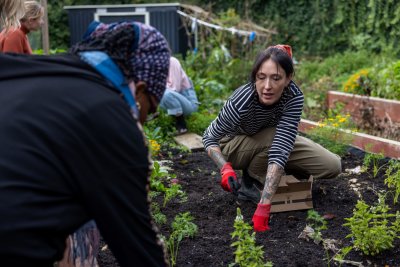
Across the BCP Council area, practical projects continue to grow: social supermarkets and community cafés, expanded pantries, culturally appropriate food for asylum-seeking families, cookery workshops, budget friendly cooking clubs, community kitchen gardens and improved community meal settings informed by Hidden Hunger research with older adults.
Collaboration is key in the partnership's work. Examples include the Start Cooking recipe book and microgrants given to help support resident-led ideas. By working together, partners reduce duplication, strengthen food supply, and make sure support is coordinated and accessible. Residents are linked with the services that can help address the wider factors affecting their ability to access food.
A long term, strategic approach to tackling food waste in Bath & North East Somerset
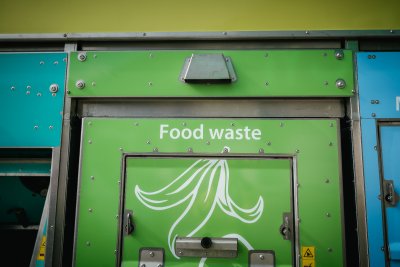
Bath & North East Somerset has taken a long term, strategic approach to tackling food waste as part of its Towards Zero Waste Strategy. Following the district wide rollout of household food waste collections in 2010, the council has steadily expanded access, achieving around ~90% coverage to all flats by 2019 and has delivered further improvements in 2025 by transitioning over 300 harder to reach flats in Bath city centre off co-mingled bagged collections to standard recycling containers, including food caddies. To ensure every B&NES resident has access to a food recycling collection, we will also be installing new, communal on-street food bins to serve central Bath flats without storage space for regular containers by March 2026.
All collected food waste is processed at Codford Biogas through anaerobic digestion, generating renewable energy and fertiliser; diverting food waste from residual waste is key to reducing disposal costs and waste-related greenhouse gas emissions. Alongside the expansion of food recycling, the council has invested in behaviour change campaigns, school engagement, and planning guidance to ensure new developments include appropriate recycling bin storage. These actions have contributed to a 25% reduction in residual waste since 2017 and a 60.5% household recycling rate in 2024/25.
Eating Better in Bristol: Procuring Healthy and Sustainable Food
Bristol City Council’s Healthy and Sustainable Procurement Policy requires all providers of food in council contracts to achieve the Bristol Eating Better Award, alongside additional health and sustainability measures. The award supports and rewards settings such as businesses, schools’ caterers and early years caterers, that offer healthier and sustainable food options.
To support the policy, the council works with contract managers and providers through the Bristol Eating Better Award application process. This ensures food provision reduces sugar, salt and fat and increases consumption of fruit, vegetables and salad. The council also maintains standards for food waste and carbon reduction. In addition, the Bristol Eating Better Award has been added as a procurement social value mandatory measure in the Bristol Social Value Framework.
Examples of this work include the council corporate catering contract which requires all of its nine venues to be accredited with Bristol Eating Better Gold Award and Soil Association’s ‘Food for Life Served Here’ Silver award. All venues currently have the BEBA and as of January 2026 are in the process of applying for the Soil Association’s Food for Life Served Here award. A further example is the council’s ice cream concession contract, which also requires the provider to achieve the Bristol Eating Better Award. The provider is a mobile trader delivering in Parks and must have actions such as providing only low sugar drinks and introducing low sugar ice creams including a 96% fruit lolly. The provider currently holds the award at bronze level.

Plymouth City Council: Supporting community led approaches to food
Plymouth City Council supports community led approaches to food with programmes coordinated by staff across a number of departments including public health, natural infrastructure and economic development. Taking an ‘Asset Based Community Development’ approach, the Council draws on a variety of funding sources including NHS and Government grants to help fund and support a diverse programme of local authority, community and VCSE led health and wellbeing initiatives which build collaborations and partnerships for learning and change. Development and delivery of programmes is typically done in partnership with local VCSE organisations that support citywide networks and, by operating at a neighbourhood level are well placed to coordinate hyper-local community projects. Adopting a ‘Food Ladders’ approach provides a framework to create three strands of interventions covering support for those in crisis, capacity building to enable change and self-organised community solutions.
Building upon existing infrastructure and community assets, key organisations include housing associations, Wellbeing & Family Hubs as well as the local food partnership, Food Plymouth and the Plymouth Food Access Network who both operate as connectors and convenors, bringing the voice of community into strategic conversations. Beyond strategic investment into local networks, direct support for community organisations and initiatives has been provided through grants which have supported a range of community led food initiatives offering education, engagement, composting, cookery skills, community kitchens, fridges and larders, food processing & retail development.
The University of Plymouth has also been involved in the UKRI FoodSEqual research project which focused on working with communities to jointly imagine new solutions to address a lack of access to healthy and sustainable food. Its vision was to provide citizens of culturally diverse, disadvantaged communities with choice and agency over the food they consume by co-developing new products, supply chains & policy frameworks that deliver an affordable, attractive, healthy & sustainable diet. Central to the project in Plymouth, six community food researchers were recruited to bring the voice of residents into conversations about the wider food system, acting as co-researchers to support research activities and extend social impact. The researchers have planned and organised various food and community-based events alongside supporting wider FoodSEqual activities.
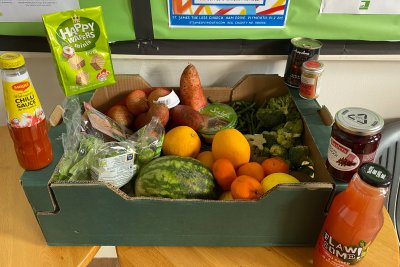
A notable success story in Plymouth has been the development of 12 neighbourhood food cooperatives under the Cooperation Town model through the efforts of a joint funded Cooperation Town Food Organiser. Members pay a low price for goods, around £3 per week for at least 12 items. This money goes into a group fund and the group then makes a joint decision on how it is spent.
The role of the Cooperative Town Food Organiser has been critical to the set up and sustainability of the Co-ops. They identify areas of need, build partnerships and trust, support membership, facilitate the initial set up and build skills, capacity and wrap around support. Learning from the Co-op programme has been used to build on the concept and has supported the development of two new Social Supermarkets.
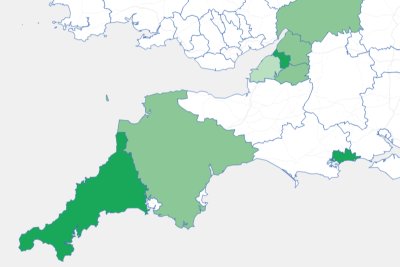
Find the full results from the region’s first benchmarking here, including more information about good food work in the South West.
South West maps
For more information on how Good Food Local could support your region, contact us here.
Take a regional approach to Good Food Local
As well as supporting individual councils to improve their local food system, Good Food Local can support a region to come together, share opportunities and challenges and build a sense of collective direction.
Could your region be next?

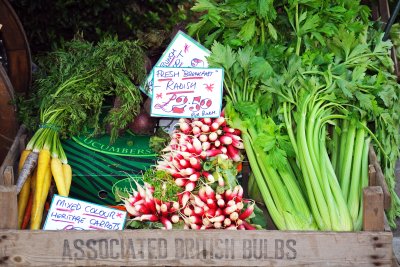
 Food Box from Food Co-Ops, Plymouth. Credit: Kelly Fritzsche, Food Co-Ops Coordinator, Plymouth
Good Food Local: Supporting local authorities to create more healthy and sustainable food systems in their local areas.