

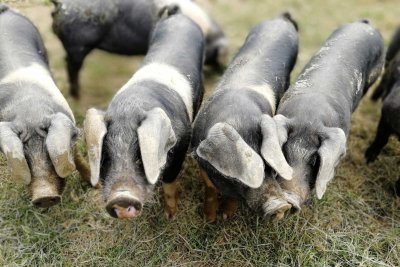
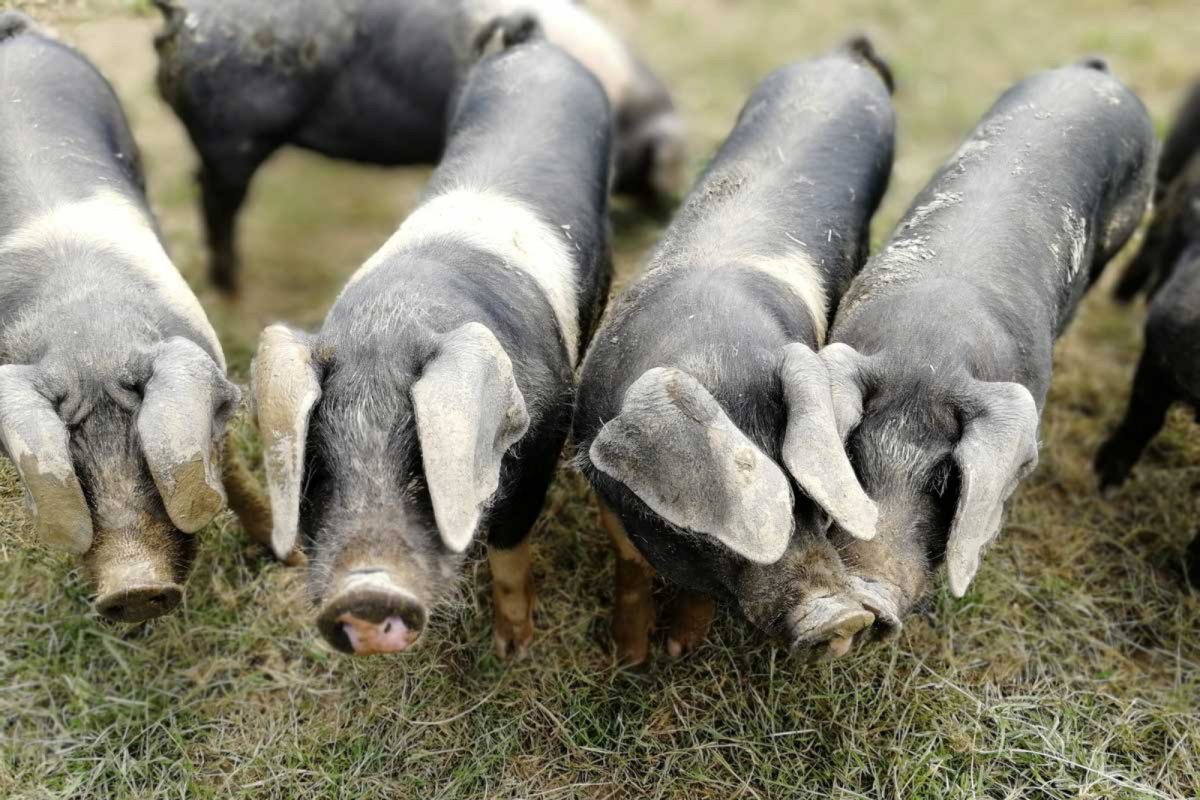
 Organic pigs. Credit: Vicki Hird | Sustain

Intensive livestock MIA: Sustain responds to the Animal Welfare Strategy
While the strategy shows real progress on cages and crates, we will see more animal suffering in industrial animal production unless the government invests in sustainable farming.
Sustain, the alliance for better food and farming, calls for greater government action on factory farming following release of new Animal Welfare Strategy.
Sustain has been working with other environmental campaigners, lawyers and members of affected communities to halt the rapid spread of factory farming for the last four years. We are concerned that marginal changes to the law on farmed animals, as well as the false narrative that industrial livestock is necessary for food security will push the UK further down a path of intensification, which would mean cruel and inhumane living conditions for more animals.
Our major concern is that discussion on cimate change in the strategy is largely confined to the risks of extreme weather to farm animals. In reality, the climate and nature crises pose probably the greatest threat to the lives of animals globally, and the farming of animals is one of the most significant contributors to these crises. Reducing intensive livestock production, and supporting sustainable farming and diets should therefore be a key part of any strategy that aims to benefit the wellbeing of animals.
The positives
Confinement
The government has committed to a transition away from cage systems for hens and farrow crate for sows, and the strategy states they support farms to align with the Better Chicken Commitment, which is a voluntary commitment to reduce stocking density and phase out fast-growing breeds. Whilst we welcome the recognition that animals deserve to live in a manner more consistent with their natural behaviours, our experience in supporting communities on planning applications is that operators are using the better chicken commitment to rationalise expansion of the industry. The best way to safeguard against the suffering of millions of animals is to move away from intensive livestock farming, to an agroecological, localised, and just food system with far fewer farmed animals, much more of our protein from plants, and in which animals provide beneficial ecological services and are genuinely well cared for.
Enforcement
It is positive that this strategy commits the government to improve enforcement of animal welfare regulations, as there is significant evidence that non-compliance with farming rules is commonplace. The Animal Sentience Committee’s February 2025 report identified systemic compliance issues with welfare regulations, such as poor inter-agency coordination, lack of transparency and consistency of enforcement action, and insufficient detection of offences.
Sustain's own investigations into regulatory compliance in intensive livestock operations concur. Terry Jermy MP uncovered 7000 violations of environmental permit regulations via FOI last year, as analysed by Sustain, including exceeding permitted stocking densities. Multiple high-profile animal welfare exposes in intensive farms have showed gaps in reporting, compliance, and resourcing and last year we saw damning evidence of compliance failures with Red Tractor environmental standards. Data seen by Agtivist and published in Wicked Leeks last month showed that more than 356,000 chickens, cattle, pigs, and sheep, amongst other species, were involved in welfare violations documented in England and Wales between January and June last year.
Making enforcement records publicly available, properly resourcing enforcers and financial support for farmers is crucial to making progress on non-compliance, and is a welcome improvement.
Areas of concern
No transition away from intensive livestock farming
Currently, the direction of travel in UK farming is incredibly worrying for animals and farmers.
We are on a trend of greater industrialisation, with more animals living in industrialised, US-style ‘megafarms’. It is the exploitation of animal’s bodies, restriction of natural behaviours, exploitation of workers and destruction of nature that facilitates the extraction of colossal profits to global corporations; as is the defining characteristic of industrial animal production. And the more that meat corporations expand, the greater their power to squeeze farmers, influence government policy and hide their impacts from the public.
Sustain's position is that the only real way to reverse the colossal scale suffering of farm animals in the UK is to create viable and attractive alternatives for farmers. Alternatives must include options that are also solutions to the climate emergency, including boosting production of vegetables, pulses, legumes and beans, as well as mixed farming systems that incorporate animals. A UK Horticulture strategy has been promised, and this needs to focus on ensuring the growth of a plant-based protein industry in the UK that is profitable and innovative.
Without such an approach, we risk catastrophic expansion of intensive farming on the grounds that it is ‘high welfare’. We also risk the blurring of the distinction between intensive livestock production and farming that is genuinely high welfare. Thus the intensive industry risks further undercutting and undermining sustainable farming.
The economic case doesn’t add up
The strategy presents economic arguments to justify the intensive livestock industry, stating the sector brings in £20.1 billion to the UK economy every year.
But the reality is that the not-so-hidden costs to communities, jobs, and our health are vast, at least £1.2 billion a year according to research by the Conserative Animal Welfare Foundation. Research from the Office for Budget Responsibility has found that UK GDP will drop by 8% by 2070 if we hit 3 degrees above pre-industrial, with "a peak shock that wipes out around £200 billion from UK GDP" say researchers from the University of Oxford.
Studies have shown producing food in a different way creates more jobs, maintains and builds a diversity of skills, improves rural economic diversity, and leaves more land for other uses like nature recovery.
Climate change poses an acute risk to non-human and human animals
Given the urgent threat to farmed and wild animals from climate change and nature loss, it is disappointing that the strategy doesn’t prioritise solutions that would reduce these risks.
The strategy confines discussion on climate change to the likely impacts on farm animals, for example cooling measures in transport and farms, and producing breeds better suited to extreme heat. This is not an inadequate response to climate collapse. The livestock sector in the UK and globally is one of the largest contributors to global emissions and these emissions are not reducing. The government must prioritise preventative measures like those outlined above – a Just Transition away from intensive livestock and an investment in plant-based proteins and horticulture – to protect all animals, farmed and wild, human and non-human.
Food security
The strategy argues that increasing British ‘higher-welfare’ production will cut imports from lower-welfare countries and boost growth and food security. It is shortsighted and reckless to consider intensive livestock as a food security solution. The government’s own food security assessment identifies increasing consumption of animals as a threat to food security, particularly because of the vast amounts of land and crops the industry consumes.
Government policy can both end low welfare imports, support high-welfare UK farming and transition the UK to a healthier and more localised food system. If the government is serious about reducing low-welfare imports, it could tackle the factors that are driving overconsumption of meat and dairy in the UK, such as marketing, greenwashing and misinformation.
Conclusion and our recommendations:
We urge the government to read the writing on the wall and invest in a just transition for UK farming. We call for:
- No further expansion of industrial livestock operations, to relieve widespread animal suffering and protect UK farmers
- More support for high welfare and nature friendly farming
- More public investment and policy support for horticulture and healthy and sustainable diets
Animal, human and planetary suffering are symptoms of the same problem; extractive and self-destructive models of food production. The government will only show it is serious about animal welfare when it uses all its powers to support genuinely sustainable farming instead.

Sustain: Sustain The alliance for better food and farming advocates food and agriculture policies and practices that enhance the health and welfare of people and animals, improve the working and living environment, enrich society and culture and promote equity.




Sustain
The Green House
244-254 Cambridge Heath Road
London E2 9DA
020 3559 6777
sustain@sustainweb.org
Sustain advocates food and agriculture policies and practices that enhance the health and welfare of people and animals, improve the working and living environment, promote equity and enrich society and culture.
© Sustain 2026
Registered charity (no. 1018643)
Data privacy & cookies
Icons by Icons8
