

Sustain / Real Bread Campaign / Articles
Windmills of the mind
An article in True Loaf issue 60 prompted Rob Milne to pen this piece.
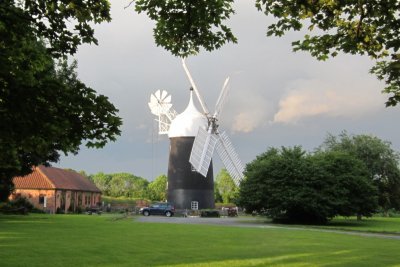




It was the picture of the beautifully-restored and functioning windmill at Tuxford in Nottinghamshire that brought to mind my favourite quote from a book, any book, all the books I’ve ever read!
In his 1940 book, Corn Country, C. H. Warren described a visit to the owner of a watermill, from where, two or three hundred yards away, an unused windmill could be seen. The author asked the miller which he preferred, watermill or windmill. The miller replied: ‘I was taken away from school when I was fourteen; and at fourteen and a half I was put in charge of that old mill. Can you beat it? Of course my father kept an eye on me, from the mill here, and if there was a press of work I had the help of another lad about my own age. But mostly I ran the mill on my own: did every blessed thing there was to do. And I can tell you they were the happiest years of my life. The stronger the wind blew, the better I liked it: I just put on more feed* and let her go. No, I’ve never been happier since.’
Useful and productive
This paragraph could be used to support many arguments and good causes. I used it in an article advocating food gardening in the school curriculum. One of many benefits of children engaging in food production is that it boosts their morale because they feel they are doing something really useful. The quote above powerfully illustrates how children in the UK once were useful and productive members of their communities, and valued for that, in contrast to today. It has to be said, though, most child labour of the past was dangerous, unhealthy and exploitative. One thinks of mines, chimneys and farms. Milling would not have been without risk either. ‡
At school, my daughter ‘did’ cookery, but they never made bread. At one parents’ evening, I asked the cookery teacher why children were not taught this most basic and useful skill. I was told it would take too long. Time shouldn’t be a problem. Children could make dough during lesson time, then what child would not want to come back during break time to put their dough in a tin, then into a warm oven to rise? The teacher, or a member of kitchen staff, could surely turn the oven on when the dough had risen and off when the loaves were baked, and the children could collect their bread at the end of the day.
Job done! It just needs a bit of organising and children will have one of the most useful, memorable and enjoyable lessons on their days at school.
*Feed refers to the area of canvas deployed on the sails of the windmill, or the number and angle of wooden slats adjusted to catch the wind.
‡ In some places, terrible abuses and exploitation continues today. Conversely, many communities around the world value and reward the contribution children make to society. [ed.]
Lessons In Loaf
Bake Your Lawn is the Real Bread Campaign's grow-a-loaf guidebook to small-scale sowing, harvesting, milling and making Real Bread with wheat. It features a range of ways that Real Bread making can be woven into a school day. The book also includes information and inspiration for using bread as a topic across a range of curriculum subjects.
You can read about a number of school bread making projects in the latest articles section of the Campaign website.
Got something to share?
See YOUR words in print , my baker’s dozen and my favourite bakery.

Published Monday 22 December 2025
Real Bread Campaign: Finding and sharing ways to make bread better for us, our communities and planet.