

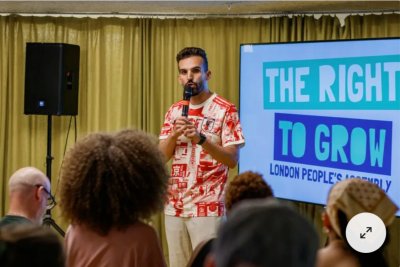
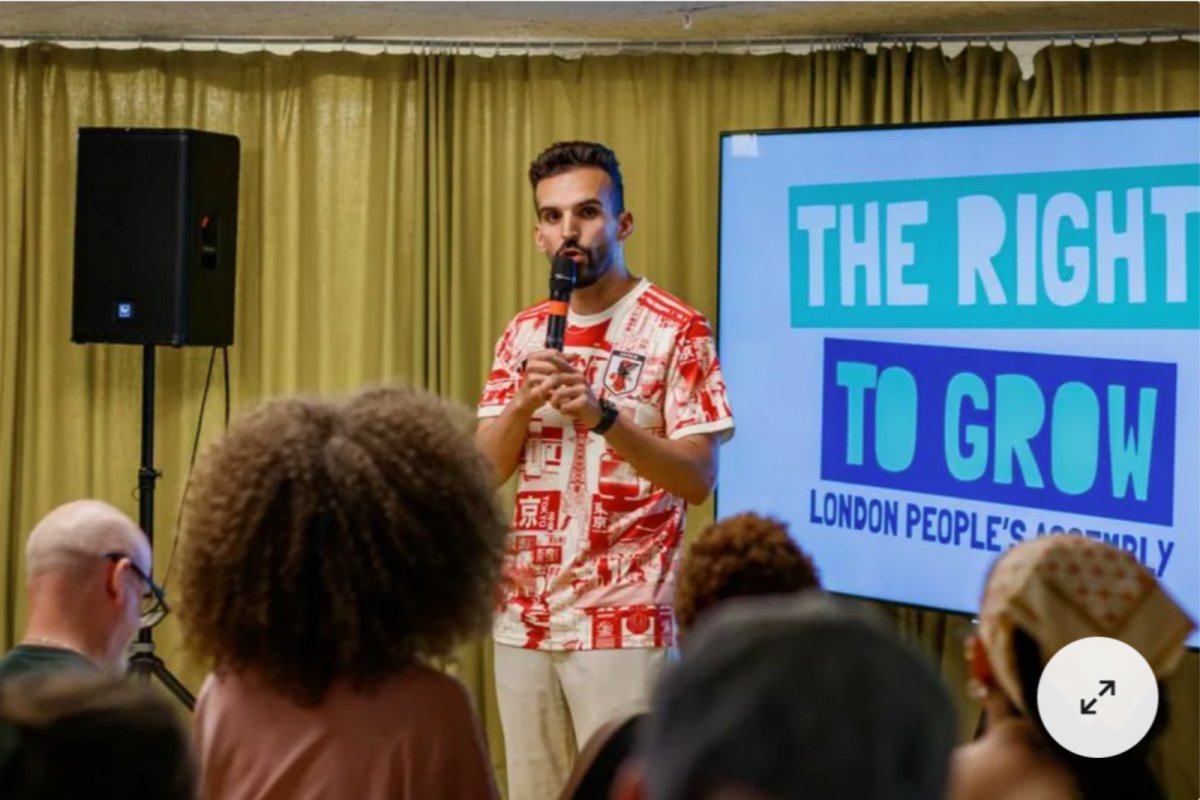
 Deputy Mayor for Environment Mete Coban addresses the audience at the People's Assembly on climate, environment and Right to Grow. Credit: Tanya Vora

London campaigners call on City Hall to take action on the Right to Grow
At the recent London People's Assembly on Food, Nature and the Right to Grow, campaigners welcomed the progress already being made across the capital to support food growing on public land, while urging City Hall to go further, faster.
Several London boroughs have now backed the Right to Grow principle, including Hounslow, Hackney and Southwark, with more councils considering how they can support communities to access land for growing.
Hundreds of people took part in people’s assemblies throughout June leading to a new report from the London People’s Assembly on Food, Nature and the Right to Grow. It lays out 12 demands for London-wide action to make the city “greener and more edible” by 2035, including a City Hall-inspired framework, dedicated community growing officers in every borough and the embedding of food growing into future health and planning strategies.
Deputy Mayor for Environment, Mete Coban, supports the principle of increasing access to green space as "a matter of social and environmental justice". Whilst Kalpana Arias, key campaigner, calls on the GLA to implement Right to Grow in their food and housing policies, so access to land isn’t dependent on a postcode lottery, but is achievable for all Londoners.
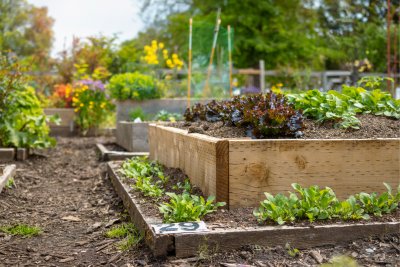
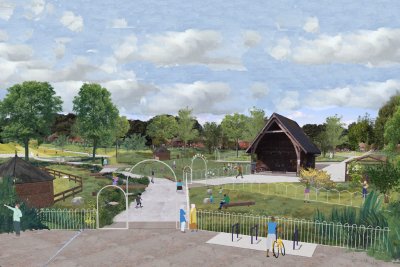
The policy aims to reduce the barriers that often prevent communities from setting up food-growing projects, making the process of creating public gardens simpler, more accessible and better supported by the appointment of dedicated Food Growing council officers, mapping of available land and free and simple licence agreements
Across the capital, many residents face significant barriers to accessing fresh, affordable food, while a shortage of available land increasingly limits opportunities to grow. Existing community gardens are under threat from development with well-loved sites like The Canal Community Club having to fight development despite the holistic benefits they provide to the local community.
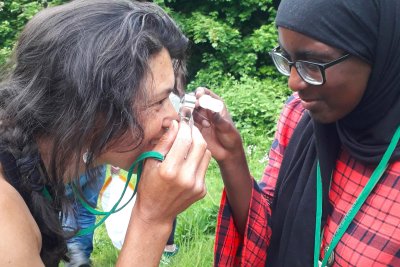
London communities are experiencing the combined impacts of the climate and social crises, from rising temperatures and extreme heat to food insecurity, inequality and loneliness. Community gardens are uniquely placed to respond to these challenges, providing cool spaces where people can grow food, connect with nature, learn new skills and build relationships with their neighbours.
Rachel Dring, Capital Growth Coordinator, states:
"Right to Grow is one of the campaigns our members feel most strongly about, and we would welcome City Hall's support in taking it forward. There is a clear and growing appetite among Londoners to reconnect with the land and grow their own food. We believe this new approach could offer a genuine opportunity for citizens and local authorities to work together to make our neighbourhoods greener, more abundant, and to bring food growing back into everyday life."
Do Londoners actually want a Right to Grow? Absolutely. Demand for growing spaces far outstrips supply. More than 30,500 Londoners are currently on allotment waiting lists, with 16 boroughs closed to new applicants. In some boroughs, like Wandsworth, residents face waiting times of 21 years for a plot.
And the Right to Grow approach is already delivering results. In Southwark, where the council adopted the motion in 2021, investment in Food Growing Officers has helped establish 21 new gardens with 241 food growing plots with more in development.
By encouraging more councils to adopt the Right to Grow, campaigners hope to see a city-wide shift towards making food growing a central part of London’s future. Unlocking land for communities could help strengthen food resilience, support climate action and create more inclusive access to nature.

Sustain: Sustain The alliance for better food and farming advocates food and agriculture policies and practices that enhance the health and welfare of people and animals, improve the working and living environment, enrich society and culture and promote equity.
Sustain
The Green House
244-254 Cambridge Heath Road
London E2 9DA
020 3559 6777
sustain@sustainweb.org
Sustain advocates food and agriculture policies and practices that enhance the health and welfare of people and animals, improve the working and living environment, promote equity and enrich society and culture.
© Sustain 2026
Registered charity (no. 1018643)
Data privacy & cookies
Icons by Icons8
