

 Credit: iStock
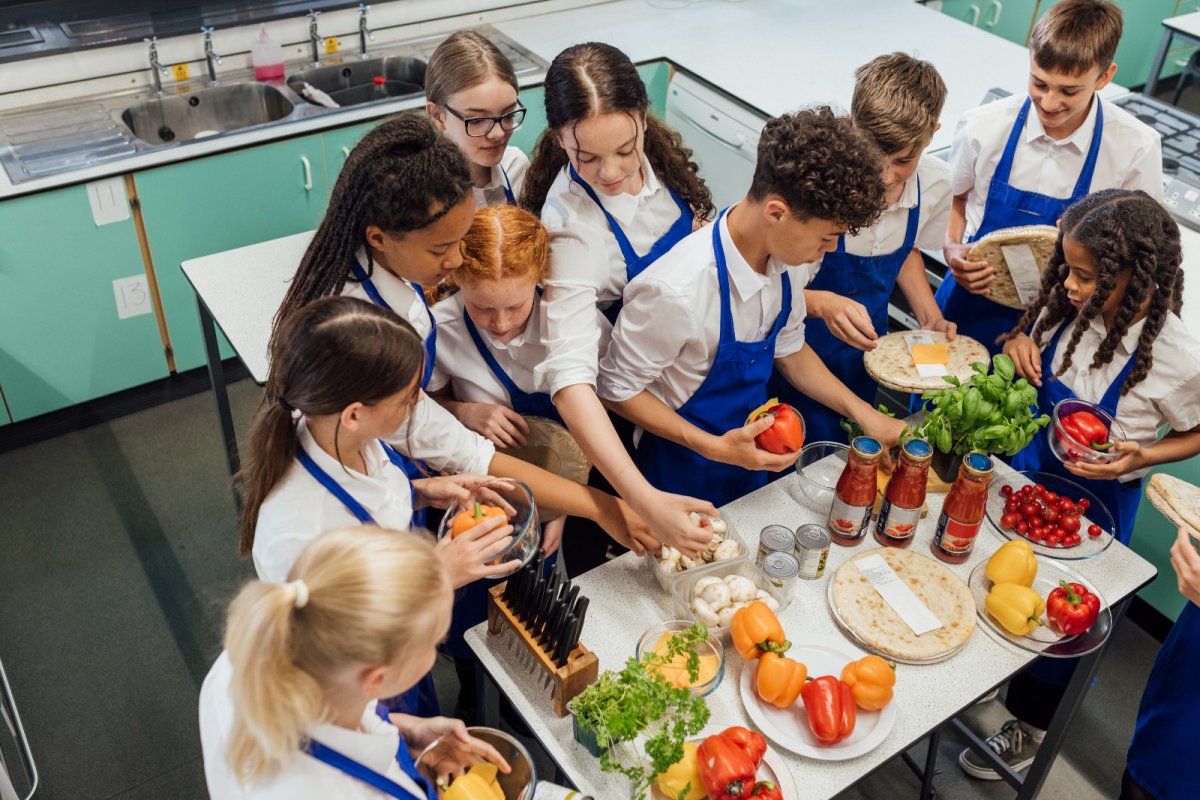

New report warns of widening inequalities in food education
A major new report from The School of Artisan Food’s Best Food Forward programme highlights overwhelming public support for food education in England’s schools, while exposing significant gaps and inequalities of access.
A new Hungry for Change report published by the School of Artisan Food reveals near-universal agreement amongst parents and young peole that learning to cook healthy meals and make informed food choices is an essential life skill, comparable to physical activity or digital literacy.
The findings, based on polling with more than 2,000 parents and 2,000 young people aged 11-18, conducted by Public First, also reveal that provision of food education is fragmented, inconsistent and often insufficient. In particular, it reveals worrying inequalities, with pupils from more disadvantaged backgrounds having less access to quality food and nutrition education.
- Just 48% of young people report receiving any dedicated curriculum time for food education.
- Nearly one in four (23%) say their school does not meaningfully promote healthy eating.
- Access drops sharply with age, falling from 56% at ages 11–12 to 32% by ages 17–18, just as young people gain independence.
Responding to the findings, Children's Food Campaign Officer Naema Jannath says:
“Food plays a vital role in children’s lives, yet far too many young people leave school without the skills, confidence, or understanding to make healthy, sustainable choices. This report highlights that access to food education is inconsistent and often disappears just as teenagers gain independence. We need a curriculum that gives every child the knowledge, skills, and passion for food, brought to life through a whole-school approach from farm to fork, so that learning about healthy eating is experienced, practiced, and embedded across the school day.”
Current provision of food education is a postcode and income lottery. Pupils from lower-income households and those in state comprehensive schools are significantly less likely to receive food education than their more affluent peers.
- Only 41% of children from lower income households (below £45,000) reported having class time to learn about food and nutrition, compared to 65% of those from the highest income families (above £100k) - a 24 percentage point gap.
- Children attending state comprehensive schools are also 24 percentage points less likely to receive food education than private school pupils.
Limited access is reflected in low confidence around cooking and preparing food:
- Only 22% of parents believe children nationally can cook and prepare meals well from fresh ingredients.
- Young people from lower-income households are more than 10 percentage points less confident preparing food independently than their peers from higher-income families.
The report also highlights that food education often disappears at the point young people need it most. As National Curriculum guidance only requires core food education up to Key Stage 3, access drops from 56% at ages 11–12 to just 32% by ages 17–18, precisely when young people are gaining independence and considering pathways into food-related careers.
The findings echo long-standing calls from Children’s Food Campaign Parent Ambassadors to place food education at the heart of curriculum reform. In 2024, parents urged policymakers through an open letter to strengthen food education so that all children learn to cook, understand where food comes from and gain practical life skills that support health, sustainability and future careers.
Children's Food Campaign Parent Ambassador, Mary Needham says:
“To me it is a no brainer that our children should leave school knowing how to put simple ingredients together to create a balanced meal. My experience, both as a parent and a practitioner, shows me that teaching kids how cook from scratch boosts their confidence, sparks their curiosity and equips them with other essential life skills such as budgeting, financial resilience and teamwork. As well as this, the sensory and social nature of cooking is beneficial for their mental well being, creativity and cognitive development."
The report warns that, as government investment in school food expands through breakfast clubs, wider free school meal eligibility and updated standards, these efforts risk falling short without embedding high-quality food education alongside provision.
Building on earlier mapping work, the authors call for a whole-school approach in which children can “learn it, see it, live it” through curriculum, culture and daily school practice.
Recommendations include:
- making food a core subject across Key Stages 1–4
- appointing school food leads within multi-academy trusts and local authorities
- restoring a Food A-level to support pathways into food and nutrition careers.
Jenny Paxman, CEO of The School of Artisan Food says:
“Hungry for Change reinforces what we have seen consistently through our work: food education can be transformational when it is done well, but access is far from equal. This report shows that too many children are missing out on skills that are fundamental to health, confidence and independence. If we are serious about improving outcomes, food education must be treated as a core part of school life for every child.”
With strong public backing and clear evidence of unequal delivery, the report argues that now is a pivotal moment to ensure all young people leave school with the knowledge and skills to eat well and thrive.
See also

Children's Food Campaign: Campaigning for policy changes so that all children can easily eat sustainable and healthy food.






Sustain
The Green House
244-254 Cambridge Heath Road
London E2 9DA
020 3559 6777
sustain@sustainweb.org
Sustain advocates food and agriculture policies and practices that enhance the health and welfare of people and animals, improve the working and living environment, promote equity and enrich society and culture.
© Sustain 2026
Registered charity (no. 1018643)
Data privacy & cookies
Icons by Icons8
