

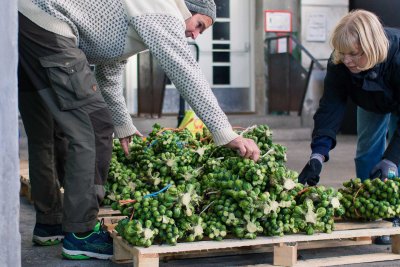
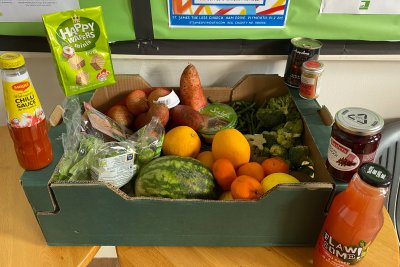
 Food Hub. Copyright: Rachel Jones
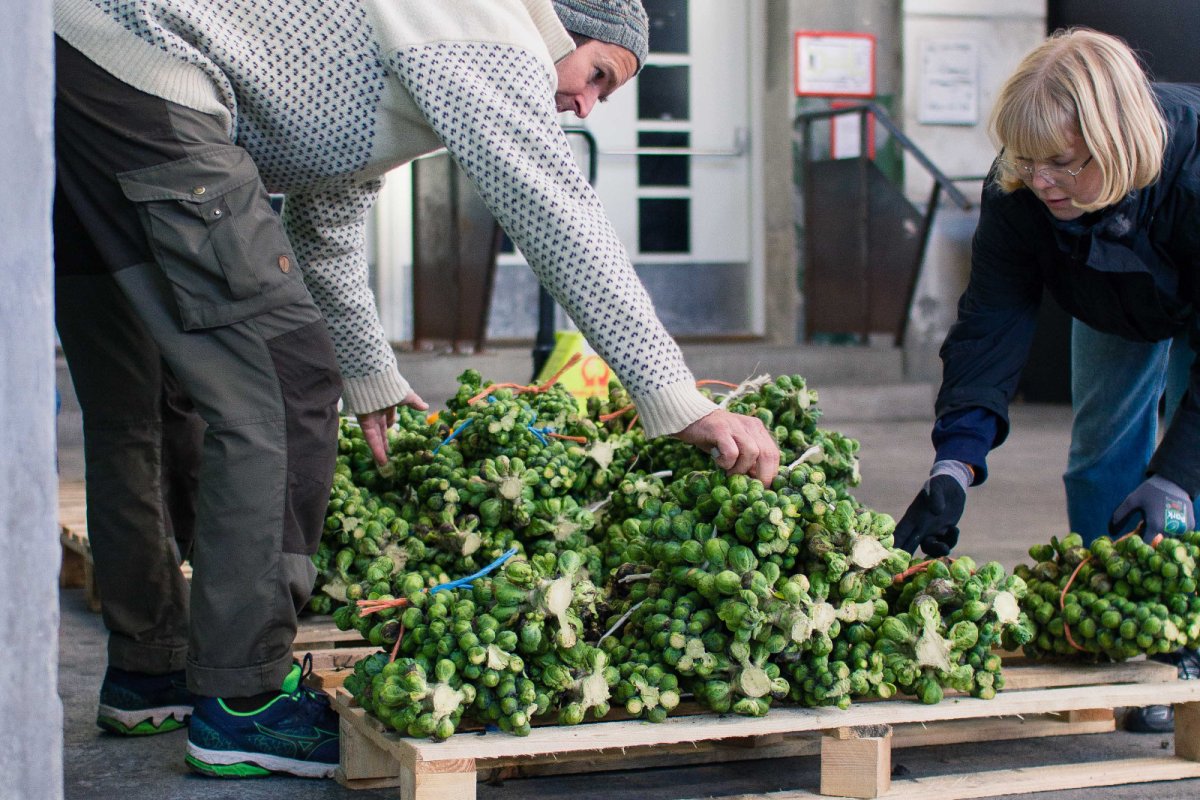

New insights: Food Hubs - what works and what doesn’t
Discover the six ingredients needed for Regional Food Hubs to thrive, based on our work to develop twelve of the UK's emerging examples over the past year.
These days, local, agroecological food systems aren’t just a nice to have. They’re increasingly critical to UK food resilience, given the political and climate realities we face. And we therefore need to scale them.
A lynchpin for that scaling is aggregation of supply. At present, the sector can be fragmented, placing larger retail markets and bigger trading opportunities in public procurement out of reach. Aggregation of supply can give the sector the volumes and consistency needed to access those markets, helping move local, agroecological food from niche to normal.
Enter the rise of the Food Hub
There are great ethical wholesalers and producer cooperatives doing that work, but the last few years has seen increasing buzz around ‘Food Hubs’ as a solution, with several examples emerging around the UK. But this buzz is often accompanied by confusion: What are food hubs? How do they work? And… do they actually work?
Throughout 2025, Better Food Traders, with Sustain, Growing Communities and Soil Association, ran a learning and peer-support programme for twelve emerging hubs, to help ensure their success.
We learned about the challenges Regional Food Hubs face and the necessary conditions for their growth.
Six Ingredients for Success
Across the programme, six common ingredients emerged as critical to successful hubs:
- An entrepreneurial mindset – an innovative and agile approach is needed to establish hubs in the current context
- Clear demand – successful hubs emerge from existing demand, and a plan to service it cost-effectively.
- A supplier ecosystem – having different types of suppliers in the region can help scale both supply and demand
- A clever customer mix – grow your customer base according to financial viability, and look for a mix of customers
- Inter-hub collaboration – a connected food hub network across the UK can help the whole sector to grow
- An enabling environment – local authorities, anchor institutions and private investors can catalyse hub success
For more information – read the full Learning Summary here.
More support to connect demand and supply is needed
Today, success is hard won for Regional Food Hubs. They operate in a challenging economic and policy environment, and yet despite that, there are examples that are delivering real impact on the ground and enabling widespread access to local, agroecological produce where it would not otherwise exist.
Regional Food Hubs aren’t the only aggregation solution, but what is clear is that we need better infrastructure to connect local food supply and demand; be that relational, physical or digital, and likely a combination of all three.
A small amount of targeted support for such infrastructure could unlock outsized benefits for regional economies, food resilience and community connection. Through this work we call on local, regional and national governments to provide better support to this critical national infrastructure.
Read the full Learning Summary and actions for local and national governments here.

Local Food Plan: Creating a plan to grow the local food sector 10x by 2030.




Sustain
The Green House
244-254 Cambridge Heath Road
London E2 9DA
020 3559 6777
sustain@sustainweb.org
Sustain advocates food and agriculture policies and practices that enhance the health and welfare of people and animals, improve the working and living environment, promote equity and enrich society and culture.
© Sustain 2026
Registered charity (no. 1018643)
Data privacy & cookies
Icons by Icons8
