

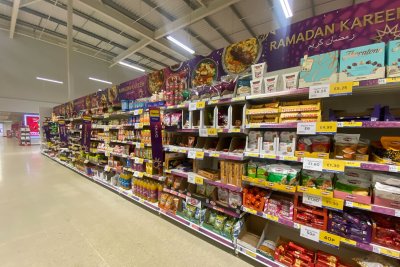
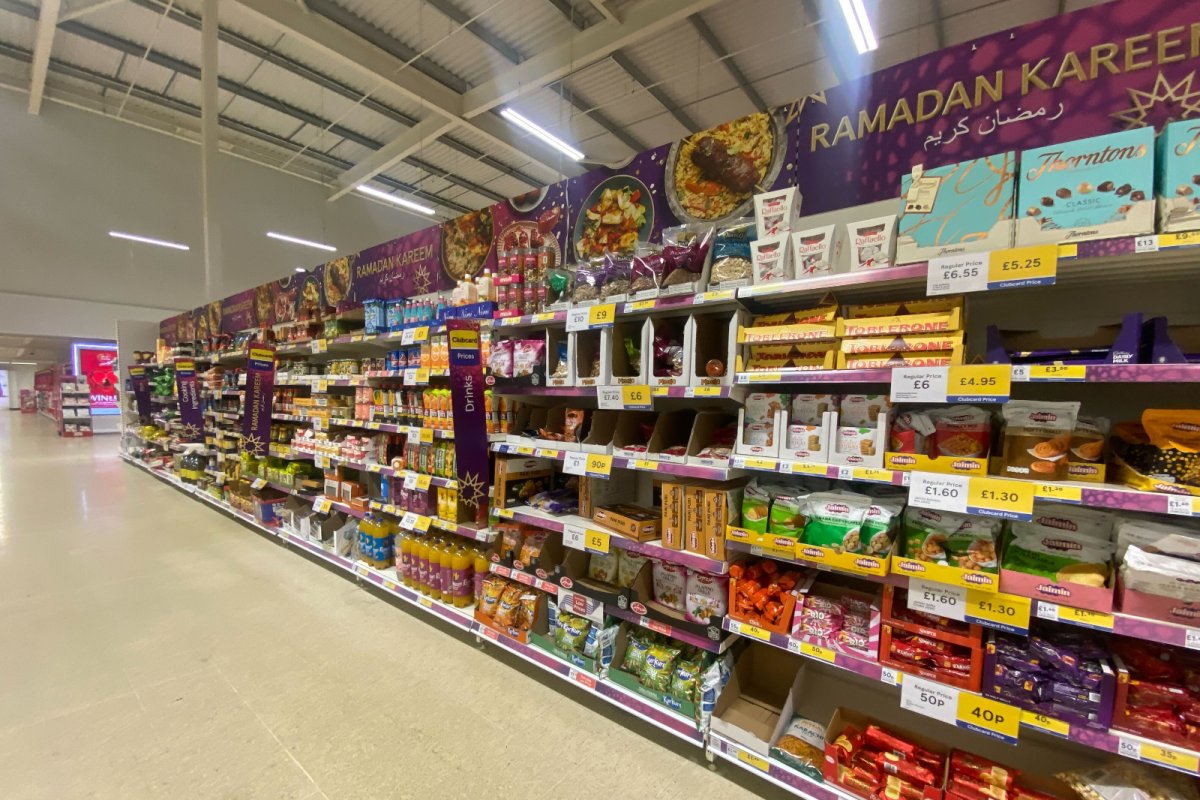
 Ramadan promotions in a supermarket aisle.. Credit: Faheemah Nagdee

Our culture isn’t your customer. Our religion isn’t your revenue.
In this blog, Faheemah Nagdee from Bite Back reflects on how Ramadan, a sacred month of faith and community, is increasingly being turned into a marketing opportunity by big food brands and supermarkets.
Ramadan is a beautiful month, and a time when Muslims shift focus to what really matters to us: community, belief, and recharging resilience. It is a responsibility, as well as a gift. Muslims must take this chance to self-reflect and make the most of the month, whether it’s giving in charity, performing extra worship, or giving back to the people around us.
The word Ramadan means ‘intense heat’, the intensity being the level of dedication it requires from us, in giving up food and drink from dawn until sunset, and giving up sleep in the name of prayer and Suhoor (the pre-dawn meal). But the heat also reflects its positive effects. The same way the seed of a plant cannot germinate without heat, Muslims cannot grow without Ramadan.
But the world around us rarely reflects the beauty of the season. Walking into my local supermarkets, I’m surrounded by shelves laden with offer after offer on products including oil, fizzy drinks, big chocolate boxes, cakes and biscuits. The signs are screaming Ramadan Kareem, but there’s nothing there that feels like a blessing. At a time when I and other Muslims are shifting focus away from food, why are brands using this moment to shove it — especially the unhealthy stuff — back into the spotlight?
When I am slowing down and switching off, why is the effort to be ever-present in my mind increased?
Just like their products, it’s a prettily-packaged lie. On the surface, the inclusion feels like recognition and a warm welcome, but what’s actually inside goes against the very meaning of Ramadan. Because to truly take part in Ramadan, is to appreciate what we have, and to trust that Allah is the one Who provides for us. It’s to live within our means, and to give to those who have less than us, not to indulge in the latest products, or the latest trends.
At every corner we turn, it feels like junk food companies are waiting for a seat at Iftar. They’ve become so good at assimilating themselves into our culture that they are guaranteed a trending spot on social media every year. Whether it’s a Lotus Biscoff cheesecake, or a Mini Egg Crunch cake, junk food products are relabelled as ‘Ramadan traditions’, sneakily switching our focus away from worship, and on to making the latest dessert.
It’s the same old playbook — barely a week of Ramadan displays had gone up, before they were featured alongside aisles and aisles of Easter egg displays. From Christmas to Diwali, cultural and religious events are ripped off for commercial opportunities. Big Food companies go beyond our celebrations, they infiltrate our daily lives — Cadbury’s ‘Made to Share’ bars, and Coca-Cola’s personally named bottles are two examples from many.
Working at Bite Back has opened my eyes to the unfair influence Big Food has over our health, our culture, and our surroundings. And speaking to the youth activists I work with, I’m even more infuriated that their worlds are filled with brands pushing profits, and stomping over health. I connected with one of our activists Zara, to hear her thoughts on junk food marketing and Ramadan.
“For me, Ramadan symbolises peace and always arrives when I need it most, providing solace and comfort that everything will eventually fall into place. My favourite moments are the ones I share with my family, especially when making our cultural foods like pakora or jalebi to open our fasts with. These moments always uplift my morale, and bring a sense of togetherness and joy.
But it really annoys me when junk food companies are trying to invade these moments, especially when you can tell that they’ve not even researched the culture or the religion they are targeting. I hear ads on the radio on my way to school which seem designed for Ramadan, but when you listen closely, you can tell clearly the company is profiting from the community without genuine care.
They even use TikTok to take over the season with food trends around their latest products. How can it make sense to push unhealthy food trends during a time when people are restraining themselves from food? And these trends work, not because they’re good or catchy, but because they capitalise on people’s need to feel connected and understand the feeling that everyone else is experiencing.
It’s upsetting that the main cultures targeted by junk food companies are the ones experiencing health inequalities. Amongst the South Asian community, ‘sugar’ (type 2 diabetes) is highly prevalent, and research has shown that foods high in fat, salt, and sugar negatively contribute to this health condition more than people realise. Junk food brands are refusing to create a level playing field, where our health, and our culture can stand side by side, and be protected.”
And as we approach the end of Ramadan and begin preparing for Eid celebrations, the message is clear. Our culture isn’t your customer. Our religion isn’t your revenue. Junk food companies won’t be on my Eid table, that’s for sure.
Representation isn’t representation if it doesn’t come with true understanding. And if Ramadan makes brands and supermarkets only think of packing their shelves with low-grade processed junk food, then they really don’t understand.

Children's Food Campaign: Campaigning for policy changes so that all children can easily eat sustainable and healthy food.





Sustain
The Green House
244-254 Cambridge Heath Road
London E2 9DA
020 3559 6777
sustain@sustainweb.org
Sustain advocates food and agriculture policies and practices that enhance the health and welfare of people and animals, improve the working and living environment, promote equity and enrich society and culture.
© Sustain 2026
Registered charity (no. 1018643)
Data privacy & cookies
Icons by Icons8
