

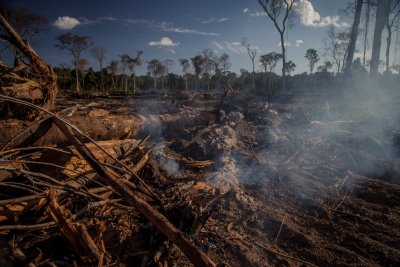
 The Amazon rainforest is being deforested for pasture, livestock and agriculture. Copyright: marcio isensee | shutterstock
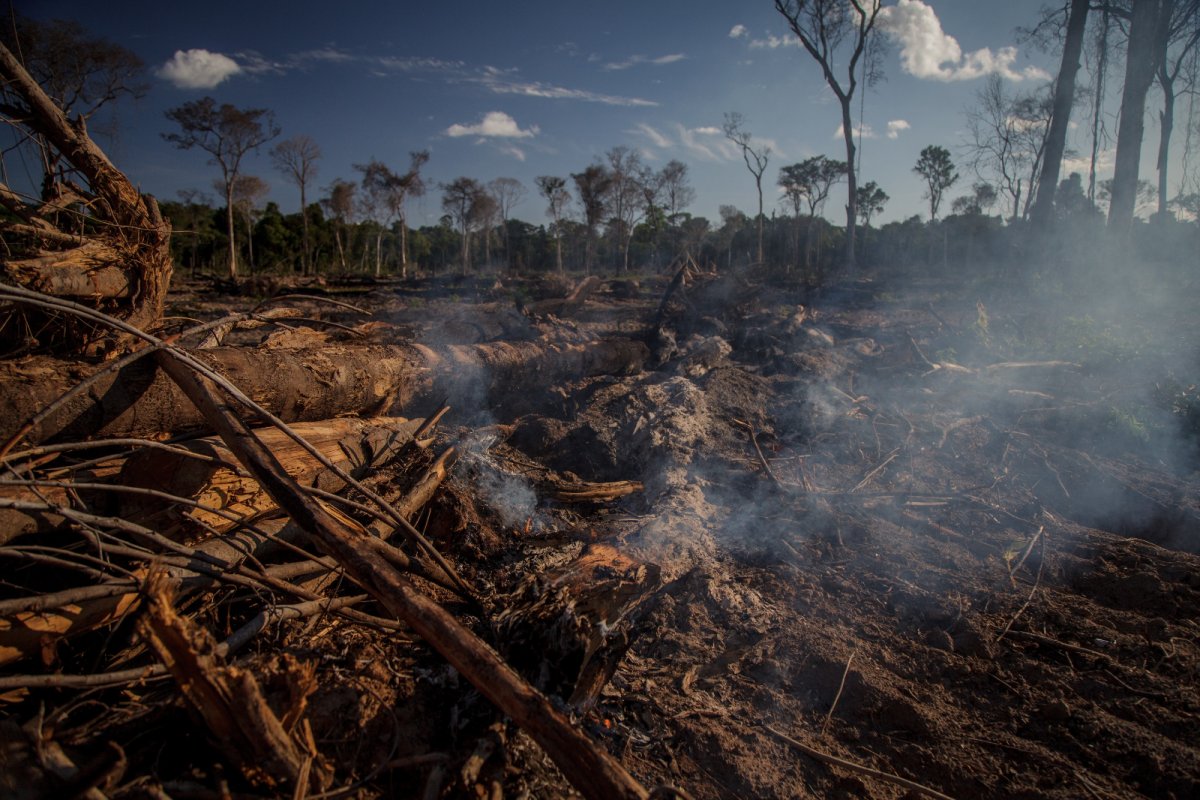

Global coalition sounds alarm as moratorium to prevent deforestation faces collapse
Cargill, Bunge, ADM and COFCO have U-turned on commitments to stop soy-driven deforestation in the Amazon for animal feed.
A broad coalition of NGOs, led by Mighty Earth and joined by groups including Global Witness, WWF-Brazil and Rainforest Foundation Norway, has issued an urgent call for action to defend the Amazon Soy Moratorium (ASM) - a commitment that has helped protect the world’s largest rainforest from soy-driven deforestation for nearly two decades.
The moratorium, which was established in 2006 and operational since 2008, is a voluntary agreement under which major soy traders pledged not to source soy from land in the Brazilian Amazon that has been deforested since the cut-off year. It has not been without controversy (critics have queried the accuracy of its scope and success) but it has been widely welcomed as a mechanism through which to ensure that soy cultivation expanded mostly on already-cleared land, reducing pressure on native forests even during periods of rapid agricultural growth. Research indicates the moratorium helped prevent roughly 18,000 km² of forest loss relative to a counterfactual scenario without the pact.
However, major soy traders including Cargill, Bunge, ADM and COFCO, have walked away from the mechanism following legislative changes in the Brazilian state of Mato Grosso that removed incentives for companies to adhere to environmental criteria beyond national law. Without the moratorium, conservationists warn that deforestation in the Amazon could rise sharply, by as much as 30% by 2045, threatening ecosystems, communities and global climate stability.
The coalition is calling on all soy end-users to:
- Continue to uphold ASM commitments and reaffirm that they will not accept animal products linked to soy-driven Amazon deforestation;
- Clearly integrate into company policy the 2008 deforestation cut-off date, full farm-level traceability, and the rejection of both legal and illegal deforestation;
- Collectively call on traders to uphold the criteria of the moratorium through CEO-to-CEO letters.
Mauricio Voivodic, executive director at WWF Brazil said:
The decision to prioritize immediate profit over protecting a biome that has already exceeded its resilience limits was deliberate. And the consequences of this setback go far beyond the environmental agenda: they affect water security and the stability of agribusiness, which already suffers from extreme climate events resulting from forest loss. By weakening environmental safeguards, Brazil sends the world, including major buyers such as Europe and China, a signal of misalignment with new sustainability requirements, tarnishing the image of national soy, making it harder to meet international climate targets, and compromising the sector’s long-term economic viability.
A significant proportion of the UK’s imported animal feed comes from high-risk regions, including Brazil, and 90% of demand is from the livestock sector. Cargill, Bunge, ADM and COFCO all operate in the UK. Carghill are joint owners of Avara Foods, who are currently part of the largest environmental lawsuit ever brought in the UK, over pollution of the River Wye.
Sustain has consistently argued that the UK urgently needs to reduce its dependence on import-heavy, industrial livestock systems that externalise environmental harm overseas while locking farmers and communities into fragile supply chains. A recent UK Government National Security Assessment has warned that food security is increasingly compromised by reliance on foreign imports (including animal feed) alongside accelerating ecosystem collapse.
Ruth Westcott, Campaign Manager for Climate and Nature Emergency said:
"It's incredibly disappointing to see some of the world's largest meat corporations abandon commitments to preventing deforestation. They have breached the trust of consumers and governments. Put simply, we can't have confidence that meat produced in the UK in industrial systems isn't linked to deforestation. The UK government must stop supporting industrial animal production. If we invest in UK farmers that are producing healthy, high-quality food from plants and nature-friendly livestock and mixed systems, we can do our part in preventing deforestation, as well as producing more healthy food here."

Sustain: Sustain The alliance for better food and farming advocates food and agriculture policies and practices that enhance the health and welfare of people and animals, improve the working and living environment, enrich society and culture and promote equity.

Sustain
The Green House
244-254 Cambridge Heath Road
London E2 9DA
020 3559 6777
sustain@sustainweb.org
Sustain advocates food and agriculture policies and practices that enhance the health and welfare of people and animals, improve the working and living environment, promote equity and enrich society and culture.
© Sustain 2026
Registered charity (no. 1018643)
Data privacy & cookies
Icons by Icons8
