

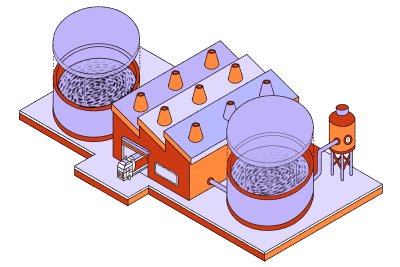
 Fish factory. Credit: @raafaye https://www.instagram.com/raafaye/
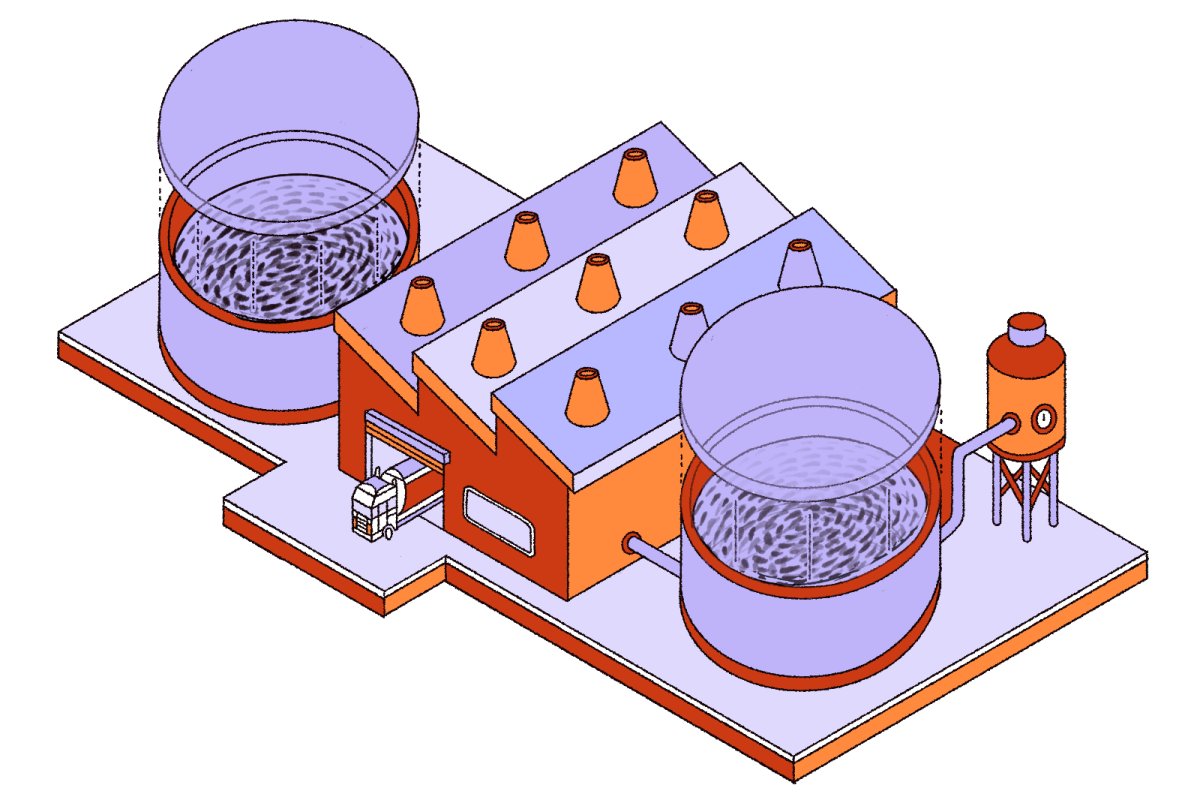

New policy briefing by Foodrise and Seastemik calls for government to ban land based salmon farming
This emerging technology is a new type of factory farming which should be banned to prevent catastrophic harm to the environment, wildlife, animal welfare and communities, according to Foodrise and Seastemik.
Foodrise and Seastemik have published a policy briefing for decision makers exposing the danger of allowing land based salmon production to spread, it includes:
- What land based salmon production is and the technologies it uses
- How financial investment and retailer interest is promoting its growth
- Proposed developments within the UK and globally
- Examples of community resistance
- Environmental and social justice problems, animal welfare and health risks, poor job prospects
- The risk of its unproven technology
- A call to action for the government to ban land based salmon farming backed by 21 organisations including Communities Against Factory Farming, Greenpeace France, Greenpeace Africa and the Green Britain Foundation
Foodrise have also published a video explaining 6 reasons why governments should ban land-based salmon.
Amelia Cookson, Industrial Aquaculture Campaigner at Foodrise said:
"Land-based salmon production is the newest dystopian form of industrial factory farming. Salmon born to swim freely in rivers and seas are instead crammed into barren tanks circling endlessly under artificial light. Whether on land or at sea, salmon production is fundamentally unsustainable. It is reliant on the extraction of wild-caught fish used in feed, often taken from communities in the Global South, and plagued with mass mortality events where hundreds of thousands of fish die. These facilities are dragging us into a dystopian world where the food system is becoming further industrialised in the pursuit of profit at all costs. Governments must act now before irreversible damage is done."
Tackling factory farms through planning policy
Salmon factory farms require planning permission, and decisions to grant permission are determined by local planning authorities, normally the local council. Major developments are subject to higher scrutiny through an environmental impact assessment which must outline the likely impacts on the climate, environment, wildlife, and communities. As recent precedent has demontrated, applications must be transprant about these impacts and prove there are effective measures to deal with waste, or they could face legal challenge. Sustain’s new toolkit includes guidance on how councils can use their planning powers to halt the spread of potentially unlawful factory farms, while growing a sustainable local food and farming economy.
Vicky Gerrard, Campaign and Research Officer at Sustain, said:
“At a crucial time where we need to transition away from polluting factory farming, it’s hugely concerning to see the development of land based salmon production. This new type of factory farming has no place in a sustainable food system. Communities are rightly resisting and local planning authorities should listen to their communities’ concerns and use their planning powers to reject harmful developments.”

Food for the Planet: Helping local authorities to tackle the climate and nature emergency through food.

Sustain
The Green House
244-254 Cambridge Heath Road
London E2 9DA
020 3559 6777
sustain@sustainweb.org
Sustain advocates food and agriculture policies and practices that enhance the health and welfare of people and animals, improve the working and living environment, promote equity and enrich society and culture.
© Sustain 2026
Registered charity (no. 1018643)
Data privacy & cookies
Icons by Icons8
