

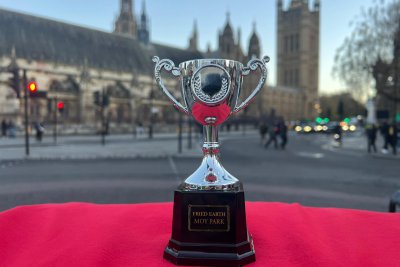
 A Runny Rivers 'Chicken Out' Award for Avara Foods on a red carpet outside Big Ben and the House of Commons. Credit: Lily O'Mara | Sustain


Sustain’s 2025 "Chicken Out Awards" recognise industry's climate and animal welfare offenders
As MPs raised glasses to poultry giants in the British Poultry Council Awards this week, Sustain’s “Chicken Out” Awards named Moy Park, Avara Foods and Cranswick plc for their impact on climate and animal welfare.
Sustain: the alliance for better food and farming has named the UK’s standout agriculture corporations for environmental and animal harm in its 2025 “Chicken Out” Awards. The awards were held in Westminster in reaction to the hosting of the annual British Poultry Council (BPC) Awards inside the Commons this week. The BPC awards were hosted by Daniel Zeichner MP, former Minister of State for Food Security and Rural Affairs.
This year’s Chicken Out recipients include Moy Park, Avara Foods and Cranswick, for their shocking record on climate, rivers and animal welfare.
Moy Park (majority shareholder JBS): Fried Earth Award
Moy Park is one of the largest operators of intensive livestock operators in the UK, with primary base in Northern Ireland where it was the subject of a 2024 BBC investigation that found that environmental law had been breached hundreds of times across multiple sites.
An analysis by Sustain in 2024 found that the company had no publicly-available policy to prevent the waste from its facilities causing freshwater or soil pollution.
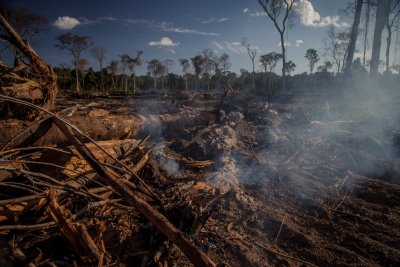
JBS is a 79% shareholder in Moy Park’s parent company, Pilgrim’s Pride, who took home three awards in this year’s BPC awards. JBS continues to face serious allegations over its involvement in Amazon deforestation. Evidence compiled by Greenpeace and corroborated by international reporting has linked JBS to cattle operations on illegally cleared land and supply-chain practices driving forest loss. Last month, environmental organisation Mighty Earth filed a complaint alleging that JBS made misleading net zero claims and failed to disclose the environmental harm linked to its operations.
Cranswick plc: Fowl Play Award

Cranswick receives this award following repeated and well-documented welfare and environmental failures at company-linked farms. Investigations at several Cranswick-owned sites in recent months have revealed serious welfare breaches, including illegal killing methods, physical abuse of pigs, overcrowding and neglect. Supermarkets have previously suspended supply from Cranswick farms following such exposés.
Cranswick was also recognised for its record of environmental harm. Environment Agency data published earlier this year revealed more than 700 environmental breaches by intensive livestock operations in East Anglia over seven years. Cranswick-linked sites alone accounted for almost 100 of these incidents. Sustain’s recent analysis of planning applications found that all Cranswick-associated intensive livestock proposals submitted since 2024 omitted the legally required assessment of greenhouse-gas emissions. Sustain has estimated proposed Cranswick developments in Norfolk alone, if approved, would produce an estimated 191,500 tonnes of CO₂-equivalent per year, roughly the same as a small town.
Avara Foods: Runny Rivers Award
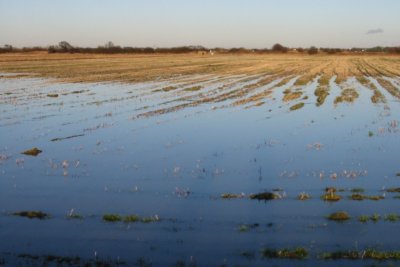
Avara Foods is awarded in recognition of the company being subject to the largest environmental pollution lawsuit brought in the UK. The chicken units in their supply chain are accused of extensive and widespread pollution in the rivers Wye and Lugg and their tributaries. The claim against Avara, brought by firm Leigh Day on behalf of 4000 residents, local business owners, and people who use the rivers, alleges that pollution has been caused by water run-off from farm land containing high concentrations of phosphorus, nitrogen and bacteria resulting from the spreading of thousands of tonnes of poultry manure and sewage bio solids.
Avara took home two awards in this week’s BPC awards, which Avara described as “among the most prestigious honours in the industry, and as a company whose greatest asset is its people, to see more of the team recognised by the wider sector is hugely rewarding.”
The rise of the UK megafarm
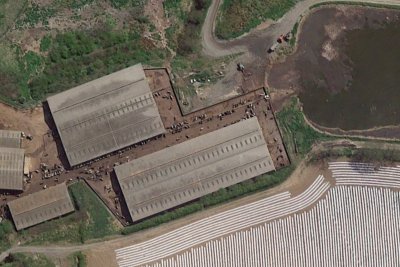
Northern Ireland, Shropshire and Norfolk, where Moy Park, Avara and Cranswick have respective strongholdings, are all major factory farming hotspots. Data obtained by the Bureau of Investigative Journalists in 2017 found that there were 245 intensive livestock units in the Northern Ireland, an increase of 68% since 2011. Research from Sustain and Compassion in World Farming estimated that Northern Ireland houses 35 million chickens and produces 2,555 tonnes of manure every day, which is thought to be contributing to the collapse of freshwater habitats including Lough Neagh.
Shropshire has found itself at the centre of a series of intensive livestock-related legal challenges in recent years. Data obtained by Sustain through Freedom of Information request shows that this legal action has cost the council upwards of £170,000. Shropshire has one of the highest concentrations of intensive poultry units in the country, which are thought to have contributed to ecological breakdown of the Wye and other rivers in the county, as well as elevated air pollution and climate change.
Norfolk has been repeatedly identified as one of the UK’s factory-farming “hotspots”, with some of the highest concentrations of intensive poultry and pig units in the country. The scale of pollution and regulatory failure has prompted South West Norfolk’s local MP to call publicly for a full inquiry into intensive farming in the region.
An investigation by DeSmog and published in the Guardian last month found that there are four applications for poultry megafarms currently under consideration by Shropshire Council, and a further four in Norfolk. All were found to be failing to disclose key potential environmental impacts as is required by law, risking both further pollution and legal hot water for the council.
Lily O’Mara, Climate Campaigner and 2025 Bertha Challenge fellow at Sustain, said
“On Monday, new government data showed that England’s nature is in crisis, with our rivers and lakes suffering unacceptable levels of pollution and iconic species at risk of going nationally extinct. In Northern Ireland, a rapid expansion of intensive poultry units is contributing to the collapse of it's freshwater habitats and driving worsening pollution across rivers and loughs.Our politicians could be working with farmers across the country to understand what support they need to transition away from intensive livestock production to be able to produce healthy, sustainable food for the future. Instead, they seem more willing to toast the corporate giants whose industrial megafarms are reshaping our countryside at enormous environmental cost.”
Industrial agriculture is the main source of river pollution in the UK. Sustain contend that celebrating industry leaders inside Government rather than discussing the sector’s environmental and welfare record is preventing the UK from bringing in policies that would support healthy and sustainable food and create more rural jobs with better incomes for farmers.
Background
The British Poultry Council Awards are held annually in the House of Commons and presented to individuals and companies deemed to have made “exceptional contributions” to the poultry sector. The full list of this year’s winners has not yet been published but last year’s winners were entirely made up of employees from large agri-businesses:
- PD Hook
- 2 Sisters Food Group
- Avara Foods
- Pilgrims Europe Moy Park

Food for the Planet: Helping local authorities to tackle the climate and nature emergency through food.

Sustain
The Green House
244-254 Cambridge Heath Road
London E2 9DA
020 3559 6777
sustain@sustainweb.org
Sustain advocates food and agriculture policies and practices that enhance the health and welfare of people and animals, improve the working and living environment, promote equity and enrich society and culture.
© Sustain 2026
Registered charity (no. 1018643)
Data privacy & cookies
Icons by Icons8
