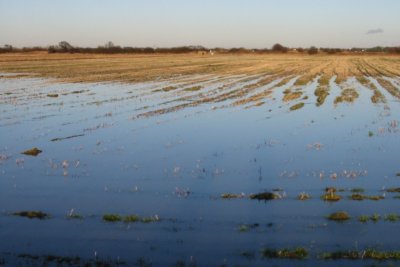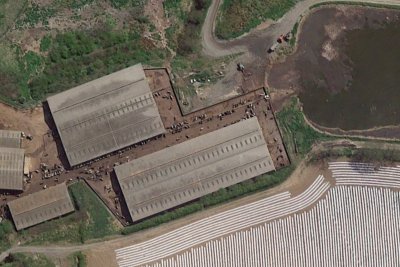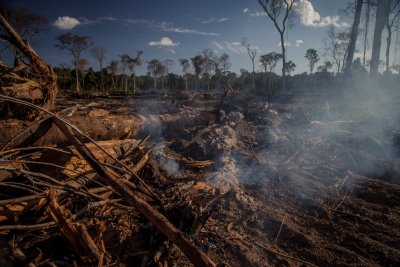



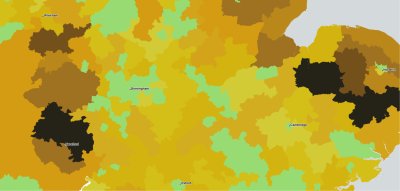
 VideoAmmonia production from industrial livestock units. Credit: Sustain
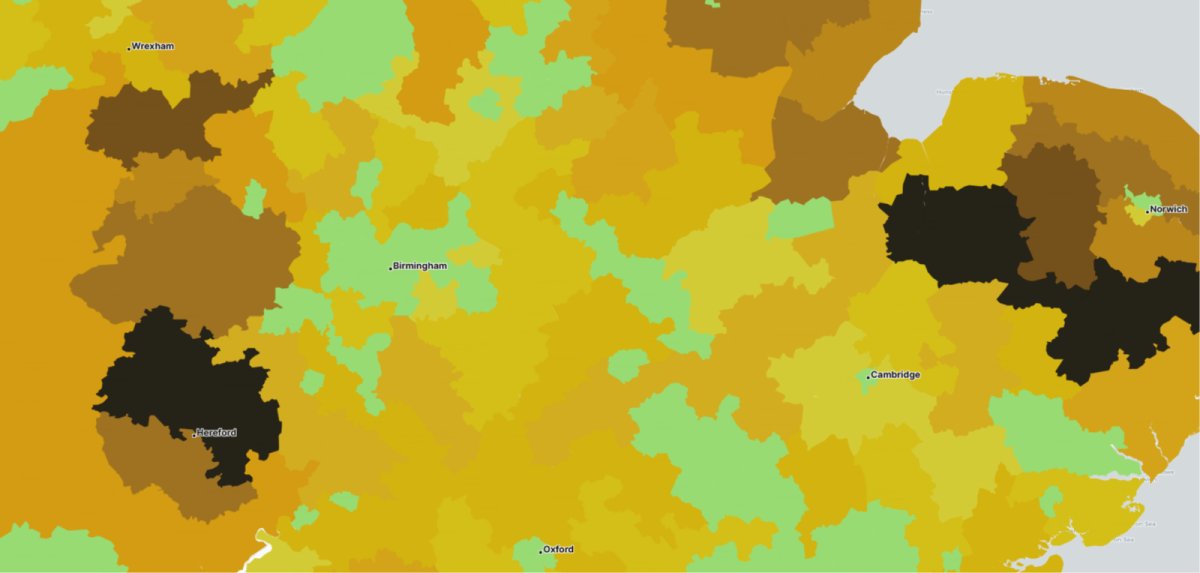
For the first time, new data released by Sustain and Compassion in World Farming (CIWF) exposes the extent of ammonia emissions from the largest industrial livestock units, revealing pollution accumulation in Lincolnshire, Herefordshire, Shropshire and Norfolk - areas with the highest concentrations of intensive farms.
Ammonia, released from livestock manure, reacts with other pollutants to form fine particulate matter (PM2.5), one of the most dangerous forms of air pollution. Long-term exposure is linked to heart disease, stroke, lung cancer, type 2 diabetes and dementia. The Committee on the Medical Effects of Air Pollutants (COMEAP) estimated human-made PM2.5 exposure was responsible for between 28,861 and 29,000 premature deaths in the UK in 2010. Agriculture is responsible for 89% of UK ammonia emissions.
Excess nitrogen from ammonia deposition acidifies soils, fuels algal blooms, and degrades forests, grasslands, wetlands and freshwater habitats.
Dr Amir Khan, TV doctor and CIWF Patron, said:
“As a GP, I see firsthand the toll that air pollution takes on people’s health – and ammonia from intensive farming is a major, yet often overlooked, part of that problem. The fine particulate matter formed from ammonia exposure drives heart disease, stroke, asthma and chronic lung conditions, and it is our most vulnerable patients who pay the price.
When factory farming releases huge volumes of ammonia into the air, the health impacts don’t stay on the farm – they reach our surgeries, our hospitals and our communities. Reducing these emissions is not just an environmental issue; it is an urgent public health priority.”
Residents living near intensive farm units are already feeling the health impacts of ammonia and particulate pollution. In Shropshire, residents have reacted with shock at the data, given the council is considering plans for at least 4 large-scale industrial livestock units, including one in Sheriffhales that would create space for up to 160,000 chickens.
Alison Caffyn, a resident of Shropshire, said:
"It’s shocking to see the scale of ammonia from these units across Shropshire. We simply have too many. The council must now do a proper assessment of the risk to our health of all the industrial animal production in Shropshire and not allow any more expansion until it is clear that these units don’t pose a risk to our health, or the health of our wildlife.”
Jon Humphreys, a resident in Cayton, Shropshire said:
“There are already 20 poultry units within just 10km of my home. The new proposed poultry unit in Caynton is one of two new units awaiting just 2.5km apart and lies right next to the banks of the River Meese.”
“As well as the known impacts on waterways, I’m also really concerned about the effect the pollution will have on the local wildlife, as well as the serious impact ammonia has on human health. There are additional factors to consider such as the significant danger from the increase in large vehicles on our narrow country lanes.”
In Whaplode Drove, Lincolnshire, local resident Michele Franks describes how emissions from a nearby poultry farm regularly force her indoors, triggering chest tightness, eye irritation and breathing difficulties during shed cleanouts that can last up to five days at a time. Now, a new proposal for 12 additional poultry sheds housing more than half a million birds threatens to place her home between two industrial units – a situation local residents have called “a health disaster waiting to happen”.
Michele said:
“When the chicken sheds are cleaned out, the smell and the polluted air hits me straight away – my chest tightens, my eyes sting, and I have to shut every window in my house just to cope. I’m asthmatic, and for days I can’t even step into my own garden. Reports say that Lincolnshire already has over 856 poultry units. The thought of another huge poultry farm being built behind my home is terrifying. They say escape to the country for cleaner air but no one should have to live sandwiched between industrial units that make them gasp for breath. This isn’t just a countryside smell – it’s a serious health risk, and it’s getting worse.”
When Kate Milsom lived in the Wye Valley, Powys, applications for new intensive poultry units forced her to move house twice. Kate describes how emissions from factory farms on her doorstep caused her eyes to sting for weeks at a time. She had to stop her niece, who was asthmatic, from visiting as the ammonia from the intensive chicken farm next door would aggravate her breathing.
Despite widespread objection from locals, the risk to human health, and the threat of environmental damage, applications for poultry units continued to be approved while Kate lived nearby. A current application for two new intensive poultry units in the Wye catchment, seek to house an additional 500,000 chickens every year. The site is within 5km of four areas designated as Ancient Woodlands sensitive to ammonia concentrations.
Kate said:
“I didn’t want to live next door to a factory, it was nearer me than the farmer! The noise would wake me at night, so I stopped sleeping – the stress caused panic attacks, I felt like a wasp in a jar – trapped, angry and desperate.
I found the odour and the noise particularly disturbing, the smell of ammonia was so invasive. My eyes had started to sting and water – I had days when I couldn’t use the computer because my eyes were so sore, I couldn’t see. I had to keep my doors and windows shut and I became increasingly concerned about my heath and the impact of airborne particles. I started to keep a diary of the smell, and there were only two weeks in a month when it was okay to have visitors.”
Ruth Westcott, Campaign Manager at Sustain, said:
"Industrial animal production is sending our food system in the wrong direction. The nation's health depends on supporting farmers to produce more of the foods we actually need - vegetables, pulses, fruit - through supply chains that pay fairly and give power to farmers."
Both organisations are clear that the solution is to support farmers better, not just to increase regulation, and invest in a transition away from industrial livestock production that will leave farmers and workers better off and our food system more resilient. Farmers must be properly supported to move towards producing fruit and vegetables, pulses and legumes, with animals integrated within the carrying capacity of the land.
The UK currently produces more meat and dairy than is necessary for a healthy and sustainable diet, but has a critical shortage of home-grown plant based proteins.
Sustain is calling for:
- Local councils: Ensure the full impacts of existing pollution are taken into account when making planning decisions for intensive livestock units, through a comprehensive cumulative impact assesment covering human health, nature, and potential river and soil pollution
- National government: Invest in an ambitious horticulture growth strategy, to increase healthy plant-based protein production and consumption in the UK. Such a plan must come with measures to ensure farmers have a decent living and opportunities through sustainable farming, and that public catering supports sustainable British produce
- National government: Deliver on promises to overhaul the environmantal permitting system, to ensure all polluting livestock operations are properly controlled, emissions monitored, and environmental rules enforced.
Mapped: Ammonia production from industrial livestock

Sustain: Sustain The alliance for better food and farming advocates food and agriculture policies and practices that enhance the health and welfare of people and animals, improve the working and living environment, enrich society and culture and promote equity.