

The following case studies are all featured in this year's Good Food Local: The London report.
Case study themes:
Food governance & strategy
Sustainable Food Boroughs: Collaboration across London
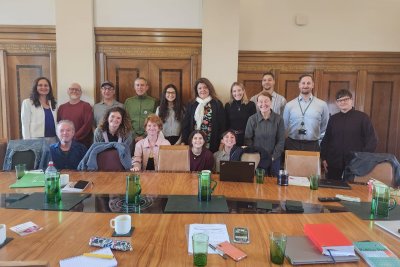
London is full of examples of leadership and innovative work on food issues, with a long history of going above and beyond statutory requirements. Along with the hard work of London borough councils, much of this progress is also thanks to the work of the 16 Sustainable Food Partnerships, and the many emerging food alliances and networks across the capital, joining up the dots between grassroots action, local government and other key local actors. In 2025, a network of London food partnerships was established as a legacy of the Food Roots project, bringing together partnership coordinators to share good practice and learning, support each other, and explore collaborative work. The network has met three times, exploring issues from food resilience, Right to Grow funding and engaging diverse members.
Islington Food Partnership: REDI for change
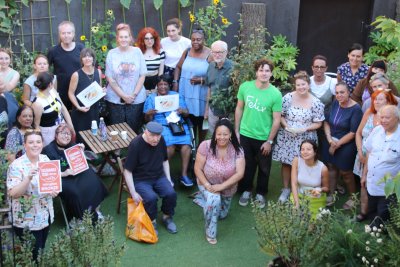
Islington Food Partnership received REDI (Race, Equity, Diversity and Inclusion) grant funding through the Sustainable Food Places network to implement the REDI for Change Review Tool. The tool helps food partnerships review their culture, practices and the people involved, through the lens of Race, Equity, Diversity and Inclusion.
Islington used the funding to carry out a two-part project with the first work stream focussed on improving availability of culturally appropriate foods in community food settings, and the second exploring work with the partnership itself to look at the culture, representation, policies and practices of the partnership itself in relation to REDI. Choices London were commissioned to help the partnership carry out this work which resulted in a policy and set of action points, which the partnership continue to work through on their journey to embedding an anti-racist and inclusive approach. To protect the longevity and impact of Islington Food Partnership, the coordination of the partnership is funded through ring-fenced funding from the public health grant. The grant enables Manor Gardens – an important local VCS organisation – to employ a part-time coordinator and part-time chair to lead the work of the partnership.
Enfield: cross-departmental food systems work
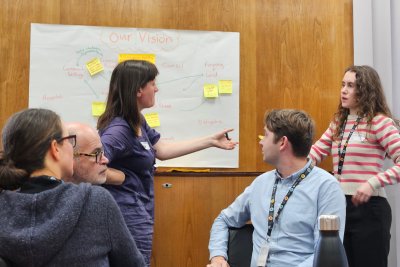
Enfield Council is on a journey to drive forward food-related health, equity and environmental outcomes through participation in a series of systems change workshops delivered by Sustain. These workshops enable councils to identify priority food systems challenges and opportunities and allow participants to design and take collective ownership of tangible and realistic actions and solutions. Officers from different departments across Enfield council – including public health, procurement, property, climate and inclusive economy, and others - have come together to connect with new colleagues, offering the opportunity to solve problems across policy areas that traditionally operate in isolation. Each attendee has had the opportunity to learn food systems principles and how these relate to their roles, bringing everyone on a shared journey towards a more sustainable and equitable food system.
“The workshop provided us with an opportunity to bring key stakeholders together and think, as a system, about how we develop a more sustainable food system in the borough. The Sustain team are insightful, knowledgeable and supportive of all partners even those at the start of their thinking on this issue. Sustain also helpfully shared a lot of information about good practice that has helped elsewhere.” Dudu Sher-Arami, Director of Public Health, Enfield’
Community food growing
Newham: A new approach to food growing in schools

Newham council has developed a scalable model for creating professional market gardens at schools with green space availability. The model involves partnering with a restaurant, which funds the wages of a professional grower to manage the kitchen garden at the school, who are then able to fetch premium prices due to providing locally grown food in London. The Royal Docks Academy Market Garden was set up in December 2024 and two more underway. This project provides educational benefits, sources of local food, and green jobs on land that was otherwise underutilised. Due to creating an economic incentive to keep the garden running, they hope to avoid the common pitfalls of school-based food growing, where lack of capacity often lead to gardens eventually falling into disrepair. Additionally, Newham is applying for a joint funding bid with OrganicLea to establish a dedicated food growing network across the borough that will connect up community growing groups, share resources and strengthen collaboration and decision-making.
Ealing Council puts grassroots voices and community growing at the heart of their food work
Ealing Council runs a Community Champions Programme, which supports a network of individuals and local groups to use their lived experience and skills to support Ealing's diverse communities. Community Champions are trusted community figures who start conversations about issues, including food access and healthy eating, and signpost people to relevant support and services. Crucially, Champions feed back to the council and partner organisations on the health and wellbeing priorities in Ealing - what's working well and what improvements are needed. This ensures that food system decisions are informed by the voices of communities currently underrepresented and most affected by health inequalities. The programme provides Champions with training, networking opportunities, and platforms to amplify their community's voice on food and health issues, creating sustainable change in the places that need it most.
Ealing Council is also exploring a Right to Grow approach to land use in the borough. The Regional Park Community Growing Working Group has identified several areas for action, including community support for accessing land, council resources, practical requirements such as water, tools, and storage, community governance models, and integration within wider biodiversity and climate work. Efforts are being made to embed community growing within Ealing's new Regional Park development, with community growing spaces designed as integral features from the outset and co-created with residents and organisations during early planning stages. This operationalises Right to Grow by ensuring accessible land, infrastructure support, and community governance are built into park design, creating permanent community food-growing assets.
Bexley: Men in Sheds
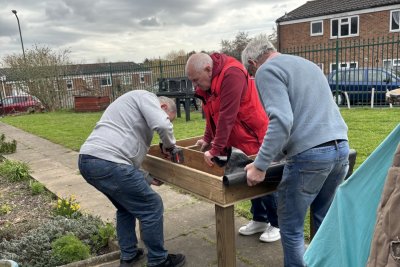
Bexley Council supports a wide range of small and growing projects across the borough, including initiatives at Hall Place, Slade Green, and within key community infrastructure such as schools, pubs, and football clubs. The council also supports Men in Sheds, an Age UK Bexley scheme for retired men aged 50 and over. The Shed is currently funded by the National Lottery’s Reaching Communities Fund. The group delivers woodworking workshops that bring people together overcoming social isolation and allowing new friendships to bloom. Past projects include making wheelchair accessible food growing planters for a local day care centre and SEN school. These activities are an excellent example of how food growing and practical skills can intersect to support wellbeing, learning, and social connection.
Food poverty alliances
Lewisham: putting food justice at the heart of food work
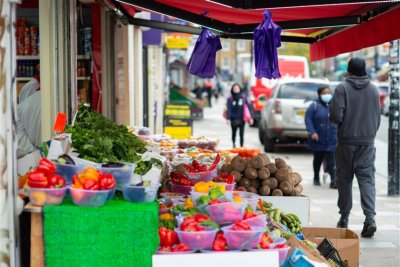
The Lewisham Food Justice Alliance is responsible for overseeing the implementation of the Food Justice Action Plan, which aims to improve access to nutritious, culturally appropriate food and to address the structural drivers of food insecurity. The Alliance Steering Group is chaired by the Director of Public Health and will be co-chaired by the Trussell Trust Foodbank Programme Manager, in line with the co-chairing arrangements agreed in the Terms of Reference.
The alliance has five task and finish groups which include grassroots organisations with lived experience of the issues they are working to address, and three of the groups are chaired by community members. The groups are supported by Lewisham Local who host the food partnership and the Food Justice Programme Manager, a role funded by Public Health. The Food Justice Alliance reports to the Whole Systems Approach to Obesity, the Cost- of- Living Programme Board and the Health and Wellbeing Board. The Alliance prioritises communities facing health inequalities, drawing on the Birmingham and Lewisham African and Caribbean Health Inequalities Review (BLACHIR). This includes, for example, commissioning of independent research into the drivers of food injustice for Black African and Black Caribbean residents.
Camden: food cooperatives and working in alliance

As part of Camden’s Food Mission, the council has committed to working closely with and funding three core, catalyst partners. These organisations do not just deliver projects, they create the conditions for others to act, innovate and contribute to borough-wide change. Their work expands capacity across key outcome areas, including money-first approaches to food access, health and nutrition, food waste reduction and sustainability. Their work is essential to connect people, strengthen networks, and raise standards across the local food system, and enables more coordinated and impactful efforts that move us closer to a fairer, more sustainable local food system.
- Cooperation Town is a movement of community food coops, providing support to self-organising neighbouring buying groups. They work collaboratively to buy food in bulk to reduce costs for local people. In Camden, they are committing to developing 12 more coops 2026 - 2027 and supporting resident-led social action.
- Feast with Us provide nutritious community meals using surplus food for people experiencing food insecurity, as well as delivering meals to hostels and community centres. They are providing support to organisations across Camden including through healthy eating programmes and support reactivating community kitchens.
- Life after Hummus provide charitable food provision via a social supermarket and re-use centre, redistributing surplus food, clothing and other items to the local community. They also run a community café using surplus food that serves affordable, plant-based meals and employs local people at Camden Council’s headquarters. As a catalyst partner they will expand food redistribution innovation, improving local infrastructure and reducing food waste.
Food access for older and disabled people
Hillingdon: cooking workshops for marginalised groups

Learn Hillingdon, the council’s adult learning service, has launched a series of cookery workshops including Nutritious and Healthy Dinners, Low-Cost Healthy Dinners and Men’s Healthy Cookery. The sessions are aimed at residents who want to lose weight, those living with long-term health conditions, widowers, former carers, residents aged over 65, unemployed residents, and those earning below the London Living Wage.
The workshops support residents to learn how to cook nutritious, healthy meals on a budget. Participants are introduced to a wide range of dishes, from meatballs and lasagnes to Sri Lankan curries. All ingredients are supplied by Learn Hillingdon, with vegetarian and halal options fully catered for.
Over the past year, Learn Hillingdon delivered 24 cookery-based workshops and is now rolling out additional evening classes to make the sessions accessible to daytime workers. The programme is also expanding beyond cookery alone to include communal meals after the sessions. Many participants shared that they previously relied heavily on highly processed ready meals but now feel more confident cooking healthy meals from scratch and have a greater awareness of the impact food choices have on their health.
Hackney: Lunch Clubs connecting cultures

Hackney is home to a vibrant collection of unique lunch clubs for residents aged 55 and over. Each lunch club reflects the diversity of the borough, serving global majority communities, including Chinese, Vietnamese, Cypriot, Kurdish, Turkish, Jewish, and Caribbean communities.
Aside from bringing older residents together through food, the lunch clubs also offer holistic mental and physical health interventions including movement and fitness classes, leisure activities and local outings as well as advice and support services. The clubs successfully reduce social isolation and ensure residents have access to nutritious, culturally appropriate food. 59% of guests said the food served was much healthier than what they eat at home and 94% said they had made new friends at the clubs. A lunch club celebratory event in the last year brought together older adults from different clubs to share and sample food from across the network, building collaboration and connection across cultures with a joyful energy that is still talked about today.
Supporting the lunch clubs to build and sustain their work has taken different forms. In 2025, Hackney Council funded the clubs through its Core Grants programme. This included funding for a coordinator who did key capacity building work with the clubs. She supported them to convene their own network, to be better prepared for competitive grant processes, and worked with them to launch a new Hackney Lunch Clubs website. She also built relationships between the clubs and, crucially, connected the clubs to the wider Hackney Food Network where they have the opportunity to join a diverse group of organisations supporting the different communities of Hackney.
Hackney Council continues to directly fund a number of local VCS organisations that host lunch clubs and provide wraparound and holistic support to residents, especially those from communities that have been failed by the system.
Residents with the immigration condition no recourse to public funds (NRPF)
Croydon: improving food experiences for people with NRPF
Croydon Council take a proactive approach to applying the policy levers at their disposal to improve access to healthy, appropriate and dignified food for residents with the immigration condition no recourse to public funds (NRPF). The council works closely with a range of voluntary, community and faith sector partners to support wellbeing whilst people are awaiting the outcome of their asylum claim. Partners provide activities, often with a hot meal, or the ability to cook food and take it back to their accommodation to eat with their families.
Work includes grant funding a women’s cooking club, partnering with Happy Baby Community where lunch is served every Wednesday, and supporting Good Food Matters who host after school clubs for children. Families are able to access services through the Holiday Activity and Food programme during the school holidays which enables access to further food support, and programmes are targeted for delivery close to hotel accommodation.
Support services such as English language lessons have been co-located within community spaces which enables learners to also access healthy, free food on site. Services also hold events to celebrate festive days with culturally appropriate food available, and during festive seasons, the council partners with other community and faith organisations who provide food for residents staying in hotels without access to kitchens.
Infant feeding
Westminster: prioritising early years nutrition
Westminster City Council have prioritised giving children the best start in life, with a strategic partnership group embedded across the council and committed resource to early years. Health is a key concern, with almost a third of children in the borough living in poverty and one in four children being overweight when starting primary school. Since September 2023, Westminster City Council have supported Early Years Settings (EYS) with additional funding to provide free school meals. This offer is for EYS with children aged two to four in private, voluntary, independent and maintained nurseries and includes childminders in receipt of funded places. The majority of settings have opted to use the funding to enhance their hot meal offer, ensuring children receive nutritious meals which are not means tested, with evaluation surveys showing a positive impact on hot meal uptake and financial resilience.
Additionally, the Public Health Commissioned Change4Life service offers bespoke support to EYS and parent/carers. For EYS, this includes:
- delivering a webinar to support EYS in providing healthy lunches
- 1-2-1 advice sessions for practitioners to receive bespoke advice regarding their lunch provision
- the option to book an appointment with a Registered Nutritionist/Registered Dietician from the service for 1-2-1 advice about improving the health and quality of food provision at the setting and a pack of tailored resources.
For families support includes the Change4Life Mini Clubs 5-week programme for under 5s, health promotion outreach including free workshops and resources, and support via HUGGG shopping vouchers. Westminster City Council also supports EYS to progress through the Healthy Early Years London awards.
School meals
Havering: community food champions in schools

As part of the GLA's School Superzones programme, Havering Council ran a pilot in the Collier Row neighbourhood providing support to improve children’s health through public health place-based initiatives. The project was designed to help schools, young people and families in the most disadvantaged areas by creating healthier food environments, as well as promoting the benefits of active travel in supporting health and wellbeing.
As part of the scheme the council carried out extensive consultations on food issues in schools with pupils, parents, carers and school staff through interviews, focus groups and surveys of school food provision. They also recruited ten Year 5 “Community Food Champions” to act as young leaders, working with practitioners to design and deliver food-related activities for their peers and families, helping to give children a visible voice in decision-making and empowering the next generation in Havering.
Healthier food environments
Lambeth: tackling food-related health inequalities
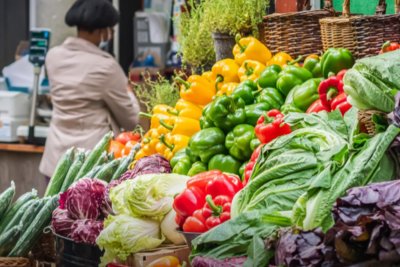
Lambeth Council is taking a system-wide, multi-pronged approach to reducing food-related health inequalities by improving the local food environment and making healthier eating choices easier for residents. The council’s actions include a wide range of policies, programmes and work areas designed to support access to good food across the borough. This work includes developing and implementing a comprehensive Food Justice Action Plan, a Health and Wellbeing Strategy, signing up to the Local Authority Declaration on Healthier Food and Sugar Reduction, adopting the Healthier Catering Commitment, and developing an evidence based Healthy Weight Care Pathway Programme for both children and adults.
Lambeth also supports breastfeeding, has signed up to the Food Purchasing Commitment and has endorsed The Plant Based Treaty. In addition, Lambeth Council delivers a range of healthy-eating programmes and community-based activities. These include healthy schools’ initiatives, food growing projects as well as being part of and supporting the local food partnership. Over the years, the borough has also supported national and London-wide campaigns, including Eat Them to Defeat Them, Veg Power in schools, Eat Like a Londoner and National Vegetarian Week to name a few. National Vegetarian Week is also promoted internally within the council, shared widely across local social media, and in schools to encourage residents, businesses, and community groups to try more vegetarian options, save money and support climate-friendly choices.
Other local initiatives and activities include a fruit and vegetables on prescription project, community cook and eat sessions, culturally appropriate weight-management programmes, and the development of bespoke healthy-eating resources tailored for specific communities such as recipes for Black communities, Latin American communities and a toolkit and guidelines for older people.
Merton: putting health first
Merton Council has taken a commendable strategic approach to addressing health inequalities and making healthy eating easier in the borough. Their planning and advertisement policies are exemplary examples in promoting healthier food environments.
Merton Council’s Local Plan takes a holistic approach, restricting the development of more than three hot food takeaways in a row of ten shops, supporting allotments and food-growing spaces, and integrating national frameworks such as Sport England’s Active Design, Healthy Streets, and the 20-Minute Neighbourhood approach. In addition, Merton has implemented a robust Healthier Food Advertising Policy that restricts public advertising of foods high in fat, salt and sugar, and was the first borough to pass a motion with no exceptions, meaning loopholes are not left open to advertisers.
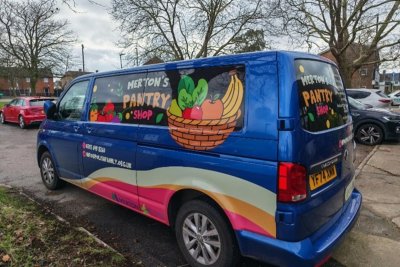
The Council also runs extensive community programmes to improve access to healthy food, from free after-school meals and holiday lunches to youth cooking programmes and care leaver clubs. Merton also fund a mobile food pantry, offering fresh produce at a subsidised cost to residents in disadvantaged areas and food deserts. They accept cash payments and Healthy Start vouchers. By combining robust policies with practical initiatives, Merton Council demonstrates how local authorities can successfully create healthier food environments and make sustainable, healthy and affordable food more accessible.
Sustainable food economy
Greenwich: One Card
Greenwich Council is committed to creating a vibrant and inclusive food economy across the borough. The council commissioned Greenwich Co-operative Development Agency (GCDA) to support food businesses to increase productivity, improve residents’ access to good-quality food retail, and strengthen the local entrepreneurial ecosystem. This included targeted support for underrepresented groups in business, encouragement of new food start-ups, and action to reduce the environmental impact of the food sector.
A key element of the council’s approach to a good food retail environment is promoting a circular local economy. Through the Greenwich One Card, local businesses are encouraged to sign up in exchange for increased publicity and practical support, while residents are incentivised to shop and spend within the borough. Food businesses benefiting from this scheme include greengrocers, local cafés, and food markets. The council also runs regular promotional campaigns throughout the year, such as Shop Local and Love Your High Street, to encourage continued engagement with local food retailers.
Barking and Dagenham: a thriving local food econonmy

The Barking and Dagenham Inclusive Economy team has excelled at improving and growing the food economy in the borough through a variety of initiatives. Bespoke mentoring services have been offered including Amplify, developed with Barking Enterprise Centre, to help local SMEs through tailored plans and resources to improve economic success whilst creating positive community impact. Another key initiative, Serving Up Success, supported local caterers to access new markets linked to council events and the local film studios. Across these programmes, participation has strongly reflected the borough’s diversity, with over 60% of Amplify businesses and all Serving Up Success caterers coming from global majority backgrounds.
Alongside business mentoring, the council has directed grant funding towards SME capital improvements, including the Small Food Grant programme awarding £23,000 to 10 businesses who met Good Food Enterprise Charter priorities. Larger grants supported two anchor organisations, including Kingsley Hall with new jobs and an expanded kitchen, and Dagenham Farm with improving community facilities for 2,000 annual visitors.
They have also helped corner shops trial heathier food options, delivered in partnership with Rice Marketing. This work included improving the availability of healthy African and Afro Caribbean products, and the work also contributed towards Healthy Start promotion and partnerships with local wholesalers.
Catering & procurement
Southwark: Transforming school meals through procurement
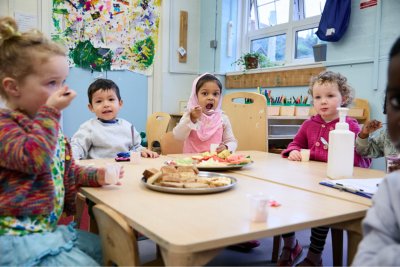
The Southwark School Meals Transformation programme (SMTP), jointly funded by Impact on Urban Health and Southwark Council, aims to improve school meal take up while upholding quality, value and sustainability. The work includes action in secondary schools to deliver nourishing, affordable and sustainable school food. Current initiatives in secondary schools include conducting quality monitoring visits, providing tailored recommendations to schools for improving school food, engaging school staff to become school food champions, and creating a pupil voice group to shape provision. The programme also offers Free Healthy Nursery Meals in all maintained school and nursery settings.
Alongside this work, in August 2025 the Southwark School Food Procurement Framework Agreement was launched, supporting schools in Southwark with catering service procurement. The agreement enables schools to procure catering services from pre-approved suppliers, operating under agreed terms and conditions. It helps schools to secure high-quality, cost-effective services that meet council, GLA and national grant requirements and includes contract monitoring and oversight responsibilities and arrangements. Benefits of the framework agreement include expert support with procurement from the Public Health team in collaboration with the DfE’s Get Help Buying for Schools service, reduced time and administrative burden for schools, tailoring of contracts to meet individual school needs and an option to group contracts with other schools.
Brent: Our School Our World
Across Brent, 20 primary schools have been involved in the Our Schools, Our World programme; an educational initiative to integrate climate change and sustainability into the curriculum. Headteachers, governors, programme leads, and business managers took part in a three-day training for Our School, Our World. Aside from learning green skills one of the key themes of the initiative was learning about diets, food and the way what we eat has an impact on the world around us. As a part of the program several schools have expanded food growing spaces and internal food waste processes have been audited and improved, helping schools reduce their environmental impact whilst inspiring young people to make more informed choices for the environment.
Redbridge: the ‘Perfect Mix’

The “Perfect Mix” initiative, led by Redbridge Council’s Public Health team with support from Serving Humanity Foundation, is a free weekly cooking and social programme bringing together refugees, asylum seekers, and local residents. Participants prepare and share lunch, building friendships, reducing social isolation, and supporting families in temporary accommodation with access to healthy meals. The scheme fosters a welcoming environment for newly arrived families and strengthens social cohesion within the community.
Redbridge Council’s Neighbourhood Engagement Team delivers bespoke waste and food-waste reduction workshops to ESOL (English for Speakers of Other Languages) learners across the borough. These sessions cover practical waste management, the environmental and climate impacts of food waste, and everyday actions residents can take to reduce waste at home. In 2025, the team delivered 18 workshops reaching 381 learners, signposting residents to food-waste reduction apps and guidance on using leftovers. In the same year, they also delivered five Love Food Hate Waste workshops to 106 residents, supported by a trained chef funded by the East London Waste Authority, combining practical cooking skills with food-waste prevention education.
Good Food Local: The London report


Good Food Local: Supporting local authorities to create more healthy and sustainable food systems in their local areas.
