






New: Sustainable Food Guidelines
Practical advice for anyone interested in buying and promoting more sustainable food.
Current projects and campaigns
NEW: Join us in transforming London into a green and productive city, with thriving communities and delicious fresh food - all in all, a better place to live! The Capital Growth campaign, run by Sustain's London Food Link (see below) will offer practical and financial support to communities around London to help more people grow more food, and to have greater access to land and growing spaces for community benefit. Click on the links in the menu on the left to find out more.
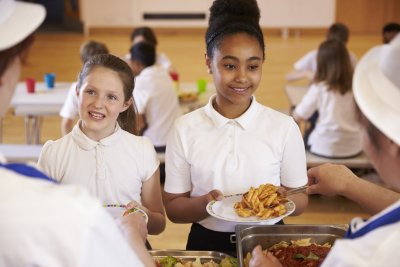
Better food and food teaching for children in schools, and protection of children from junk food marketing are the aims of Sustain's high-profile Children's Food Campaign. We also want clear food labelling that can be understood by everyone, including children.
Sustain has taken a keen interest in the rapidly accumulating evidence about the effect of food and farming on climate change, as scientific evidence emerges that our food system is a very significant contributor to greenhouse gas emissions. These pages record our activities on this critical issue.
Sustain has recently begun to develop plans for an edible roof garden in London, as one aspect of its work to promote urban food growing. We hope that roof gardens, as well as many other community food growing projects, will contribute to a more sustainable food system for London. Click on the picture above, or follow the links in the menu on the left to find out more.
Food and Farming Policy
Sustain encourages integration of sustainable food and farming into local, regional and national government policies. The following pages report on our national (sometimes international) food policy activities, where such material is not already covered within our individual project reports:
- Food Standards Agency (FSA)
- Department for Environment, Food and Rural Affairs (Defra)
- Organic sector development (including a link to the Organic Targets Campaign archive)
- Common Agricultural Policy (CAP)
- Cabinet Office review of food policy
- Department of Health
- EU School Fruit (and vegetable) Scheme
Food and Mental Health: The project promotes understanding of the links between good diet and mental wellbeing, addressing the many implications of the growing evidence linking what we eat to the way we feel and behave.
More and more people are setting up food co-ops so they can get good food at an affordable price. Our food co-ops website can help you find out if there's already a food co-op in your area, or if not will give you all the information you need to set up your own food co-op.
Food Facts is a series of short reports on over a dozen different products, shows how people’s shopping choices – as well as government policy – can protect the environment, enhance social justice and improve health. Get the Food Facts.
Sustain has worked on nutrition and sustainability labelling issues since the alliance was established in 1999, and has recently been involved in the heated debate over carbon labelling. For information about Sustain's activities on this issue, see the sustainability labelling pages.
Good Food for Our Money: The government spends over £2 billion of tax payers' money each year on public sector food. At the moment, our money pays for food that can be harmful to our
health and the environment, and fails to invest in local and
sustainable suppliers, and in fair trade with poor countries. And there
are no rules to stop this happening. The Good Food for Our Money
campaign demands that government introduce new rules so that we know
our money is being spent on good food. Join us in calling for change!
Good Food on the Public Plate: The Good Food on the Public Plate project builds on the earlier work of Sustain by providing assistance to public sector caterers across London to increase their uptake of sustainable food thereby improving the well-being of the people they serve and creating reliable markets for sustainable local producers.
Sustain is also working with Greenwich Cooperative Development Agency, on a project sponsored by the London Development Agency as part of implementation of the London Food Strategy, to provide Good Food Training for London, working with the public sector.
London Food Link runs a network of organisations and individuals with members as diverse as farmers, food writers, caterers and community food projects. London Food Link and its members run projects that help to increase the availability of sustainable food in London, tackle the barriers preventing access to sustainable food for all Londoners, and celebrate and protect London's diverse food culture.
London Food Link's projects are:
- Buywell – a project launched in 2008 as part of the Well London programme, to promote food access projects such as food co-ops in low-income areas of the capital.
- Capital Growth– the campaign for 2,012 new food growing spaces for London by 2012.
- Ethical Eats – a network of London restaurants and catering businesses with an interest in sustainability.
- Good Food Training for London - free training to increase the proportion of healthy and sustainable food provided by public sector caterers.
- Greener Food - advising businesses on using and promoting sustainable ingredients and practices.
- Jellied Eel - the quarterly magazine for Sustainable Food in London.
- London Food Access Forum - bringing together organisations and individuals around London trying to improve access to healthy affordable food for people on low incomes.
- Local Food Finder – public and business access to food producers and suppliers in London and the counties surrounding London, including on public land, housing estates and roof gardens.
- Urban agriculture – policy and campaign work to increase the amount of tasty, wholesome and nutritious food grown in urban areas.
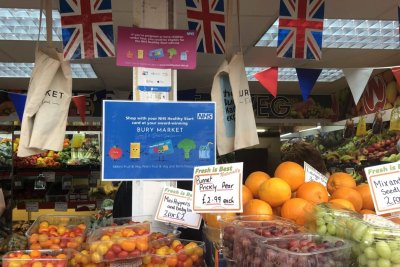
- Well London - Buy Well – Buywell is working in 10 deprived areas of London to make it easier to buy healthy, affordable and sustainably produced food locally.
London Food Link archive projects
As well as the current projects (above), London Food Link has recently completed several projects, and links to these are shown below.
- Greener Curry - increasing the amount of local, organic and fair-trade food consumed by London’s diverse ethnic communities.
- Small grants for sustainable food * PLEASE NOTE * that these grants are now closed.
- Serving up Sustainability– free workshops designed to equip food businesses and caterers with the skills to buy and serve up sustainable food.
Sustain is a consortium partner in a major Big Lottery-funded project to help community enterprises promote local and sustainable food. Sustain is coordinating two strands of work under the Making Local Food Work programme, namely:
- Food Co-ops and Buying Groups, developing a range of resources, such as a toolkit, educational leaflets and marketing materials, to help food co-ops start up or build on their successes.
- Food Supply and Distribution, working with projects around England to increase and improve the supply and distribution of local, sustainable food
For details of these strands, visit the project pages, or see the Making Local Food Work consortium website at http://www.makinglocalfoodwork.co.uk/
Local Action on Food: Local Action on Food is a network that supports local and regional activity promoting healthy and sustainable food. Established in 2008, it represents and helps members of the network, by running projects, organising events, sharing good practice and offering members other support services. Find out more by clicking here.
Olympic Food: Sustain sees the London 2012 Games as a tremendous opportunity to help
transform the food system. We are already working on Olympic food
issues, and sit on LOCOG's Food Advisory Group. Find out more details of the people, processes and standars involved, on the Olympic Food pages.
Organic Sector Development: Promotion of more environmentally sustainable forms of agriculture are integrated into all of our work. These pages record Sustain's activities to promote organic sector development.
The Real Bread Campaign aims to increase the enjoyment, production and consumption of bread made with natural ingredients, appropriate fermentation and no adulterants, so that good bread may play a larger part in the physical, mental and social wellbeing of the nation. It also promotes policies and practices that put grain and bread production at the heart of a sustainable ecological food system.
Supermarkets, health and sustainability: Sustain takes a keen interest in supermarket policies and activities on health and sustainability. These pages record recent activity on this issue.
Well London - Buy Well: Buywell is working in 10 deprived areas of London to make it easier to buy healthy, affordable and sustainably produced food locally.
International Links: Other networks that Sustain supports
AlimenTerra is a network of European organisations working to develop a sustainable European food system. Sustain provides secretariat services to this network. AlimenTerra's own website is at http://www.alimenterra.org/; the Sustain website page for AlimenTerra gives a brief summary of recent activities, as reported to Sustain's Council.
The UK Food Group is the network for non-governmental organisations (NGOs) working on global food and agriculture issues. Sustain works in partnership with the UK Food Group, and also provides management and other services. The UK Food Group's own website is at http://www.ukfg.org.uk/; the Sustain website page for the UK Food Group gives a brief summary of recent activities, as reported to Sustain's Council.
Archive projects and campaigns
Archive: The Agri-Food Network project ran seminars linking academics working on food and farm policy with each other and with those NGOs and think tanks which are using and commissioning research to underpin policy advocacy work. Seminar papers and notes are available on the archive project pages.
The Eat Somerset project worked to increase trading between producer groups in and around
Somerset and independent food retailers in the county, and creating new
markets in Bristol and Bath. Details of the project's activities and successes are on the Eat Somerset archive pages.
Archive: From 1996, the Food Access Network project (previously known as the Food Poverty project) worked with a range of local, national and international organisations to reduce inequalities in health through food. It provided information and support through a database, events and a range of publications. The project also explored new ways of working with low income communities to develop appropriate policies to tackle food poverty. The Food Access Network has now merged with Food Links UK, and a new network for local and regional projects working on healthy and sustainable food issues will be launched in 2008.
Archive: Grab 5! was a Lottery-funded project for primary schools wanting to encourage their pupils to eat more fruit and vegetables. It contributed to an average 30% increase in consumption (from 1.7 to 2.2 items per day) of fruit and veg among the 7-11 year olds in the schools where we worked in Lambeth, Leeds and Plymouth, in schools serving low-income communities. We also developed a programme that ran in at least 1,000 schools in every region of the country reaching children, siblings, parents, teachers and others through schools and local networks, encouraging them to eat more fruit and veg. The project has now ended, but we continue to encourage people to use the materials and approaches it developed. Free-to-download educational materials are available on the archive project pages.
Archive: The Healthy Schools and Fairtrade project project, commissioned by the Young Co-operatives organisation, assessed the implications of the new school food standards for Fairtrade food and drink products sold in schools, and published advice to schools on how to continue to promote Fairtrade certified products in line with the new rules. The advice is available free to download on the archive project pages.
Archive: Sustain worked on a national Orchards project with Leader+ (a European Union funded programme of rural development) to conserve and bring into sustainable management traditional orchards in six Leader+ funded areas; Hereford Rivers, Somerset Level and Moors, Teinbridge, North West Devon, Mid Kent and Cumbria Fells and Dales. It published a good practice guide for organisations and communities striving to maintain traditional orchards, which is available free to download on the archive project pages.
Archive: In 1999 Sustain became the secretariat for the Organic Targets Campaign, which succeeded in persuading government to establish an Organic Action Plan to increase the market share of British organic produce from 30% to 70% of the market, by 2010. The campaign brought together a supporting coalition of over 100 national organisations, plus hundreds more local groups and individuals.


