

Sustain / Real Bread Campaign / About / Marketing and labelling / Honest Crust Act
Sourdough
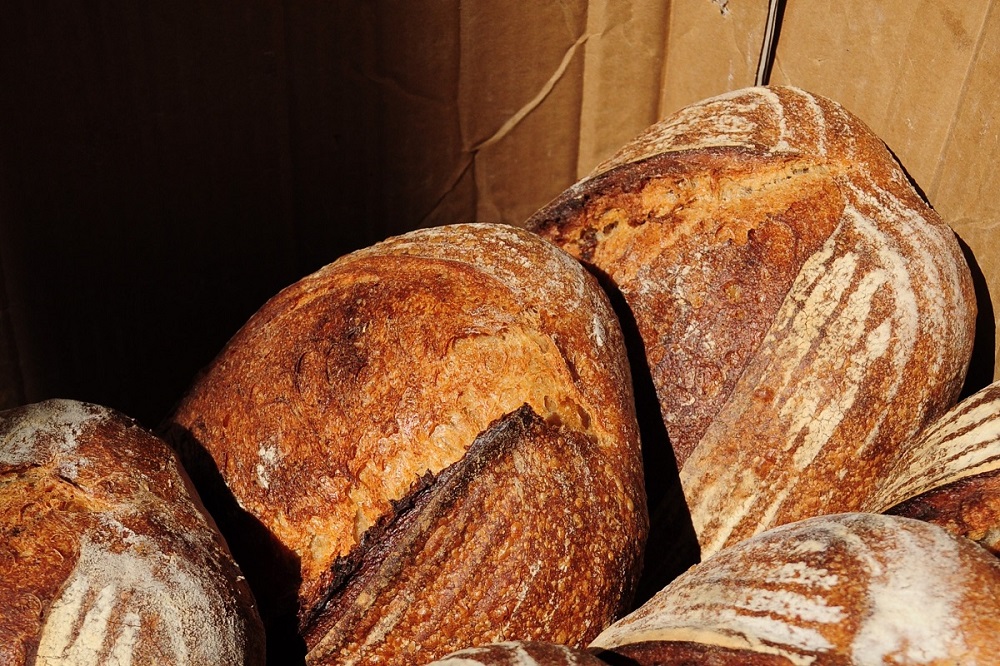

The original method of raising dough and, some people would argue, still the best.
Being made by the sourdough process isn't a criterion of the Campaign's basic definition of bread. We do, however, believe that there might be beneficial effects of this method of bread making, which cannot occur to the same extent (or perhaps at all) in products made by other methods.
These are the result of the action of the live sourdough starter culture (and its byproducts) on the dough over the longer fermentation time it requires to generate sufficient gas to leaven (raise) the dough. You can read some of these potential benefits of genuine sourdough on our FAQs page.
See also: Create your own sourdough starter
- Sourdough around our site
- What is sourdough?
- Say no to sourfaux
- Is sourdough the same as soda bread?
- Is sourdough better than baker's yeast?
- Where can I buy sourdough Real Bread?
- How do I know if product X is genuine sourdough?
- Why does sourdough bread cost what it does?
- What do I need to start a sourdough starter?
- Is sourdough yeast free?
- A note on marketing to sourdough bakers
- So if I have a yeast allergy/intolerance can or can’t I eat sourdough?
- Sourdough and coeliac disease, food allergy and food intolerance
- Not sure I like the sound of bacteria in my food
- I don’t like the sound of bread that’s sour
- I don't like sourdough
- Controlling acidity
- Is my '100 year old starter' really the same as it was a century ago?
Sourdough around our site
- Sourdough: The case for a legal definition
- Supermarket 'sourdough'?
- Start your own starter
- Buy a sourdough starter
- Classes and courses
- Books
- Websites
- Sourdough September
What is sourdough?
Sourdough isn't a look, style, taste, trend or fad, it's is a process. This process can be used to make pretty much any type of bread (sweet or savoury) in the world.
Yeasts and lactic acid bacteria that are naturally present on the surface of grains end up in flour. These can be nurtured to create a thriving sourdough starter culture that can be used to make bread from as few as three ingredients – flour, water and salt.
Other natural ingredients can be added but genuine sourdough bread making does not involve the use of baker’s yeast, chemical raising agents, so-called processing aids or other additives.
Sourdough is often used as shorthand for that starter cuture, and of bread etc. made by the sourdough process.
Your starter for ten
Yeasts and bacteria are present all around us – for example in the air, soil and water. Those well suited to bread production are found in relatively high populations on the surface of cereal grains, such as wheat. By grinding the grains into flour and providing a suitable environment for these microorganisms to thrive (basically by adding water, maintaining an appropriate temperature, and providing food in the form of more flour) these populations can be increased in size and concentration, where they co-exist in a symbiotic relationship.
Eventually there will be enough yeast cells giving off carbon dioxide as a byproduct of their respiration to make bread rise. The interaction of the yeast and the natural enzymes they secrete will have a beneficial effect on the flavour, texture and aroma of the baked bread.
At the same time, the populations of bacteria will increase. The interaction of these bacteria and the products of their respiration (including lactic and acetic acids) also contribute to the flavour, texture and aroma of the bread. Genuine sourdough may stale more slowly, and evidence suggests that the process might have health benefits.
Say no to sourfaux
In 2015, Real Bread Campaign co-ordinator Chris Young coined the word sourfaux for any product that is named or marketed using the word sourdough but that is made using one or more additives and/or an alternative raising agent (such as baker's yeast or baking powder) in addition to or instead of a live sourdough starter culture.
As the yeast(s) found in a live starter typically produce carbon dioxide at a slower rate than commercial baker's yeast, the rising time is longer. This longer fermentation period allows other changes to occur in the dough that could have benefits other than flavour alone. You can find examples of these potential benefits on our FAQs page.
This is a key reason the Real Bread Campaign's call for an Honest Crust Act includes (amongst other things) legal definition of the word sourdough and regulation of its use. This is to better protect us from the risk of being misled by cynical marketing and to allow us all to make better-informed choices about the food we eat.
The Real Bread Campaign believes that to be named or marketed using the word sourdough, bread must be:
- Made without any additives - ie the main criterion in our basic defintion of bread.
- Leavened only using a live sourdough culture, without the addition of any commercial yeast or other leavening agents, e.g. baking powder.
- Made without using other ingredients/additives as souring agents or as sourdough flavouring, e.g. vinegar, yoghurt, or dried sourdough powder.
Baked products made with such things but named/marketed using the word sourdough are what Real Bread Campaign cofounder Andrew Whitley calls pseudough.
NB We have nothing at all against Real Bread made using baker's yeast. Our issue is with products being made using a fundamentally different process involving baker's yeast but then named or marketed using the word sourdough, which we believe to be utterly misleading.
But in other countries...
None of these is necessary to make genuine sourdough bread. For the sake of clarity and avoidance of confusion, we call for a legal definition that excludes them.
We're aware that some people choose to make exceptions to the above exclusions. For example, over centuries of sourdough breadmaking, some bakers in France and elswhere have allowed a small percentage of baker's yeast and/or additives to slip into their generally accepted definition of sourdough bread.
Our response is that there are many things that are done differently in other countries and cultures that we don't necessarily have to adopt in the UK. Since its revival (which perhaps can be traced to the early 1970s) the UK's relatively young sourdough tradition has not involved baker's yeast or additives. The custodians of this craft (many, perhaps the majority, of whom are in the Real Bread Campaign's network) do not use these things.
'With' sourdough
With is a weasel word to watch for. Like 'style' it tends to mean what you're getting isn't 100% genuine. As we say, sourdough is a process, so marketing a loaf using the phrase 'with sourdough' is a bit like selling a bottle of spirit as 'with single malt whisky' or fortified wine as 'with solera'.
Is sourdough better than ‘normal’ yeast?
Unless you have an allergy or intolerance to baker's yeast, there is nothing wrong with it. You can make great Real Bread with baker's yeast.
A growing body of evidence, however, collectively suggests that making bread using a genuine sourdough method might have greater nutritional, and other health benefits, than making loaves without a live starter culture, and/or by a shorter process, such as one accelerated by baker’s yeast.
Some of the potential benefits of sourdough fermentation are summarised in Thirty years of knowledge on sourdough fermentation: A systematic review, which is based on an examination of 1230 peer reviewed research articles published between 1990 and 2020.
Additionally, some people report that they can enjoy eating genuine sourdough, while they find other types of bread and/or industrial loaf products hard to stomach.
NB None of this has been proven beyond doubt and the Real Bread Campaign calls for more research to be done on the potentially beneficial effects of sourdough fermentation.
If you make sourdough bread for sale, be aware that health and nutritional claims are governed by EU and national legislation. No claims regarding sourdough have been added to the list, so you cannot legally say 'more digestible', 'healthier', 'more nutritious' etc.
Is sourdough the same as soda bread?
No. Soda and sourdough might sound similar but it would be hard to find two baked product processes that are more different. Genuine sourdough undergoes long fermentation over many hours in the presence of lactic acid bacteria. The use of chemical raising agents (such as baking powder/soda) involves no fermentation at all. Any known, or potential, benefits of fermentation simply cannot happen in a chemically-leavened loaf. Read more.
Where can I buy genuine sourdough?
You can find all of the bakeries that have told us they bake without additives on our Real Bread Map. Once you have found a bakery, you should read the ingredients lists, or ask a staff member for the details if the bakery chooses not to display them for unwrapped products.
As a visual guide, you can also look for The Sourdough Loaf Mark.
How do I know if product X is genuine sourdough?
The Real Bread Campaign is fighting for a legal definition for the word sourdough so shoppers know what they’re buying.
In the meantime, appearance, price, aroma, taste and even the word sourdough offer you NO GUARANTEE.
Tips:
- Look for The Sourdough Loaf Mark. This is a visual assurance from baker to buy that a loaf is genuine sourdough.
- Always read the label. Genuine sourdough bread is NOT made using additives, baker’s yeast (usually listed simply as yeast) or chemical raising agents (eg baking powder). If there isn't a label (or you just fancy a chat) then...
- Ask the baker / salesperson for a copy of the ingredients list.
We also suggest that you..
...stay away from loaf tanning salons. Even if a product is genuine sourdough, if it was made elsewhere and then merely re-baked in store (or by a vendor who buys in such products for a market stall), you might want to shop elsewhere. Read more.
As supermarket products lines and formulations change fairly frequently, the Real Bread Campaign doesn't keep a list of which of their products are sourfaux. For the same reason (and because it's not our role to provide free advertising for such multi-billion-pound companies) we don't keep a list of which of their products are genuine sourdough, either.
NB Taste, texture, aroma an appearance are not a failsafe guide to whether or not a product is genuine sourdough. A skiled Real Bread baker can use baker's yeast to craft a product that has characteristics often associated with sourdough bread, such as a glossy, open crumb structure (ie big holes); crisp (and, later, chewy) crust; and complex, delicious flavour and aroma. Meanwhile, a close-textured, soft-crusted white sandwich loaf can be made in a tin using the sourdough process.
As for sourness, this is down to both the skill and preference of the baker – it can range from a robust tang to barely perceptible. Products such as brioche, panettone and croissants can be made by the sourdough process and (as long as the baker knows what they're doing) they won't be sour. Conversely, and industrial loaf fabricator can add anything from dried sourdough powder to industrial acetic acid to give sourfaux a bit of tang.
Why does sourdough cost what it does?
Maybe a better question might be: why does sourfaux tend to be so expensive? Being cheaper to manufacture, especially when done at scale, sourfaux is typically sold at a lower price than a small, independent bakery can craft genuine sourdough. We believe this to be unfair competition and also misleading to shoppers, especially as companies tend to sell sourfaux at a premium price compared to other products in their own ranges.
Genuine sourdough tends to be produced in relatvely small batches, requires more time to make and - to be done well - relies on craftspeople with specialist skills and knowledge.
Small, independent Real Bread bakeries help to keep more money circulating in local economies and support more jobs per loaf than supermarkets and other industrial loaf fabricators. The flipside is being at the wrong end of economies of scale when it comes to the minimum they need to charge to stay in business. This is being exacerbated by skyrocketing costs of energy, ingredients and more.
People’s decision to buy certain sourdough bread might be influenced as well / instead by finding it to be a better product in terms of flavour and texture. Others have personal experience of being able to enjoy eating genuine sourdough bread despite having difficulty with bread (or industrial loaf products) made by other processes.
What do I need to start a sourdough starter?
Nothing more than flour and water. Click here for a simple sourdough starter.
The surface of grains, such as wheat and rye, are usually home to thriving colonies of one or more species each of yeast and bacteria. These live in symbiotic relationship with the grain and so are, arguably, the most suitable to start a sourdough culture. Other ingredients are therefore unnecessary but here are some that might be suggested, along with some theories behind their inclusion:
- Rhubarb. Acids can help deter pathogenic (bad) micro organisms and create an environment favoured by lactic acid bacteria.
- Hops also have anti-bacterial properties.
- Live yoghurt is also acidic and contains lactic acid bacteria, though not necessarily the types most suitable for producing bread.
- Mashed potato provides an extra source of food for yeast and bacteria.
- Grapes, raisins, sultanas and so on have yeasts and bacteria on their skins but again, not necessarily the types most suited to making bread.
- Honey is high in sugars, on which the yeast can feed. Unpasteurised honey might also contain yeasts and bacteria.
Is sourdough yeast free?
Nope.
A sourdough culture will always contain one or more species of yeast. In some cases these yeasts might even include the same species (Saccharomyces cerevisiae) that is sold as bakers' and brewers' yeast.
That said, the strains of S. cerevisiae found in bakers' and brewers' yeast have been modified of years of selective breeding (for example to produce large volumes of carbon dioxide/alcohol, respectively, and to generate different flavour profiles in the finished product), perhaps even by genetic modification in some cases. It is unlikely that even if S. cerevisiae is present in a sourdough culture that it will be genetically identical to a commercial strain.
Concentrations of yeast in a genuine sourdough may well be lower than in a bread made with commercial yeast. Rather than using a relatively large amount of yeast cells to produce the amount of carbon dioxide needed over a relatively short period of time, sourdough relies upon its smaller number of yeast cells being left for a longer fermentation period to generate the same amount of gas.
A note to bakers
If you’re marketing sourdough bread as ‘yeast free’, stop it!
Apart from the fact that this could land you in trouble with Trading Standards, it’s not in keeping with Real Bread Campaign values of openness and honesty. Possible alternatives include ‘made without baker’s yeast’, and ‘made using naturally-occurring yeasts’.
One further thought on yeasts in bread – yeasts die at around 60°C. As the internal temperature of bread should reach at least 90°C during baking, by the time a properly made loaf of any type of bread is ready to eat, it will contain no live yeast, only dead cells and byproducts.
Can I eat sourdough if I have a yeast allergy/intolerance ?
Genuine sourdough is made using one or more yeasts but your personal experience may be that you can eat some loaves marketed as sourdough but not others. See the section on sourfaux above.
The advice we must give you is to get tested by an expert in food allergy/intolerance. This will isolate the cause of your difficulty (it might not be yeast at all) from all other possible factors. Your GP will be able to help.
Sourdough and coeliac disease, food allergy and food intolerance
See our FAQs page for a brief outline of, and differences between, these conditions.
The FAQs page also contains a growing list of studies, including at least one that has concluded that some people who encounter problems when eating bread made with commercial yeast might be able to eat genuine, long-fermented sourdough. The comments section of the Campaign’s own small sourdough study published in summer 2011 adds to the growing body of anecdotal evidence that supports this.
The Real Bread Campaign calls for funding for large-scale research to determine the impact of sourdough fermentation of wheat bread in relation to these conditions.
Not sure I like the sound of bacteria in my food
Bacteria are all around, on and inside everything in the world - including you.
With apologies for using the reductive language of certain TV adverts – there are ‘good’ bacteria and ‘bad’ bacteria. Those in sourdough are some of the ‘good’ ones, related to the bacteria used to make cheese, yoghurt, sauerkraut, kimchi and some types of salami.
I don’t like the sound of bread that’s sour
Though some bakers take pride in the extremity of their sourdough bread’s tang, a skilled baker controls his or her starter culture in order to get not only depth and complexity of flavour but also a level of acidity that is to their taste.
If you've had a less than amazing experience of sourdough from one baker, try a loaf from another - you might find you love it!
I don't like sourdough
Rather than a type or style of bread, sourdough is a process. Any bread (and more) that can be made using baker's yeast can be made by the sourdough process. There are probably more variations of sourdough-leavened bread than there are bakers on the planet.
It doesn't have to be (for example) a crusty loaf, with large holes and a tangy flavour. Like a sliced white sandwich loaf? That can be made by the sourdough process. The same goes for bagels, panettone, brioche, focaccia, baguettes, croissants, flatbreads, soft rolls...the list goes on.
Even if you've had one or more experiences of sourdough bread* that weren't to you taste but (unless you don't like bread at all) there will be other ones out there that you do like. Before you deprive yourself of some of the best Real Breads in the world based on one less than world class experience, try some crafted by other bakers.
*or perhaps it was actually sourfaux.
Controlling acidity
This item is taken from the section on sourdough in Knead to Know: the Real Bread starter:
As well as one or more types of yeast, sourdough cultures contain lactobacilli (lactic acid bacteria) that produce both lactic and acetic acids. A key part of mastering sourdough is keeping the concentration and ratio of these acids in balance. Too much acetic acid and the bread will taste very sharp and perhaps vinegary (it is the same acid that is found in vinegar), whereas bread with too little acetic acid and a higher level of lactic acid might not have any discernible sourdough characteristics.
Different yeasts and bacteria are adapted to different conditions. Lactobacilli that produce higher levels of lactic acid tend to prefer wetter batters kept at around 1-5°C, whilst those producing both lactic and acetic acid thrive better in stiffer batters kept at around 20°C. Acetic acid is produced in lower quantities than lactic and so takes longer to build up in a dough.
Therefore, to achieve a more pronounced flavour and sourness, you can try keeping your starter at a lower hydration (i.e. dough-like) and retard dough fermentation by proving overnight in the fridge. For a milder flavour and acidity, try keeping your starter as a batter and prove at room temperature.
Is my '100 year old starter' really the same as it was a century ago?
Maybe...but maybe not.
Studies of sourdough culture have found that the populations of yeast and bacteria evolve over time.
- Could 100-year-old sourdough be a myth?
- Microbiotas Characterized for 19 Traditional Italian Sourdough Breads
- Microbial population changes during sourdough fermentation monitored by DGGE analysis of 16S and 26S rRNA gene fragments
It's a bit like the old gag: 'This is the axe used to behead Queen Mary. Of course the wooden handle rotted, so that was replaced. And then the head rusted, so we put on a new one. But otherwise, it's the same axe'
Then again: It is believed that some sourdoughs are maintained over several centuries, e.g. the continuous use of Bocker–Reinzucht–Sauerteig (BRS) sourdough over seven decades has been documented ...' The sourdough microflora: biodiversity and metabolic interactions
Either way, the story of your sourdough starter is a good tale to tell as its heritage involves human relationships.
How, where and when you came to become a starter's guardian; from whom you obtained it; that person's tale of how she/he became a custodian; and so on back through time help to make you and the people who eat your loaves members of a cultural network, a community.
Even if you began your starter yourself, the story you have to tell are that your loaves are unique.



Real Bread Campaign: The Real Bread Campaign finds and shares ways to make bread better for us, better for our communities and better for the planet. Whether your interest is local food, community-focussed small enterprises, honest labelling, therapeutic baking, or simply tasty toast, everyone is invited to become a Campaign supporter.